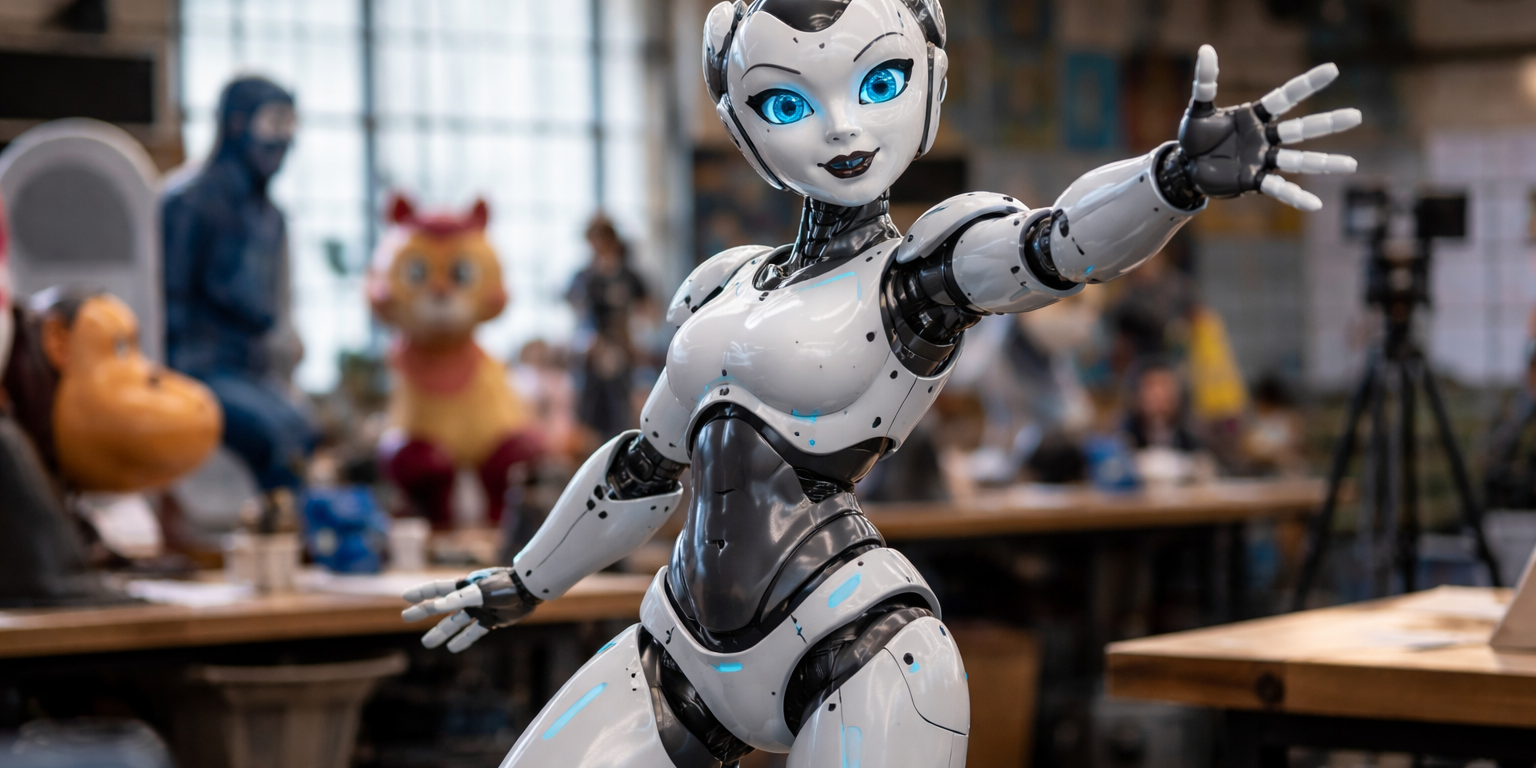
Neura Robotics GmbH closed a funding round worth up to $1.4 billion from a consortium that includes Nvidia Corp., Amazon.com Inc., Qualcomm Technologies Inc., and at least one cryptocurrency-focused investor. The Metzingen, Germany-based company confirmed the raise today, marking one of the largest capital events in robotics since Figure AI's $675 million Series B in early 2024. Neura develops what it calls cognitive robotics systems that combine vision, language processing, and force sensing in a single integrated platform. The company has shipped commercial units to automotive and logistics customers in Europe and is preparing to launch a consumer-oriented assistant robot later this year.
Neura's technology stack differentiates itself through multimodal sensor fusion. Its MAiRA series manipulators integrate cameras, microphones, and capacitive skin sensors that allow the robot to detect proximity and touch across its entire surface. Traditional industrial arms rely primarily on joint encoders and end-effector force sensors. Neura's approach allows operators to guide robots physically, speak commands in natural language, or point to objects the system should manipulate. The company claims its robots require 70 percent less programming time than conventional collaborative robots for comparable tasks. That efficiency matters in industries where automation projects often fail due to integration complexity rather than hardware cost. Automotive suppliers and contract manufacturers have deployed MAiRA units for assembly tasks that previously required custom fixturing and weeks of setup.
The investor composition reveals distinct strategic interests. Nvidia's participation aligns with its robotics processor roadmap. The company has pushed Jetson modules and Isaac simulation tools as infrastructure for intelligent machines, and Neura runs vision models on Nvidia GPUs. Qualcomm's involvement points to mobile and edge computing angles. The chipmaker has pursued robotics applications for its Snapdragon platforms, particularly in autonomous mobile robots and drones where power efficiency determines operational range. Amazon's presence suggests logistics automation use cases. The e-commerce giant operates thousands of mobile robots in fulfillment centers and has invested in multiple manipulation startups through its Industrial Innovation Fund. The cryptocurrency investor was not named in today's announcement, but Neura has previously discussed blockchain-based systems for tracking robot task history and maintenance records.
Neura was founded in 2019 by David Reger, who previously worked on automation systems for the automotive industry. The company emerged from stealth in 2021 with its first MAiRA prototype and began commercial shipments in 2022. It currently employs approximately 300 people across Germany and has manufacturing partnerships in Eastern Europe. Revenue figures have not been disclosed, but the company indicated it shipped several hundred robot units in 2024. The new capital will fund expansion of production capacity, development of a smaller desktop manipulation system called LARA, and international sales operations. Neura also plans to open a North American headquarters in 2025, though the specific location has not been announced. The company faces competition from established collaborative robot vendors including Universal Robots, ABB, and Fanuc, as well as newer entrants like Agility Robotics and Apptronik that target humanoid form factors.
The $1.4 billion valuation reflects broader momentum in manipulation robotics. Venture capital firms deployed more than $3 billion into robotics startups in 2024, with manipulation and mobile manipulation accounting for roughly 40 percent of that total according to PitchBook data. Investors have grown more willing to back hardware-intensive companies as manufacturing costs decline and AI models improve robots' ability to handle variability. Neura's cognitive architecture addresses a persistent challenge: most industrial robots still operate in structured environments with fixed part presentations. Systems that can perceive, reason about, and adapt to unstructured scenes command premium valuations because they unlock broader application ranges. Whether Neura can deliver on that promise at scale will depend on manufacturing execution, software reliability, and the company's ability to build service networks in new markets. The involvement of semiconductor and cloud platform providers suggests those partners see Neura's robots as vehicles for their own technologies, which could accelerate go-to-market efforts but also create dependency risks.
What to Watch: Neura is expected to announce its North American headquarters location and initial customer deployments in the region by mid-2025. The LARA desktop system is scheduled for a product launch in the third quarter of 2025, targeting research labs and small manufacturers. Track whether Amazon deploys Neura systems in any fulfillment centers, which would validate the manipulation approach in high-volume logistics environments. Monitor Nvidia's GTC conference in March 2025 for potential joint demonstrations or reference architecture announcements involving Neura hardware.