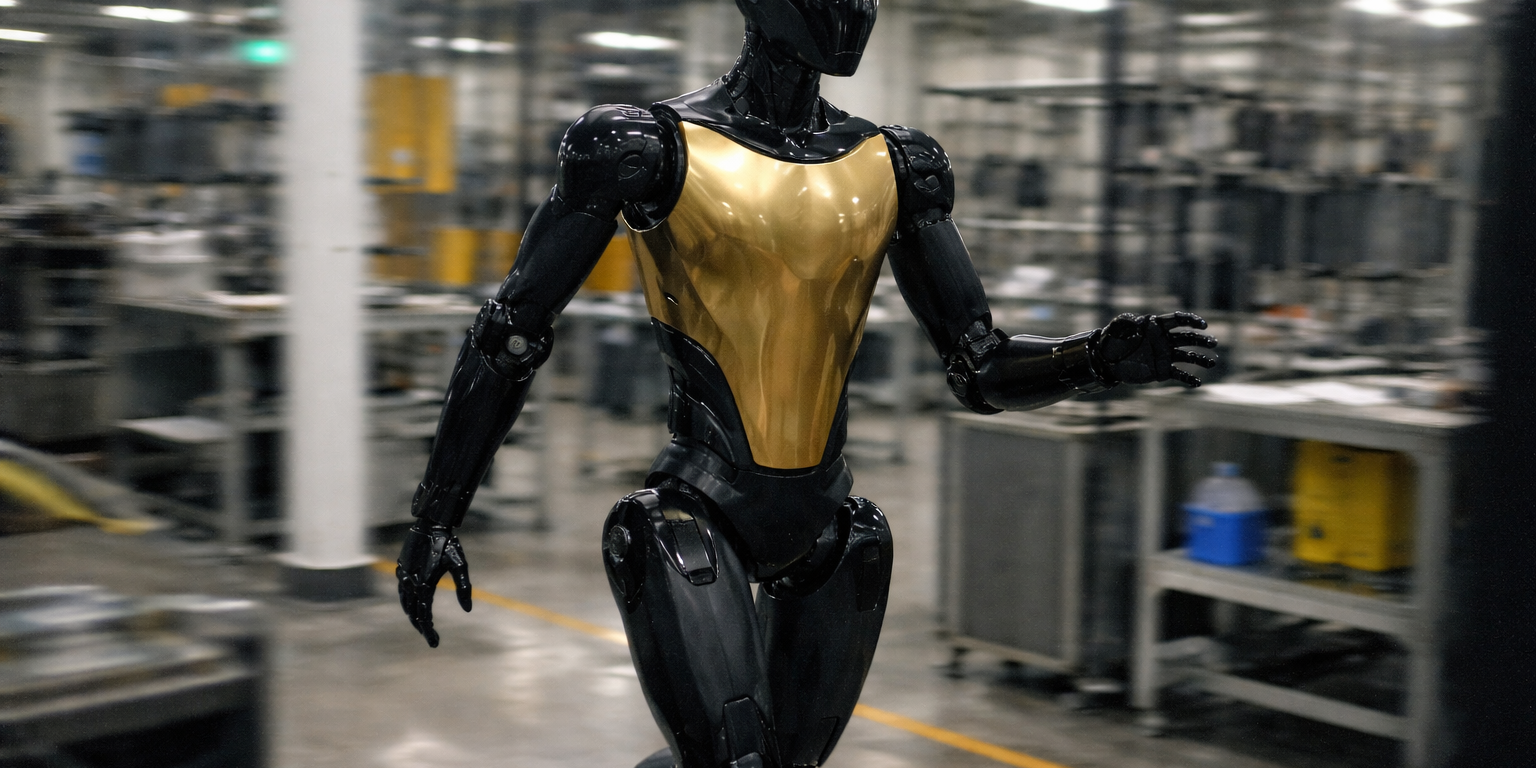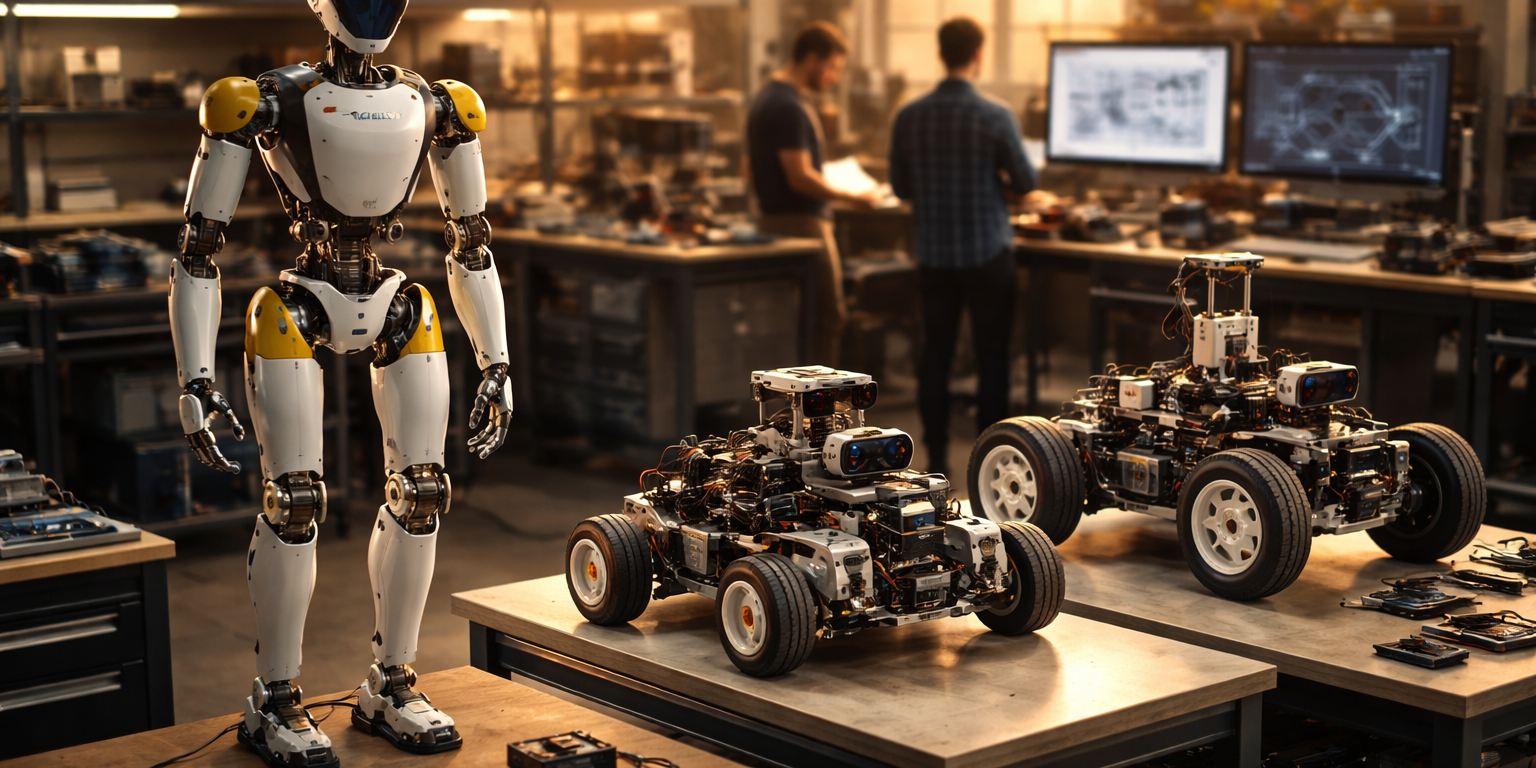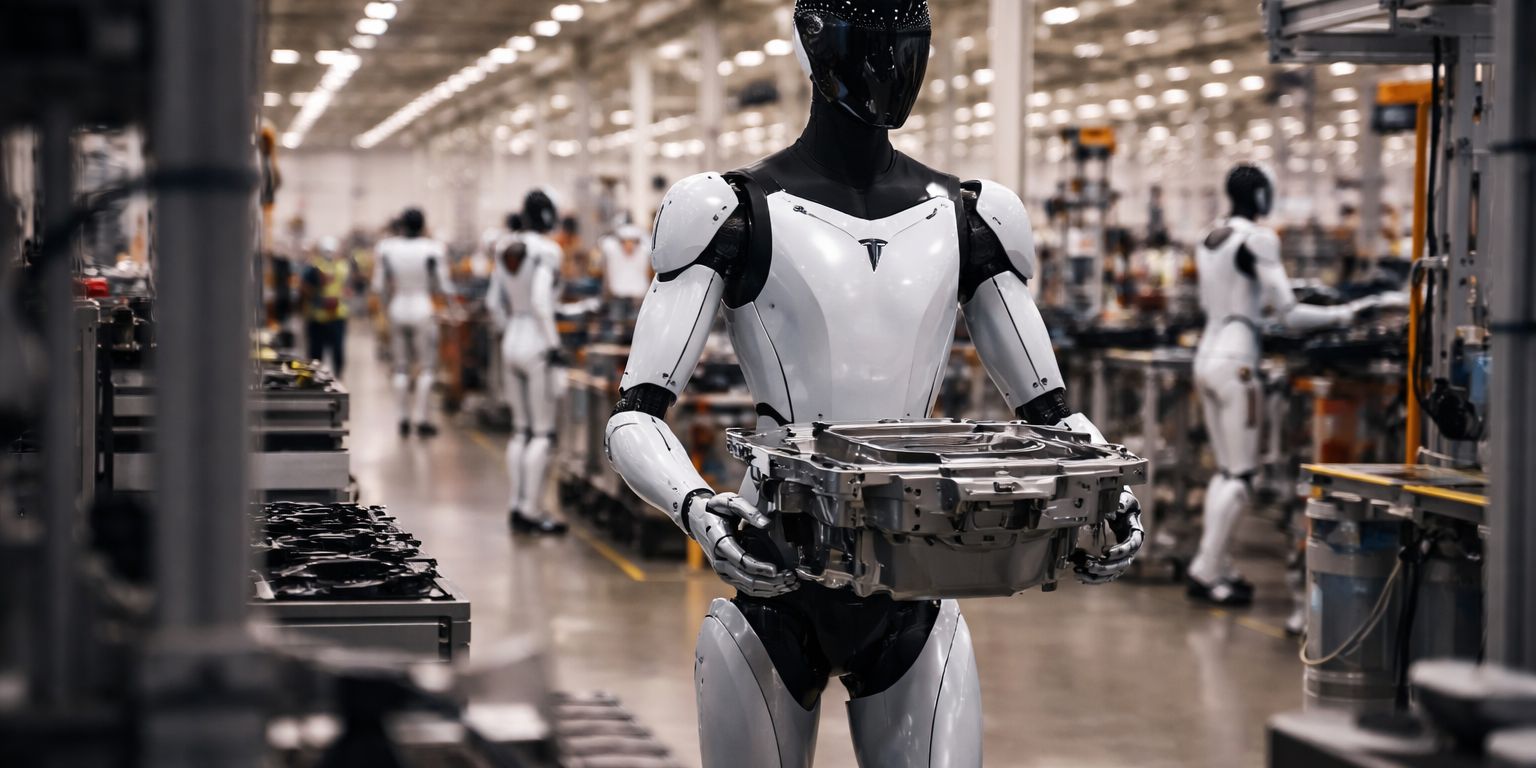
Tesla aims to place its Optimus humanoid robot in commercial settings by the fourth quarter, according to deployment timelines shared across Musk's portfolio of companies. The robot, which has progressed from static demonstrations to factory floor prototypes over the past eighteen months, represents one of five major technology initiatives Musk's ventures are pursuing simultaneously in 2026. The others span neural interfaces, orbital launch systems, autonomous vehicle platforms, and artificial intelligence infrastructure—a breadth that raises questions about execution capacity even as each project reaches inflection points in hardware maturity and regulatory clearance.
The convergence of timelines is no accident. Tesla's Gigafactory in Austin now houses parallel production lines for electric vehicles, battery cells, and humanoid robots, with Optimus units reportedly moving between stations in limited pilot deployments. Neuralink, based in Fremont, has enrolled human trial participants for its N1 brain implant following FDA approval secured in mid-2025, targeting expanded clinical studies through year-end. SpaceX's Starship system completed its first orbital mission in March and is working toward regular cargo flights from Boca Chica, Texas, while the company's Starlink satellite constellation continues adding capacity. Meanwhile, xAI's Colossus supercomputer in Memphis, comprising more than 100,000 GPUs, is training next-generation models that feed back into Tesla's Full Self-Driving software and Optimus control systems. The interdependencies matter: breakthroughs in one division accelerate progress in others, but bottlenecks cascade just as quickly.
Optimus development illustrates both the promise and the uncertainty. The robot's current configuration stands roughly 5 feet 8 inches tall, weighs 160 pounds, and uses actuators designed in-house to reduce costs below competing platforms from Boston Dynamics or Figure AI. Tesla has demonstrated the robot performing basic manipulation tasks—sorting objects, carrying items, maintaining balance on uneven surfaces—but has not disclosed specifications for cycle time, payload capacity, or mean time between failures, metrics that industrial buyers scrutinize closely. Commercial deployment likely means initial placements in Tesla's own facilities, where the company can control variables and iterate rapidly without third-party liability concerns. External sales would follow only after field validation, a pattern Tesla used with its Powerwall batteries and vehicle charging infrastructure. Robotics engineers tracking the program note that Tesla's vertical integration gives it cost advantages in motors and batteries, but the company still faces the software challenge that has vexed every humanoid effort: reliable performance in unstructured environments where edge cases multiply.
Neuralink's brain-computer interface occupies a different regulatory and technical landscape. The N1 implant, a coin-sized device with 1,024 electrode channels, is positioned for patients with severe paralysis, with the company targeting FDA clearance for broader indications by late 2027. Current trials focus on restoring communication and computer control for individuals with spinal cord injuries. The company's surgical robot, which automates electrode threading to avoid blood vessels, differentiates Neuralink from academic research projects that rely on manual placement. Synchron, a competing neural interface company, reached human trials earlier with a less invasive stent-based device, capturing a first-mover advantage in physician familiarity and insurance pathways. Neuralink's higher channel count promises finer motor control and richer data streams, but also requires cranial surgery that limits addressable patient populations. The interplay between risk and capability will determine market segmentation: Synchron for broader adoption, Neuralink for performance-critical applications.
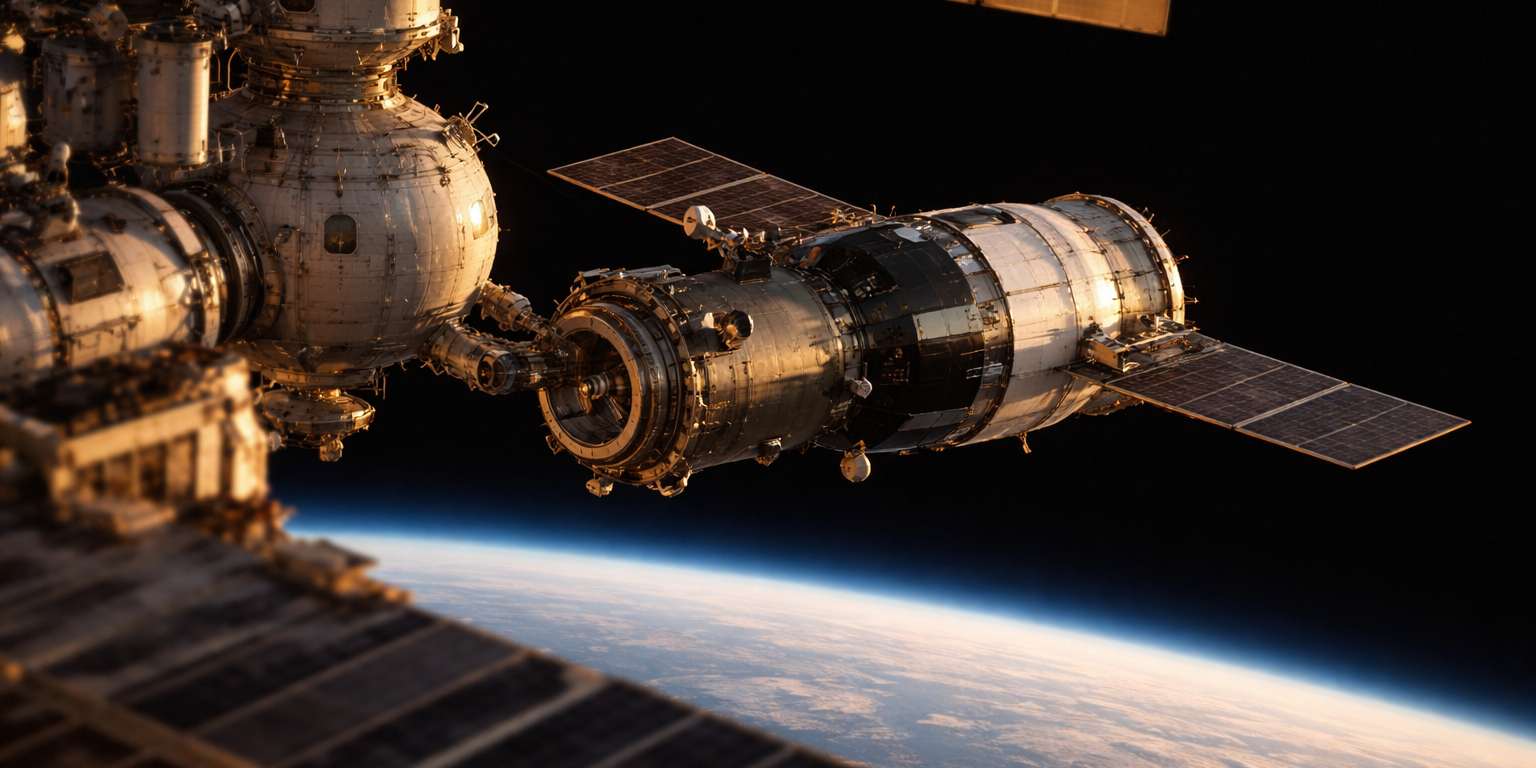
SpaceX's Starship program carries the highest capital intensity and the longest development cycle. The vehicle's first orbital flight in early 2026 validated the heat shield and demonstrated controlled reentry, but regular cargo missions require demonstrating rapid reusability—the economic premise underpinning the entire system. SpaceX aims for monthly launches by year-end, a cadence that would begin amortizing the billions invested in launch infrastructure and vehicle production. NASA has contracted Starship as the lunar lander for Artemis missions, with the first crewed landing scheduled for 2028, contingent on in-orbit refueling demonstrations planned for 2027. The company is also developing a cargo variant for commercial satellite deployment and point-to-point Earth transport, though the latter faces regulatory complexity around overland flight paths and noise abatement. For the robotics industry, Starship matters primarily as an enabler of off-world manufacturing and resource extraction scenarios that remain speculative but inform long-term R&D roadmaps at companies building systems for extreme environments.
The semiconductor dimension connects these efforts through supply chain dependencies. Tesla relies on NVIDIA GPUs for training and AMD chips for inference, but has developed its own Dojo supercomputer architecture to reduce reliance on external suppliers for AI workloads. xAI's Colossus cluster uses NVIDIA H100 GPUs acquired during a period of relative supply availability in late 2025, a stockpile that insulates the company from allocation constraints affecting competitors. Musk has publicly criticized semiconductor lead times and lobbied for domestic manufacturing expansion, though Tesla has not announced plans to design or fabricate its own logic chips beyond the existing FSD computer.
What to Watch: Tesla's Q4 earnings call will likely provide the first concrete deployment numbers for Optimus in commercial settings. Neuralink's clinical trial enrollment rate, disclosed through ClinicalTrials.gov updates, will signal whether the company can scale beyond single-digit patient numbers before year-end. SpaceX's launch manifest through December will show whether Starship achieves the monthly cadence required for NASA's lunar timeline to remain viable. Watch also for any FSD software updates that incorporate learnings from xAI's Colossus training runs, as cross-pollination between divisions is where Musk's portfolio structure yields tangible advantages.