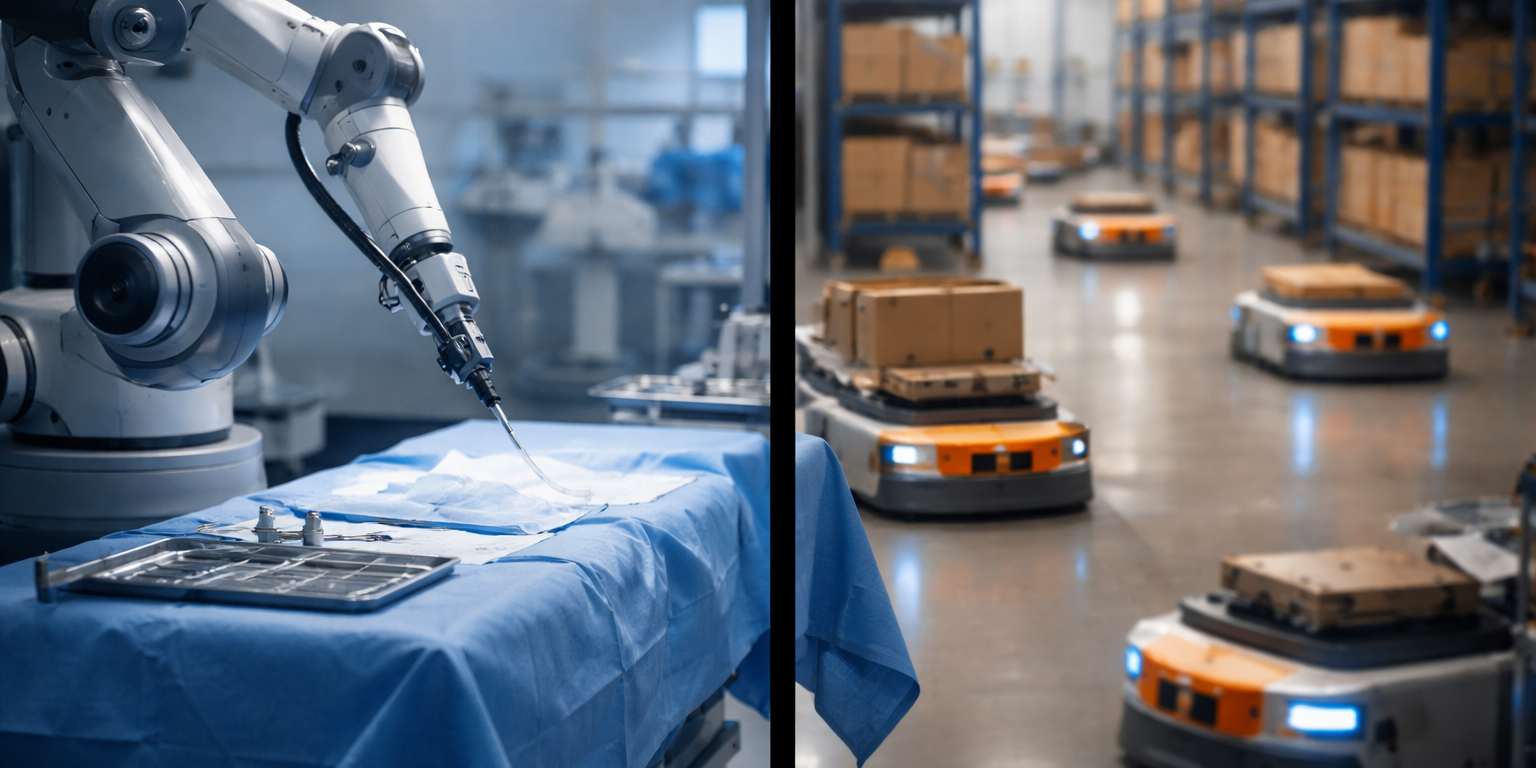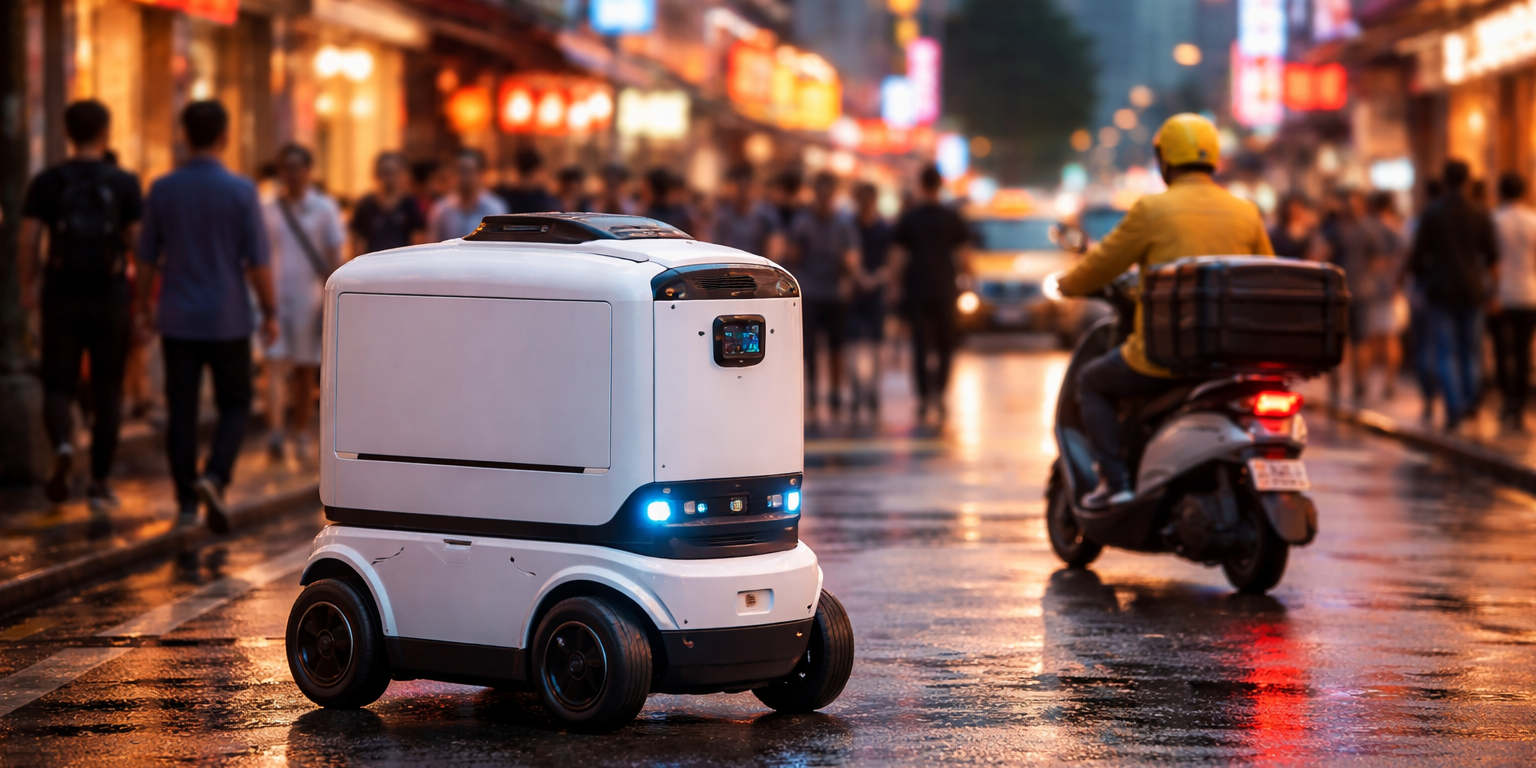
Meituan operated 8,400 autonomous delivery vehicles across 47 Chinese cities by June 2026, according to company filings, making the food delivery giant the country's largest commercial deployer of ground-based delivery robots. JD.com follows with 3,200 autonomous units including warehouse robots, delivery drones, and last-mile vehicles in active service across its logistics network. ByteDance and Baidu have each committed more than $800 million to robotics hardware development since early 2025, deploying prototype embodied AI systems and expanding robotaxi fleets in Beijing, Shanghai, Shenzhen, and Wuhan. The combined deployment represents a fundamental reorientation of China's internet economy toward physical infrastructure, a transition driven by saturating digital markets and government pressure to advance manufacturing capabilities.
The business case centers on labor costs and operational control rather than technological showcase. Meituan pays human delivery riders approximately 8 yuan per order in major cities, while autonomous delivery robots cost the company 2.4 yuan per delivery when amortized across their five-year operational lifespan, according to analysis from Beijing-based logistics consultancy China Transport Research. JD.com reported a 34 percent reduction in last-mile delivery costs in districts where autonomous vehicles handle more than 60 percent of orders. ByteDance's robotics division, established in March 2025, focuses on embodied AI agents capable of warehouse manipulation tasks, targeting integration with the company's TikTok e-commerce fulfillment operations. Baidu's Apollo robotaxi service logged 1.2 million paid rides in Q2 2026, generating approximately 18 million yuan in revenue, still well short of covering the estimated 240 million yuan quarterly operating cost.
Regulatory tailwinds have accelerated deployment timelines across all four companies. China's Ministry of Transport published autonomous delivery vehicle operating guidelines in December 2025, establishing standardized safety requirements and permitting frameworks for sidewalk robots, road-going delivery vehicles, and low-altitude cargo drones. Municipal governments in 23 cities designated autonomous delivery zones where vehicles operate without human safety monitors, reducing per-unit operating costs by eliminating the monitor salary of approximately 4,500 yuan per month. Meituan obtained unrestricted operating permits in six cities including Shenzhen and Hangzhou, allowing its yellow delivery robots to navigate pedestrian areas during peak hours. JD.com received approval for 200 kilograms maximum takeoff weight delivery drones in rural areas of Jiangsu and Sichuan provinces, enabling direct delivery to villages previously served only by consolidated drop points. ByteDance and Baidu benefit from preferential access to 5G network infrastructure and edge computing resources under national AI development programs, subsidizing the communications backbone their robotics platforms require.
Hardware partnerships reveal the component supply chain behind the deployment surge. Meituan sources lidar units from Hesai Technology and Robosense, paying approximately 1,200 yuan per sensor under volume contracts signed in January 2026. JD.com manufactures delivery robots in-house at a facility in Changzhou with 18,000 annual unit capacity, having invested 420 million yuan in the production line. ByteDance partnered with humanoid robot developer Unitree Robotics in April 2026, conducting trials of the G1 model in warehouse environments for pick-and-place operations. Baidu's Apollo platform uses Nvidia Orin chips for perception processing, procuring 15,000 units in the first half of 2026 at a reported cost of $450 per chip before tariffs. The capital intensity of scaling robotics operations contrasts sharply with the asset-light model that defined China's internet industry for two decades, pressuring gross margins even as the companies gain operational leverage.
The strategic logic extends beyond cost reduction into data accumulation and platform control. Each autonomous delivery completes Meituan's visibility into demand patterns, traffic flows, and infrastructure constraints at granular resolution, feeding predictive models that optimize restaurant partnerships and delivery routing. JD.com integrates robotics data with its supply chain management platform, offering manufacturers and brands real-time logistics capacity and dynamic pricing for expedited delivery. ByteDance positions embodied AI as the physical layer for its e-commerce ambitions, aiming to reduce reliance on third-party logistics providers who control fulfillment speed and own customer touchpoints. Baidu frames robotaxi deployment as infrastructure for its mapping, navigation, and local services businesses, with ride data enhancing the accuracy of its location-based advertising products. The hardware becomes the sensor network for expanded platform services rather than a standalone profit center, a calculation that justifies continued investment despite near-term losses.
What to Watch: Meituan plans to reach 15,000 deployed delivery robots by December 2026, which would require manufacturing and deploying 1,100 units monthly through year-end. JD.com will release Q3 2026 earnings in October, expected to break out robotics operating costs as a separate line item for the first time following investor pressure for transparency. ByteDance's humanoid warehouse trials conclude in September 2026 with a decision on whether to order 500 production units from Unitree or pivot to alternative manipulation systems. Baidu's robotaxi unit faces a November 2026 deadline to demonstrate a path to quarterly profitability or risk budget cuts under company-wide efficiency mandates.