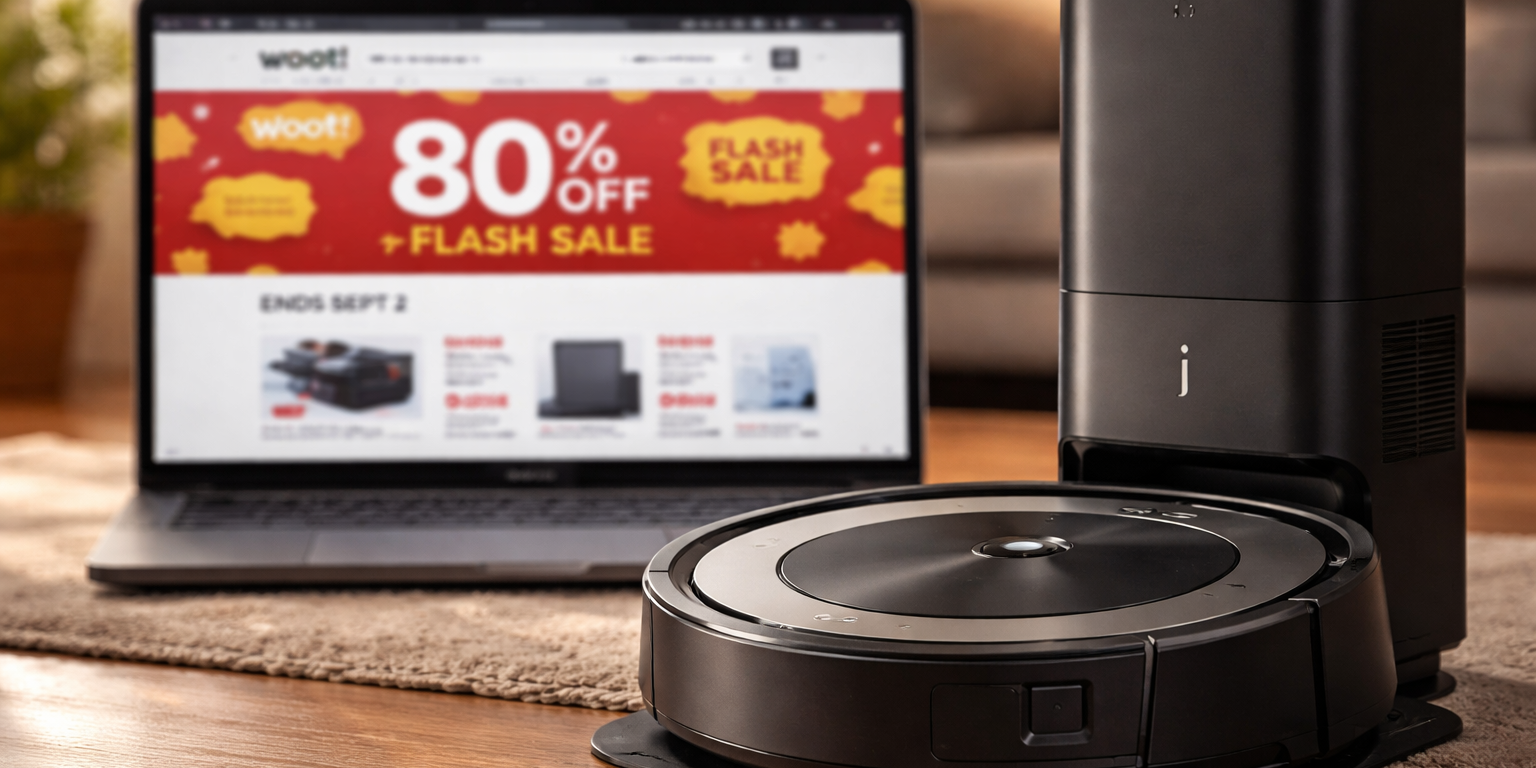
Woot, the Amazon-owned discount marketplace, priced the refurbished iRobot Roomba j7+ at $119.99 through September 2, marking an 80 percent reduction from the original $599 launch price and undercutting even Black Friday pricing for new units. The sale includes the vacuum's Clean Base automatic dirt disposal system, originally marketed as a premium differentiator when the j7+ debuted in September 2021. A 90-day iRobot warranty covers the refurbished units, substantially shorter than the standard one-year coverage on new hardware, raising questions about expected longevity and component availability for a model now five years into its product cycle.
The dramatic markdown arrives as iRobot navigates deteriorating financials and intensifying competition from Chinese manufacturers including Roborock, Ecovacs, and Dreame Technology. Second-quarter 2026 earnings, released August 1, showed revenue declining 22 percent year-over-year to $187 million, with the consumer robot vacuum segment hit hardest as average selling prices compressed across the category. CEO Gary Cohen, who took the helm in May 2024 following the failed Amazon acquisition, announced a restructuring plan in June that eliminated 350 positions and consolidated manufacturing partnerships in Malaysia. The Roomba j7+ relies on obstacle detection through front-facing cameras and proprietary machine learning models trained to identify common floor hazards including cables, pet waste, and shoes. But those computational advantages have narrowed considerably since 2021. Roborock's S8 MaxV Ultra, launched in March 2026 at $1,399, incorporates dual cameras, structured light sensing, and LiDAR in a package priced only marginally above iRobot's original j7+ positioning while delivering faster mapping and more aggressive navigation.
The clearance pricing also reflects a broader reset in consumer expectations for robotic vacuum capability and pricing. Shark's Matrix Plus, available at Costco for $399 as of mid-August, delivers self-emptying and mapping functions that required $600-plus investment in 2021. Wyze entered the category in April 2026 with a $249 model that includes basic room mapping and app control, compressing margins for established players. Meanwhile, premium tier competition intensified when Dyson's 360 Vis Nav reached U.S. retail in February 2026 at $1,199, targeting the high end where iRobot once commanded unchallenged positioning. Distribution through Woot rather than iRobot's direct channels or traditional retail suggests inventory management priorities over brand positioning. Amazon acquired Woot in 2010 specifically to liquidate overstock, returned merchandise, and refurbished goods at aggressive discounts. The platform typically sources refurbished electronics through third-party refurbishers or manufacturer warranty returns. For iRobot, the channel choice indicates excess j7+ inventory that couldn't clear through standard promotional cadences at Target, Best Buy, or Amazon's main marketplace even with conventional discounting. The 90-day warranty, administered by iRobot directly according to the listing, represents the minimum legally required coverage in most U.S. states for refurbished electronics.
Robotics industry analysts monitoring the consumer segment view the pricing as confirmation that hardware commoditization continues accelerating in categories where Chinese contract manufacturers can replicate core functionality. Ben Bajarin, principal analyst at Creative Strategies, noted in an August 12 report that lidar sensors now cost under $8 in volume production, down from $45 in 2020, eliminating the cost moat that justified premium positioning for early-generation mapping vacuums. Battery management systems, brushless motors, and ARM-based navigation processors similarly compress 15-20 percent annually in bill-of-materials cost, according to TechInsights teardown data from July. For iRobot, founded in 1990 by MIT roboticist Rodney Brooks and listing publicly in 2005, the challenge extends beyond component costs. The company invested heavily in PrecisionVision obstacle recognition, accumulating a claimed 120 million labeled training images by mid-2024. But that data advantage degrades as competitors license comparable computer vision models from Chinese AI firms or train proprietary algorithms using synthetic data generation techniques that bypass manual labeling costs. Investors have responded accordingly; iRobot shares traded at $8.42 on August 22, down from $14.10 before the August 1 earnings report and far below the $61 price Amazon offered in the aborted acquisition.
What to Watch: Monitor iRobot's third-quarter guidance when the company reports November 2026 earnings, particularly commentary on inventory levels and promotional intensity heading into the holiday season. Track whether Roborock or Ecovacs announce U.S. market share gains in October NPD data, typically released mid-month. Watch for potential strategic alternatives including private equity acquisition interest or licensing of iRobot's computer vision datasets to automotive or logistics robotics companies, either of which could surface in regulatory filings by year-end.