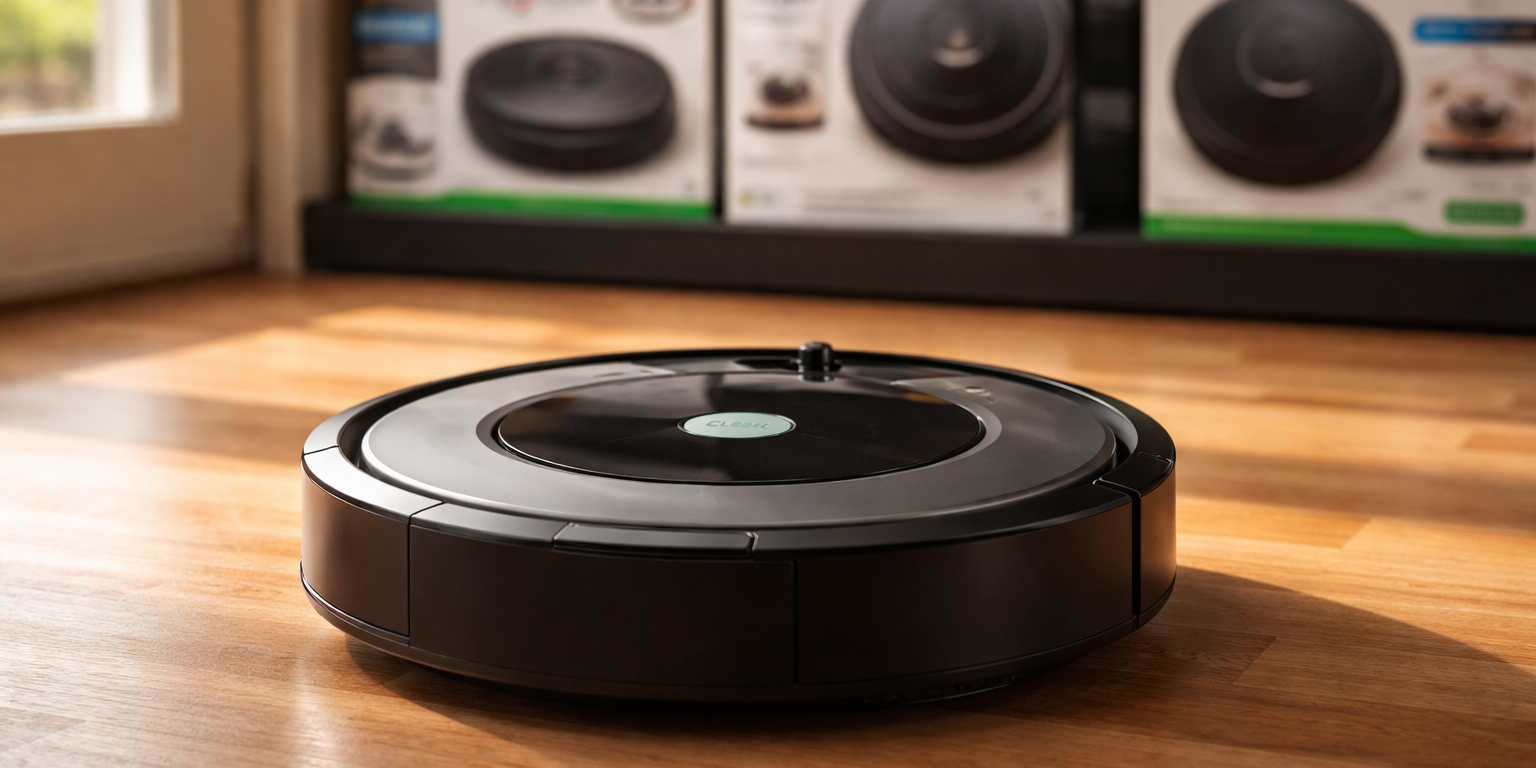
Amazon slashed the Roomba 505X robot vacuum to $149.99 on Monday, a 50 percent reduction from its $299 list price and the steepest discount applied to an iRobot mid-tier model since the company's ownership restructuring last year. The timing coincides with Prime Day preparatory sales cycles, though the depth of the markdown reflects pressure beyond seasonal retail strategy. Five years ago, iRobot commanded 68 percent of the U.S. robot vacuum market. By the end of 2025, that figure had contracted to 41 percent, according to Circana point-of-sale data, as Chinese manufacturers flooded retail channels with sub-$200 units equipped with obstacle avoidance and room mapping once reserved for $600-plus platforms.
The 505X occupies an awkward position in iRobot's lineup. Introduced in late 2024 as a refresh of the aging 500 series, it lacks the VSLAM navigation present in the company's j-series and i-series robots, relying instead on a gyroscope-assisted random navigation pattern iRobot calls iAdapt 2.0. Suction power sits at 600 pascals, roughly half that of competing models from Roborock and Dreame shipping at similar price points. Runtime reaches 90 minutes on a full charge, adequate for apartments but marginal for homes exceeding 1,200 square feet. The unit does include iRobot's Dirt Detect acoustic sensor array, which identifies concentrated debris and triggers focused cleaning passes, a feature the company has refined across seventeen years of floor care deployments. But without app-based room selection or no-go zones, the 505X appeals primarily to first-time buyers unwilling to manage smartphone interfaces, a demographic that has proven smaller than iRobot projected when positioning the refresh.
The company's challenges trace to the August 2023 announcement that Amazon would acquire iRobot for $1.4 billion, a deal European regulators blocked fourteen months later over concerns about data integration between Alexa-enabled devices and mapping robots. Amazon walked away in December 2024, triggering a $94 million breakup payment. iRobot laid off 31 percent of its workforce in the aftermath and sold a controlling stake to Bamboofun Group, a Shenzhen-based distributor, for undisclosed terms in March 2025. The transaction left CEO Gary Cohen, who had orchestrated the Amazon sale, out of the executive suite. Current leadership under interim chief Arun Nayar has prioritized cost reduction over platform innovation, according to two engineers who departed the Bedford, Massachusetts headquarters in the past eight months and spoke on condition of anonymity. One described internal roadmaps extending only through Q2 2027, an unusually short planning horizon for a company that once telegraphed product strategies three years forward.
Broader floor care robotics trends have also shifted beneath iRobot's positioning. LiDAR-based navigation, which enables robots to map rooms in real time and clean in efficient back-and-forth rows rather than chaotic bouncing patterns, has dropped below $25 in bill-of-materials cost, down from $75 in 2021. Suppliers including Xiaomi's Roborock division and Ecovacs now ship LiDAR as standard even in $179 models, while iRobot reserves the technology for units priced above $449. Auto-empty docking stations, once exclusive to premium tiers, now appear in $249 bundles from brands like Eufy and Shark. The consumer expectation reset is stark: features iRobot pioneered and monetized at high ASPs have become table stakes, forcing the company either to compete on price with thinner-margin competitors or retreat upmarket into niches like pet hair specialization and allergen-certified filtration. The 505X discount suggests iRobot is testing the former, though quarterly earnings data due later this month will clarify whether volume gains offset per-unit revenue declines. Analysts at Keybanc Capital Markets estimate iRobot's North American ASP fell 18 percent year-over-year in Q1 2026, the sharpest drop since the company went public in 2005.
What to Watch: iRobot's Q2 2026 earnings, expected by July 28, will reveal whether promotional pricing drove unit volume gains or simply accelerated margin erosion. Bamboofun Group's plans for the brand remain opaque; any signal of renewed R&D investment or platform consolidation will clarify whether iRobot remains a going concern or becomes a badge-engineered extension of its parent's distribution network. Also monitor Amazon's Prime Day floor care deals starting July 16, particularly pricing on Roomba j-series models, which will indicate whether the 505X markdown was a one-off inventory clear or part of a sustained repositioning across the portfolio.