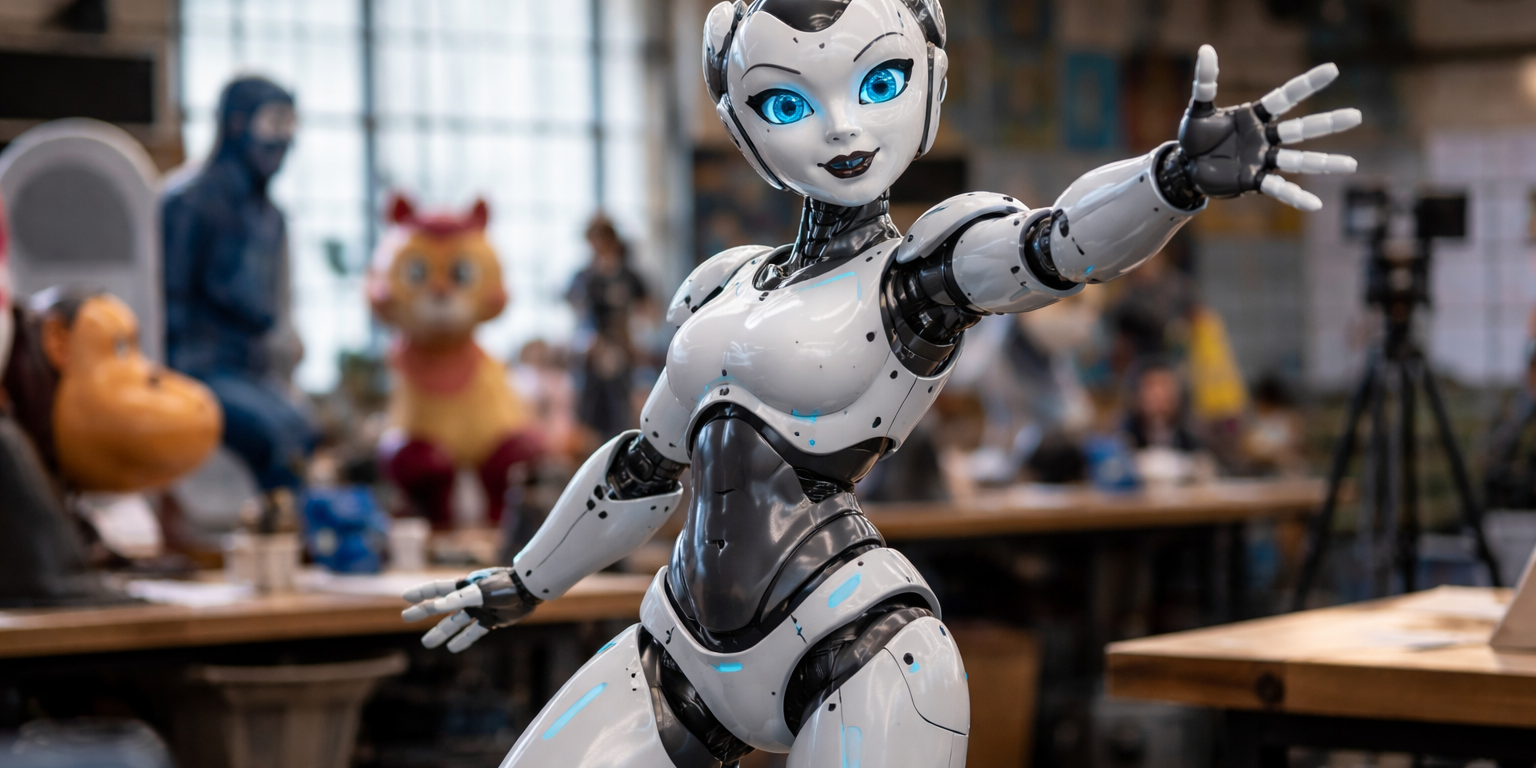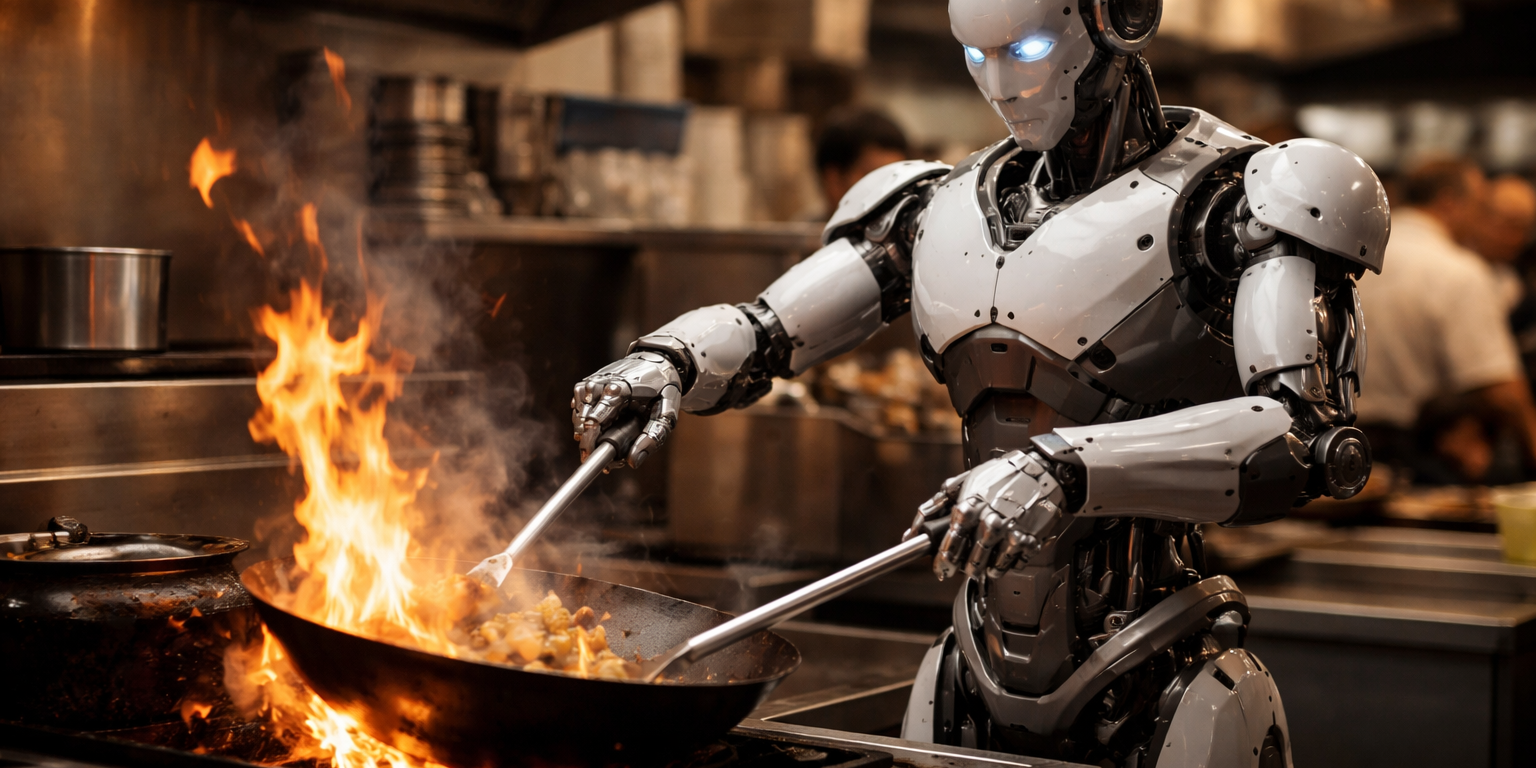
InSpace Technology demonstrated a bipedal humanoid designed to operate commercial fryers and griddles at its June 30 product event, becoming the first Chinese robotics startup to target restaurant kitchens with human-form hardware. The company, founded by Tang Mu following his departure from Xiaomi's ecosystem investment division, showed the robot handling woks in a test kitchen setup and announced plans to begin production in December. Tang declined to specify unit pricing but said the company had secured pilot commitments from three regional restaurant chains operating a combined 180 locations across Guangdong and Zhejiang provinces.
Tang spent six years at Xiaomi before launching InSpace in early 2024, initially focused on warehouse automation before pivoting to food service in mid-2025. The shift followed field research across 140 commercial kitchens in eight Chinese cities, where Tang's team documented a 23 percent average staff vacancy rate in back-of-house positions and average hourly wages that had climbed 41 percent since 2021. Those economics, Tang argued at the launch, created a viable business case for humanoid deployment in environments previously considered too complex and unstructured for automation. The three robots unveiled span different kitchen roles: the bipedal humanoid for high-heat cooking stations, a mobile unit for ingredient transport and prep work, and a countertop system for beverage assembly. All three share a common control architecture and vision system developed in-house.
The humanoid stands 165 centimeters and weighs 58 kilograms, matching the approximate size of an average kitchen worker to fit existing station layouts without facility modification. It features 42 degrees of freedom concentrated in the arms and hands, with particular attention to wrist articulation for the flipping and stirring motions required at wok stations. InSpace equipped the robot with thermal-resistant end effectors rated to 280 degrees Celsius and integrated what Tang described as a multimodal perception system combining stereo vision, force sensing, and thermal imaging to track food doneness. The company demonstrated the robot cooking three dishes during the event: twice-cooked pork, kung pao chicken, and fried rice. Tang acknowledged the robot currently operates at roughly 60 percent of human speed but said internal targets call for 85 percent equivalence by production start. InSpace employs 47 people, including 12 hired from Alibaba's former robotics division and five from the now-defunct Beijing-based humanoid startup Leju, which shut down in March after failing to secure Series A funding.
The food service robotics category has attracted limited humanoid development compared to warehouse and manufacturing applications, largely because kitchen work combines high dexterity requirements with exposure to heat, liquids, and grease in relatively small workspaces. Miso Robotics deployed single-task robotic arms at White Castle and Jack in the Box locations but has not pursued humanoid form factors. SoftBank-backed Bear Robotics focused on front-of-house service robots for table delivery. InSpace's approach of building a general-purpose humanoid that can rotate between stations represents a higher technical threshold but potentially wider deployability if the company achieves its reliability and speed targets. Tang said the three pilot restaurant chains plan to deploy between two and four units each initially, focusing on dinner rush periods when staffing shortages hit hardest. Success metrics will center on mean time between failures and actual throughput per hour compared to human baseline, not customer perception or novelty value.
What to Watch: InSpace plans to publicly name its three pilot restaurant partners in August and expects to share first deployment data in October, including failure rates and productivity benchmarks. Watch whether the company secures additional manufacturing capital before December—Tang confirmed InSpace is in active Series A discussions with two Shenzhen-based venture firms and one corporate strategic investor he declined to name. Also track any announcements from competing Chinese humanoid makers pivoting toward food service, particularly Ex-Robots and Fourier Intelligence, both of which have demonstrated kitchen-capable prototypes but not committed to commercial launches.