
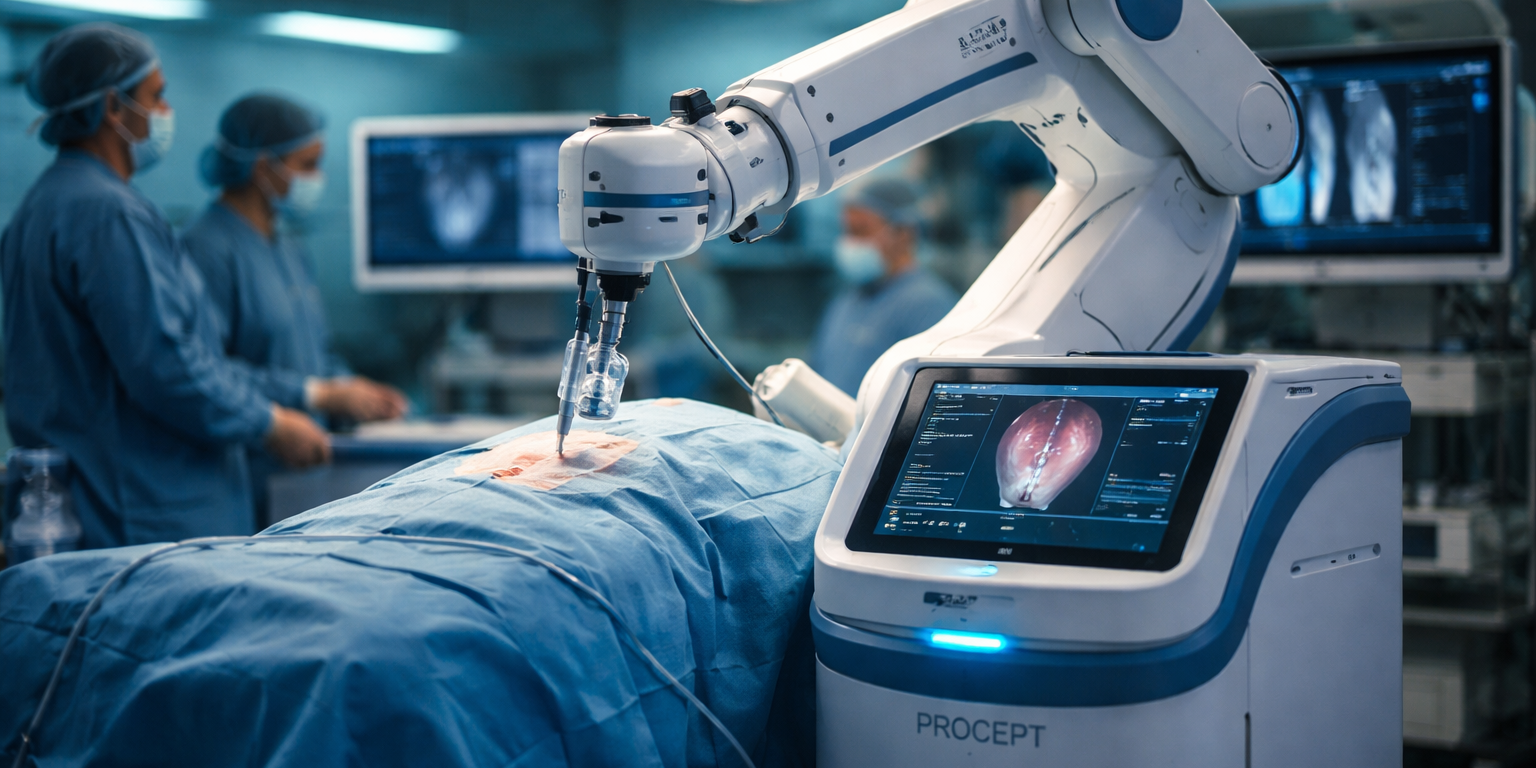
More than 350 hospitals worldwide now operate PROCEPT BioRobotics' AQUABEAM Robotic System for prostate procedures, a deployment figure the Redwood City company disclosed in its most recent quarterly update. The installed base represents a notable expansion for a surgical platform that targets benign prostatic hyperplasia, a condition affecting millions of men over 50 and creating what the company estimates as a $6 billion addressable market. PROCEPT shares have drawn attention from institutional investors tracking the medical robotics subsector, where reimbursement approval and clinical adoption timelines typically extend years beyond initial regulatory clearance. The system uses image-guided robotics to perform waterjet ablation, a technique distinct from the electrocautery and laser approaches that have dominated urology for decades.
PROCEPT went public in September 2021 at $18 per share and has weathered the volatility typical of pre-profitability med-tech firms navigating commercialization. The AQUABEAM platform received FDA 510(k) clearance in 2017, giving it a multi-year head start over competing robotic entrants in urology. That regulatory lead translated into procedure volume growth, with the company reporting thousands of cases performed annually across its installed base. Revenue per system depends heavily on procedure throughput and disposable handpiece utilization, metrics that vary widely by hospital size and urologist caseload. Analysts tracking the stock point to gross margins in the 60-70 percent range, consistent with other surgical robotics platforms where the razor-and-blade model generates recurring revenue from single-use instruments and accessories. The company manufactures in California and sources components from a mix of domestic and international suppliers, a supply chain structure it has refined as production volumes scale.
The surgical robotics landscape has grown more competitive since PROCEPT's initial market entry. Intuitive Surgical, the dominant player with its da Vinci platform, commands the vast majority of robotic-assisted procedures across multiple specialties but has not focused heavily on BPH treatment. Johnson & Johnson acquired Auris Health and has signaled intent to expand in endoscopy and urology. Medtronic continues developing its Hugo robotic-assisted surgery system, targeting procedures where cost and capital efficiency matter to hospital buyers. Smaller entrants including CMR Surgical in the UK and Asensus Surgical in the US compete on price and form factor. PROCEPT differentiates through its waterjet ablation mechanism, which preserves surrounding tissue and reduces certain complications associated with thermal energy. Clinical data supporting those claims has accumulated through peer-reviewed studies and real-world evidence registries, essential for winning over urologists trained on traditional resection techniques. Reimbursement remains a gating factor; Medicare and major private payers have established specific codes for the procedure, but rates and coverage policies vary by region and patient population.
Investor interest in PROCEPT reflects broader momentum in surgical robotics, a category where capital equipment sales, recurring revenue, and regulatory moats create attractive unit economics once scale is achieved. The company's financials show the typical pre-profitability profile: revenue growth in the double digits, operating losses as commercial and R&D investments run ahead of sales, and cash burn rates that necessitate periodic capital raises. Share price performance since the IPO has correlated closely with quarterly procedure volume updates and guidance revisions. Institutional ownership sits above 90 percent, with positions held by healthcare-focused funds and crossover growth investors. Short interest has fluctuated as traders debate the pace at which AQUABEAM can penetrate the installed base of urology practices and whether competitive threats from larger med-tech firms will compress margins. The stock trades on forward revenue multiples rather than earnings, standard for growth-stage medical device companies where GAAP profitability remains several years out. Analyst price targets span a wide range, reflecting differing assumptions about market penetration rates and the timeline to breakeven.
What to Watch: PROCEPT's Q3 2026 earnings call in early November should disclose updated procedure volumes and any new hospital contracts signed during the summer. Monitor CMS reimbursement updates in the Federal Register for changes to AQUABEAM payment codes, typically published in late summer for the following calendar year. Watch for clinical trial readouts or registry data presentations at the American Urological Association annual meeting in April 2027, where comparative effectiveness studies often influence adoption. Track competitor announcements from Intuitive Surgical and Medtronic regarding urology-specific platforms or partnerships with device makers targeting the same patient population.