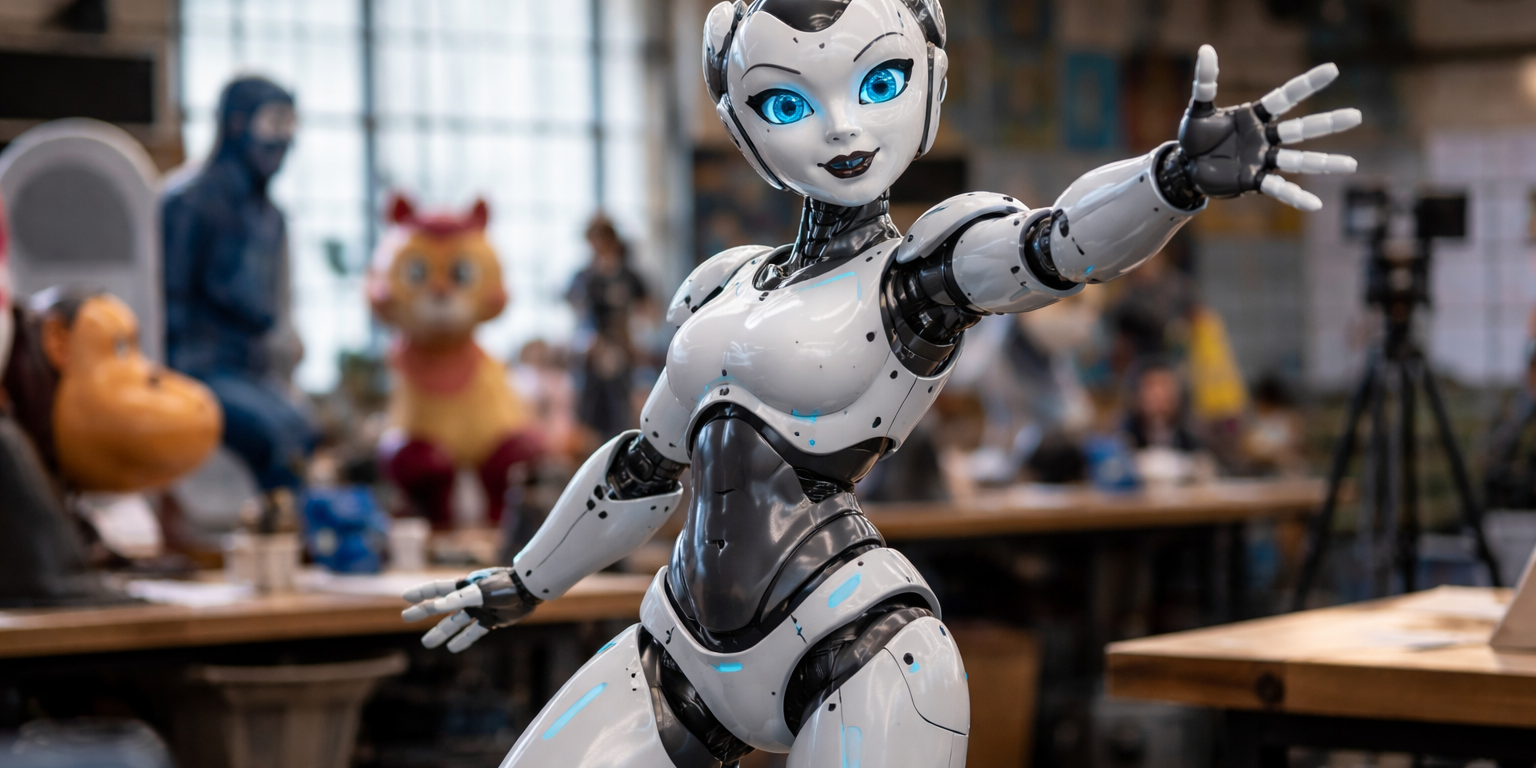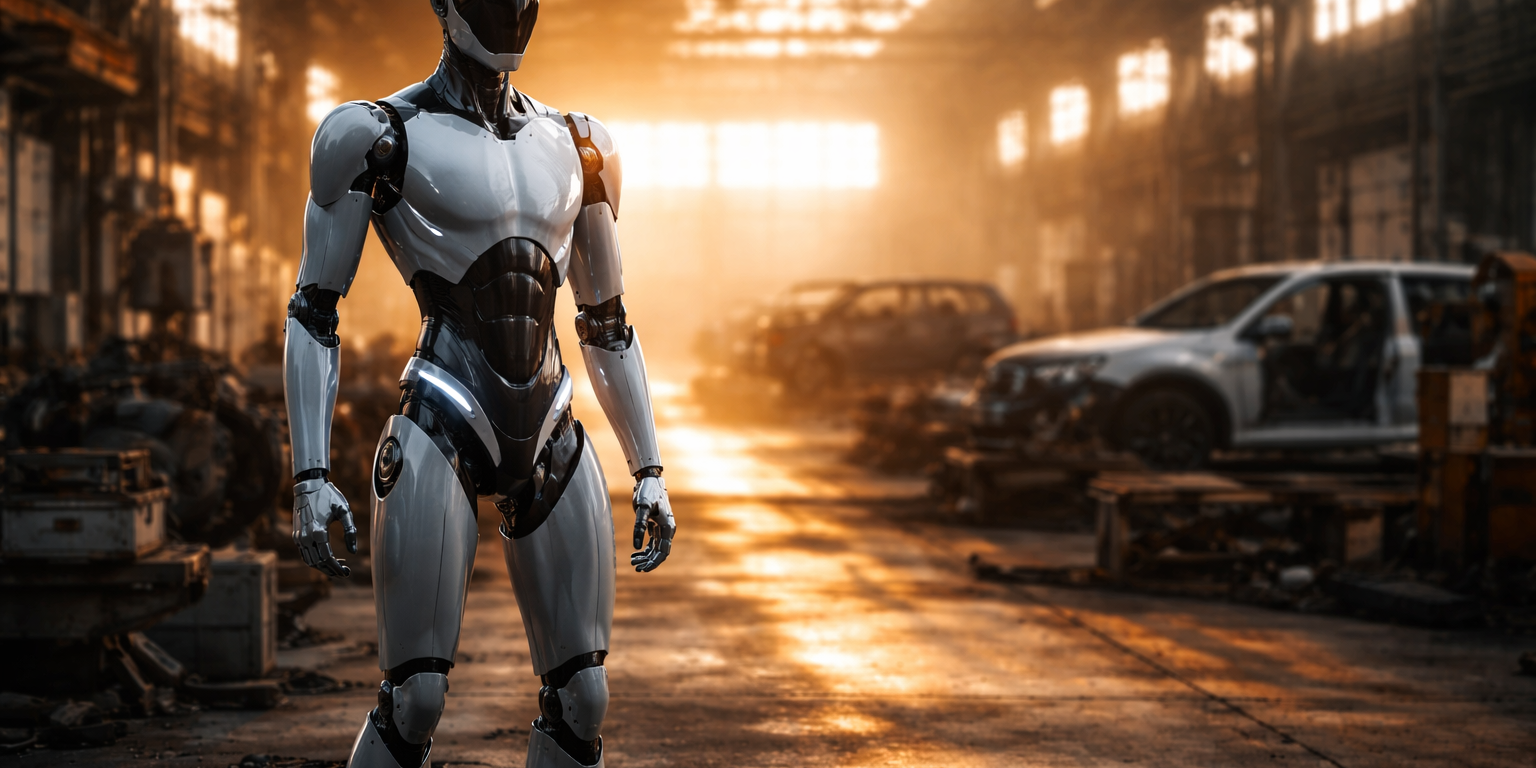
Faraday Future delivered fewer than ten electric vehicles in twelve years of operations. Now the company believes humanoid robots will rescue it from insolvency. FF announced plans to manufacture and sell humanoid robots at $90,000 per unit, targeting deployment in industrial and commercial settings by early 2027. The announcement arrives as the company faces mounting debt, a NASDAQ delisting warning, and a market capitalization that has collapsed from its $3.4 billion SPAC-era peak to under $50 million. The pivot represents either a desperate Hail Mary or a recognition that FF's manufacturing capabilities, such as they are, might find better application in robotics than automotive. Either way, the move signals how far the EV startup has fallen from its original vision of challenging Tesla in the luxury electric vehicle market.
The company's automotive track record offers little confidence for this transition. FF began operations in 2014 with backing from Chinese tech billionaire Jia Yueting, promising a flagship electric crossover called the FF 91. That vehicle entered production in 2023, nearly six years behind schedule. Total deliveries through mid-2026 number in the single digits. A partnership with Geely, announced with fanfare in 2021, evaporated within eighteen months. Another collaboration with Chinese automaker The9 similarly fell apart. Manufacturing at FF's Hanford, California facility has been sporadic at best, with multiple production pauses due to component shortages and cash flow problems. The company has cycled through five CEOs since 2017. Against this backdrop, FF's leadership now argues that humanoid robots represent a more achievable near-term revenue opportunity than scaling automotive production.
Details on the humanoid platform remain sparse. FF has not disclosed whether it developed the technology internally, licensed it from an existing robotics firm, or acquired a smaller startup with relevant IP. The $90,000 price point positions the robot above Boston Dynamics' Spot quadruped, which sells for roughly $75,000, but below what most analysts expect for first-generation bipedal humanoids from established players like Figure AI or Agility Robotics. Tesla's Optimus, when it reaches production, is expected to target a sub-$30,000 price in volume. FF claims its humanoid will stand approximately 5 feet 8 inches tall, possess 40 degrees of freedom, and feature AI-powered vision systems for navigation and object manipulation. Target applications include warehouse logistics, manufacturing assembly lines, and hospitality services. The company projects it can achieve positive gross margins on hardware within the first production year, an optimistic timeline given that even well-capitalized robotics startups typically burn through multiple funding rounds before reaching breakeven.
The robotics industry has seen a flood of new entrants over the past eighteen months, many with deeper pockets and more relevant experience than FF. Figure AI closed a $675 million Series B in February 2024 at a $2.6 billion valuation, with backing from Microsoft, OpenAI, NVIDIA, and Amazon. Agility Robotics opened a 70,000-square-foot manufacturing facility in Salem, Oregon, in late 2023, designed to produce 10,000 Digit robots annually. Sanctuary AI and Apptronik have both secured partnerships with major automotive manufacturers for pilot deployments. 1X Technologies, backed by OpenAI, delivered its first EVE humanoids to enterprise customers in early 2024. These companies have been building toward commercial humanoid robots for years, refining hardware and control systems through thousands of hours of real-world testing. FF, by contrast, has no demonstrated expertise in robotics, no disclosed partnerships with AI labs or sensor suppliers, and no capital runway to sustain the multi-year development cycles that characterize this space. The company's most recent quarterly filing showed $12 million in cash against $200 million in current liabilities.
Investors who have tracked FF's trajectory see the humanoid announcement as a last-ditch effort to generate interest before the company runs out of options. NASDAQ issued a delisting notice in April 2026 after FF's stock traded below $1 for thirty consecutive days. The company has until October to regain compliance or face removal from the exchange. FF's stock, which trades under the ticker FFIE, closed at $0.34 on June 25, down from $2.10 at the start of the year. Short interest exceeds 40% of the float. Meanwhile, the EV business continues to hemorrhage cash. FF reported a net loss of $180 million in Q1 2026 on revenue of just $3.2 million, nearly all of it from service contracts and deposits rather than vehicle sales. The company has laid off approximately 60% of its workforce since 2023. Remaining employees are concentrated at the Hanford facility and a small office in Los Angeles. Whether FF can attract the robotics engineers, AI specialists, and manufacturing talent required to bring a humanoid robot to market while simultaneously keeping its automotive operations on life support remains the central question. The company has not announced any new funding, though sources familiar with the matter suggest FF is in discussions with Chinese investors about a potential capital infusion tied to the robotics initiative.
What to Watch: FF must demonstrate actual hardware by Q4 2026 to maintain any credibility with investors and potential customers. Look for partnerships or licensing deals that might reveal where the technology actually originated. Track whether any established robotics firms comment on FF's entry, and whether the company can secure enough bridge financing to avoid bankruptcy before year-end. NASDAQ delisting deadline falls in October, which could force a reverse split or accelerated fundraising timeline.