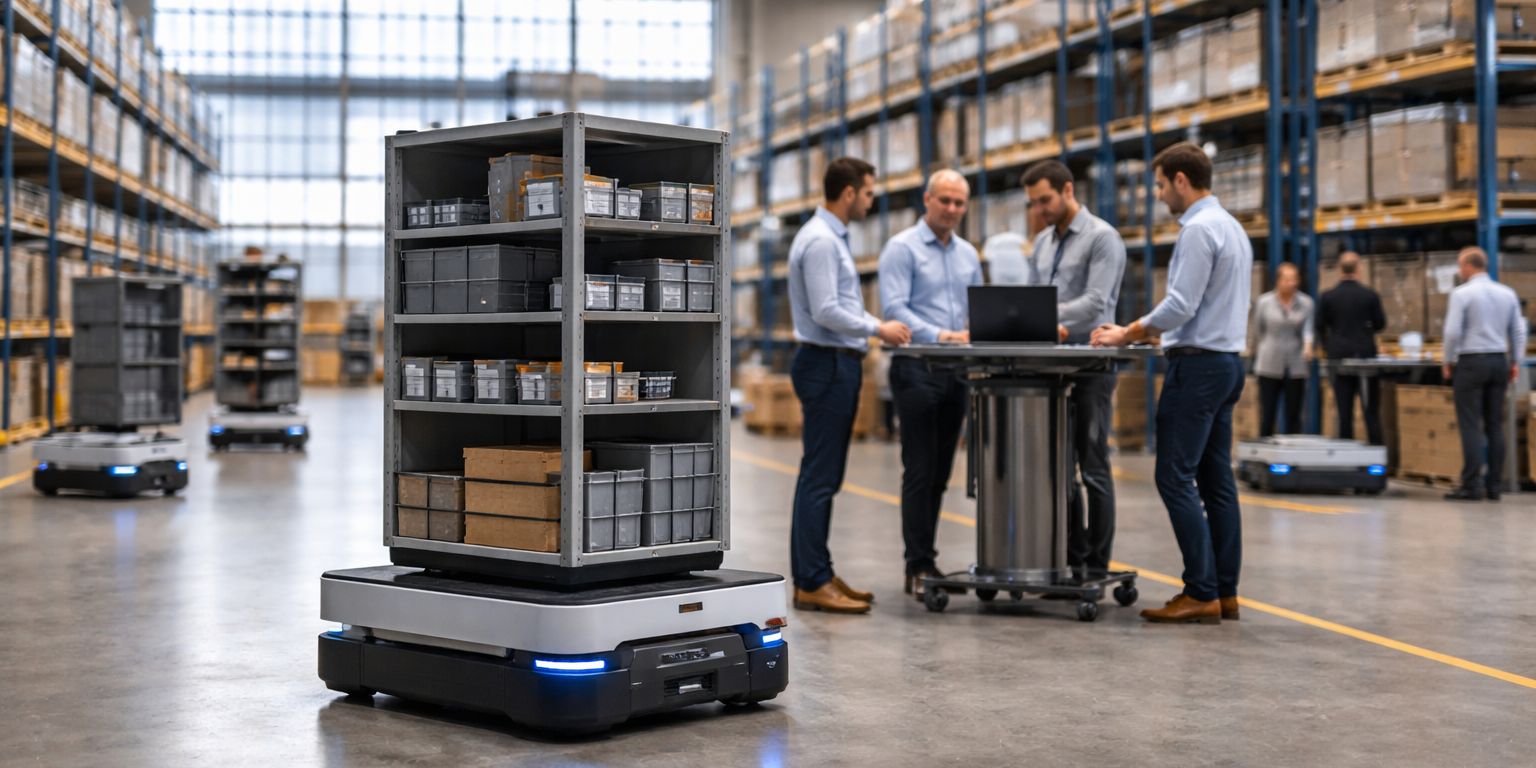
Fifty distribution centers across North America and Europe are now running Honeywell International's warehouse orchestration platform, a software layer the company released in mid-2025 that coordinates autonomous mobile robots, vision-guided picking systems, and inventory analytics under a single operational interface. The rollout, which began in the third quarter of 2025 and accelerated through the first half of 2026, represents Honeywell's most aggressive push into warehouse automation software since acquiring Intelligrated for $1.5 billion in 2016. The platform doesn't replace existing warehouse management systems. Instead, it sits between the WMS and the robots themselves, translating high-level inventory commands into robotic task assignments while balancing throughput, energy consumption, and maintenance schedules in real time. Early deployments report 18 to 23 percent improvements in order fulfillment speed and 12 to 15 percent reductions in per-unit handling costs, according to data Honeywell shared with analysts in May.
The strategic shift matters because Honeywell is betting on software margins rather than hardware volume. The company does not manufacture the robots running inside these warehouses. It integrates machines from vendors like Zebra Technologies, Locus Robotics, and Körber, then layers its own orchestration logic on top. That positions Honeywell as the system architect rather than the component supplier, a role that typically commands higher gross margins and stickier customer relationships. The platform charges a per-robot licensing fee, plus annual support contracts indexed to the number of autonomous units under management. For a typical 200,000-square-foot facility running 40 autonomous mobile robots, the annual software cost runs between $180,000 and $250,000, depending on feature set and support level. Honeywell declines to break out platform revenue separately, but executives told investors in April that the warehouse automation segment grew 31 percent year-over-year in the first quarter of 2026, driven primarily by software and services rather than hardware sales.
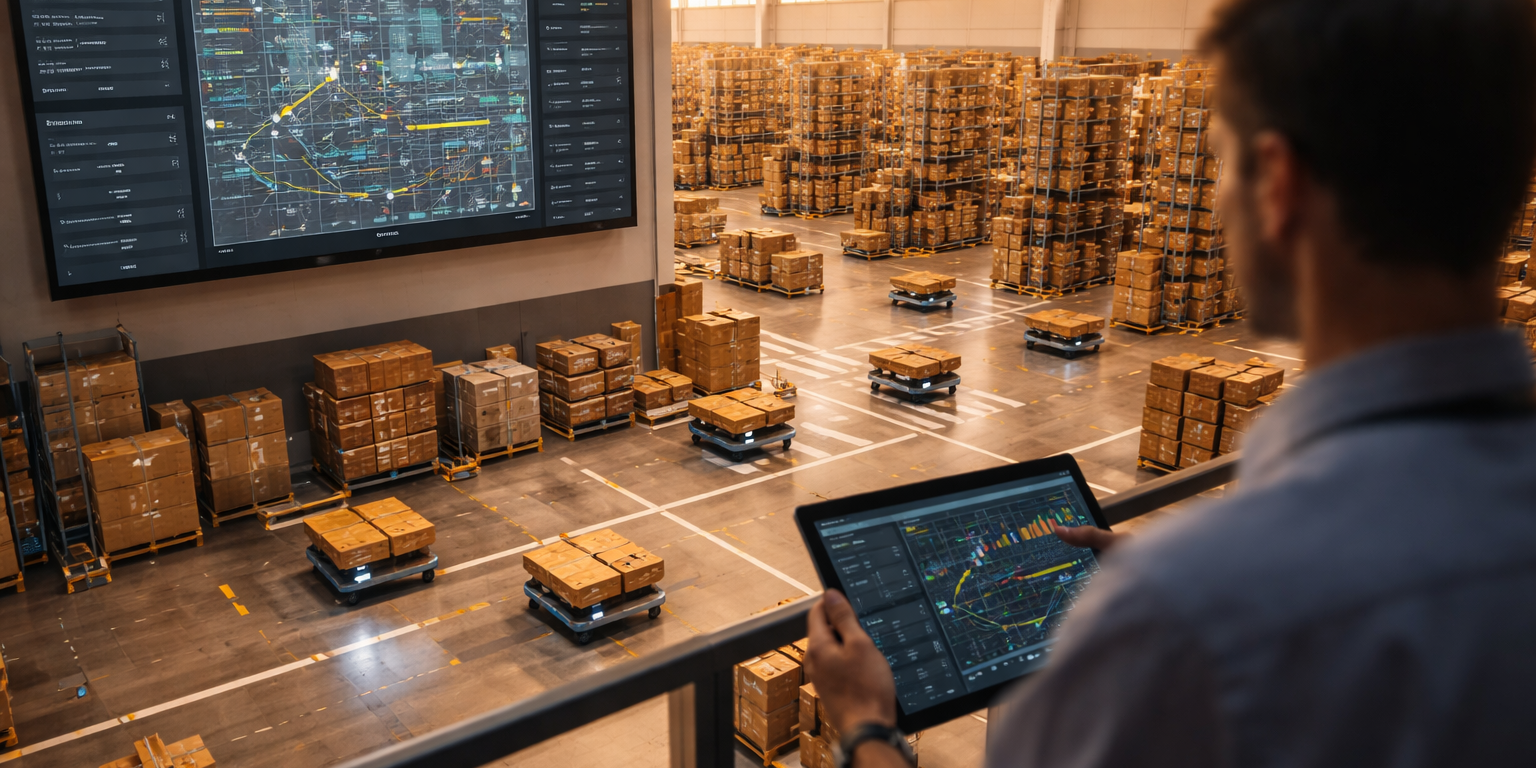
The technical architecture relies on digital twin modeling and reinforcement learning to optimize robot routes and task assignments. Each facility runs a virtual replica of its physical layout, updated in real time with RFID tag reads, vision system inputs, and robot telemetry. The orchestration engine simulates hundreds of task sequences per second, scoring each for time, energy cost, and collision risk before issuing commands. Machine learning models trained on historical data predict congestion hotspots and preemptively reroute robots to secondary pathways. The system also manages battery charging schedules, pulling robots off the floor for recharging based on predicted workload rather than fixed thresholds. Honeywell claims this predictive charging reduces the required robot fleet size by 8 to 12 percent compared to rule-based charging strategies. The platform integrates with SAP, Oracle, and Manhattan Associates warehouse management systems via REST APIs, and supports both cloud-hosted and on-premises deployment depending on customer data residency requirements.
Industry analysts see the orchestration platform as Honeywell's answer to a fragmented market where warehouse operators struggle to manage mixed fleets of robots from different vendors. A 2025 survey by Peerless Research Group found that 64 percent of logistics managers running autonomous mobile robots cited interoperability as their top technical challenge, ahead of uptime, accuracy, or workforce training. That fragmentation creates an opening for integrators who can abstract away vendor-specific APIs and present a unified control surface. Amazon has built proprietary orchestration for its own facilities, but that software remains internal. Körber and Dematic offer orchestration for their own hardware but lack the vendor-neutral positioning Honeywell is pursuing. The bet is that warehouse operators will pay a premium to avoid vendor lock-in, even if it means managing an additional software layer. Whether that preference holds as robot vendors improve their own interoperability standards remains an open question. Boston Dynamics and Zebra Technologies both announced plans in late 2025 to adopt common communication protocols for warehouse robots, which could reduce the need for third-party orchestration if widely adopted.
Honeywell's broader automation portfolio includes building management systems, industrial process controls, and aerospace avionics, giving it distribution reach that pure-play robotics software startups lack. The company employs over 4,000 field service technicians globally, many already servicing warehouse equipment for existing customers. That installed base provides a natural sales channel for the orchestration platform, particularly among customers running legacy Honeywell conveyor systems who want to add autonomous mobile robots without ripping out existing infrastructure. The platform supports phased deployments, allowing operators to start with a small robot fleet in one zone and expand incrementally as they validate performance. Honeywell is also bundling orchestration software with its industrial edge computing hardware, positioning the combined offering as an on-ramp to warehouse digitization. The company does not disclose margin data for the orchestration platform specifically, but software and services typically carry gross margins above 60 percent in Honeywell's automation divisions, compared to 35 to 40 percent for hardware.
What to Watch: Monitor whether Honeywell expands the orchestration platform beyond warehousing into manufacturing or retail environments, where similar multi-vendor robot coordination challenges exist. Track adoption metrics for the common communication protocols announced by Boston Dynamics and Zebra Technologies in late 2025, which could reduce demand for third-party orchestration if they gain traction. Watch for competing offerings from Siemens or Rockwell Automation, both of which have industrial software portfolios and could target the same vendor-neutral integrator role. Quarterly updates from Honeywell's Intelligent Devices segment will show whether software revenue growth continues to outpace hardware.