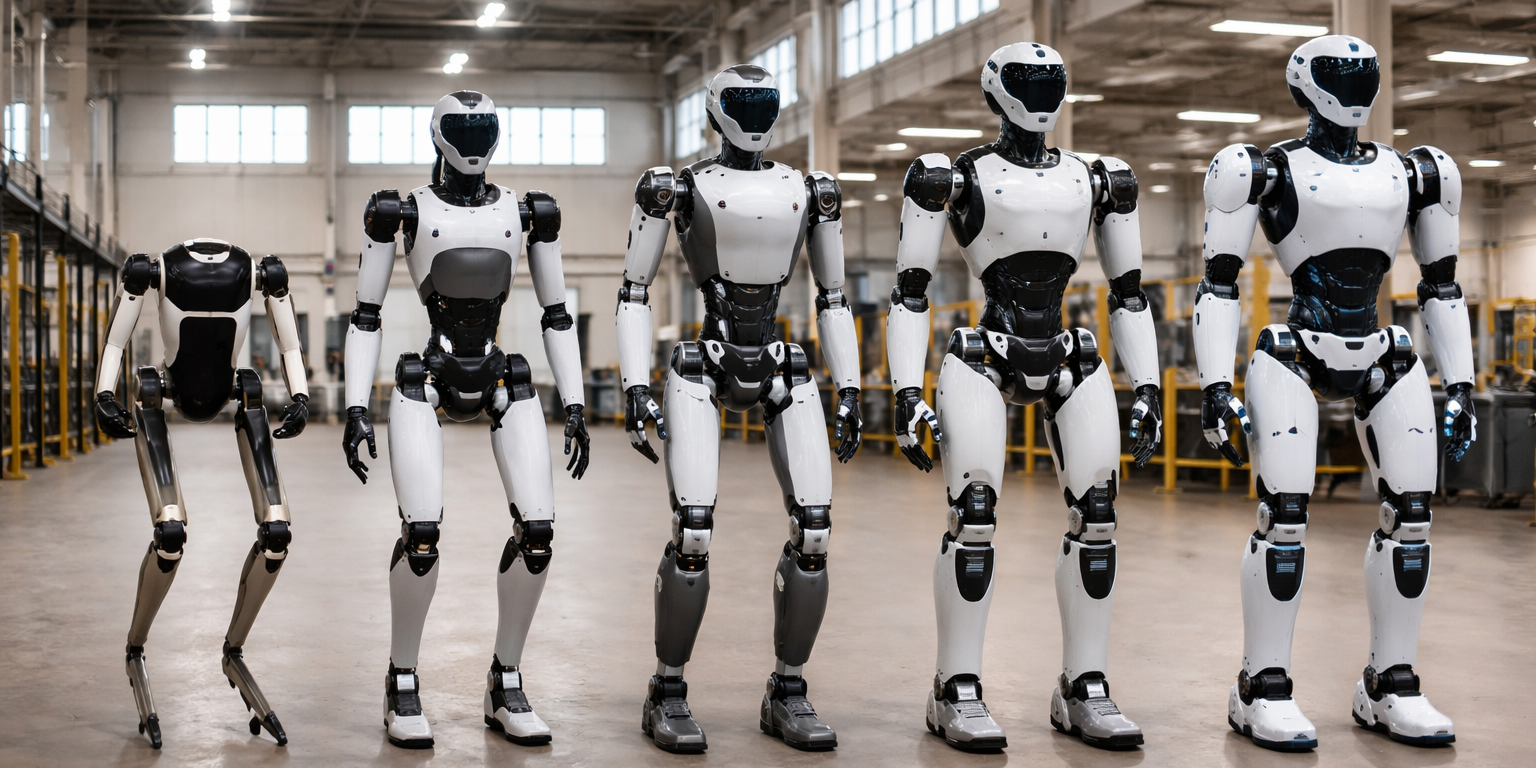
The humanoid robotics industry has solved the wrong problem first. Dozens of companies can now build machines that walk, balance, and grasp objects with impressive dexterity, but those same robots fail consistently at understanding what they're looking at in a typical living room. DIGITIMES analysts identified environmental sensing and scene interpretation as the primary bottleneck preventing general-purpose home robots from reaching commercial viability, a conclusion that reframes the entire development roadmap for the sector.
This assessment arrives as multiple robotics companies prepare consumer launches scheduled for late 2027 and 2028. Tesla continues development on Optimus for household tasks. Figure AI has partnered with BMW and OpenAI to accelerate manipulation capabilities. 1X Technologies raised $100 million in March 2026 specifically to fund home robot deployment. Yet none of these efforts directly address the core challenge DIGITIMES identified: robots that can physically perform tasks but cannot reliably determine which tasks need performing, where objects are located, or how to navigate spaces filled with unpredictable obstacles like children, pets, and furniture arrangements that change daily. The gap between motor function and environmental comprehension represents millions of engineering hours still required before any of these platforms can function autonomously in real homes.
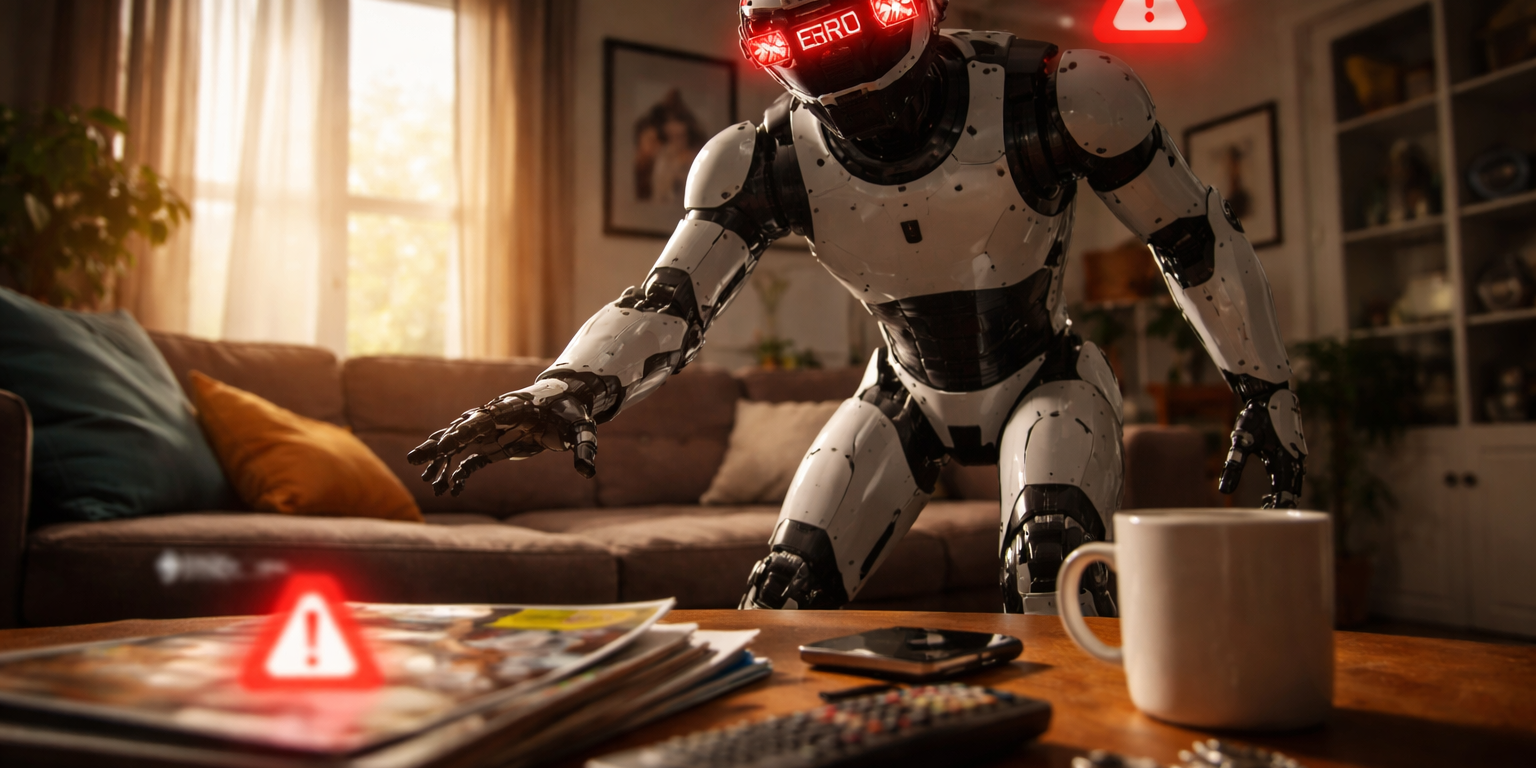
The sensing deficit manifests in multiple ways. Current vision systems struggle with variable lighting conditions, reflective surfaces, and transparent objects like glass tables or water glasses. Depth perception remains unreliable beyond three meters in cluttered spaces. Object recognition models trained on millions of images still misidentify items in unusual contexts or orientations. Most critically, robots lack the contextual reasoning to understand that a shoe on the floor might belong there while a coffee mug does not, or that a closed door likely means a room is off-limits while an open door invites entry. These failures occur despite compute power and sensor arrays that would have seemed extravagant just five years ago. Boston Dynamics solved locomotion on Spot through a decade of iteration on hydraulics and control algorithms. The sensing problem demands an equivalent investment, but in a domain where ground truth is far harder to establish and edge cases proliferate infinitely.
The market implications extend beyond hardware companies. NVIDIA's robotics simulation platform Isaac now emphasizes synthetic data generation for perception training, acknowledging that real-world data collection cannot scale fast enough. Intrinsic, the Alphabet robotics software subsidiary, pivoted in early 2026 toward scene understanding tools rather than manipulation primitives. Covariant raised $75 million in Series D funding in December 2025 specifically to expand its visual reasoning models beyond warehouse environments into domestic settings. Investment patterns show capital flowing toward perception and scene understanding at accelerating rates, even as locomotion and manipulation attract more public attention. The DIGITIMES analysis suggests this reallocation should intensify. A robot that moves perfectly but understands poorly creates more problems than it solves in a home environment, where the cost of errors includes damaged property, wasted time, and eroded user trust that may not recover.
What to Watch: Track whether Tesla's Optimus demonstration scheduled for fourth quarter 2026 showcases sensing capabilities or remains focused on manipulation tasks. Monitor Intrinsic's SDK releases through year-end for new scene understanding APIs that could standardize perception approaches across hardware platforms. Watch for acquisitions of computer vision startups by humanoid manufacturers, particularly those specializing in few-shot learning or contextual reasoning rather than raw object detection. If DIGITIMES is correct, the next wave of robotics M&A will target perception companies, not mobility specialists.