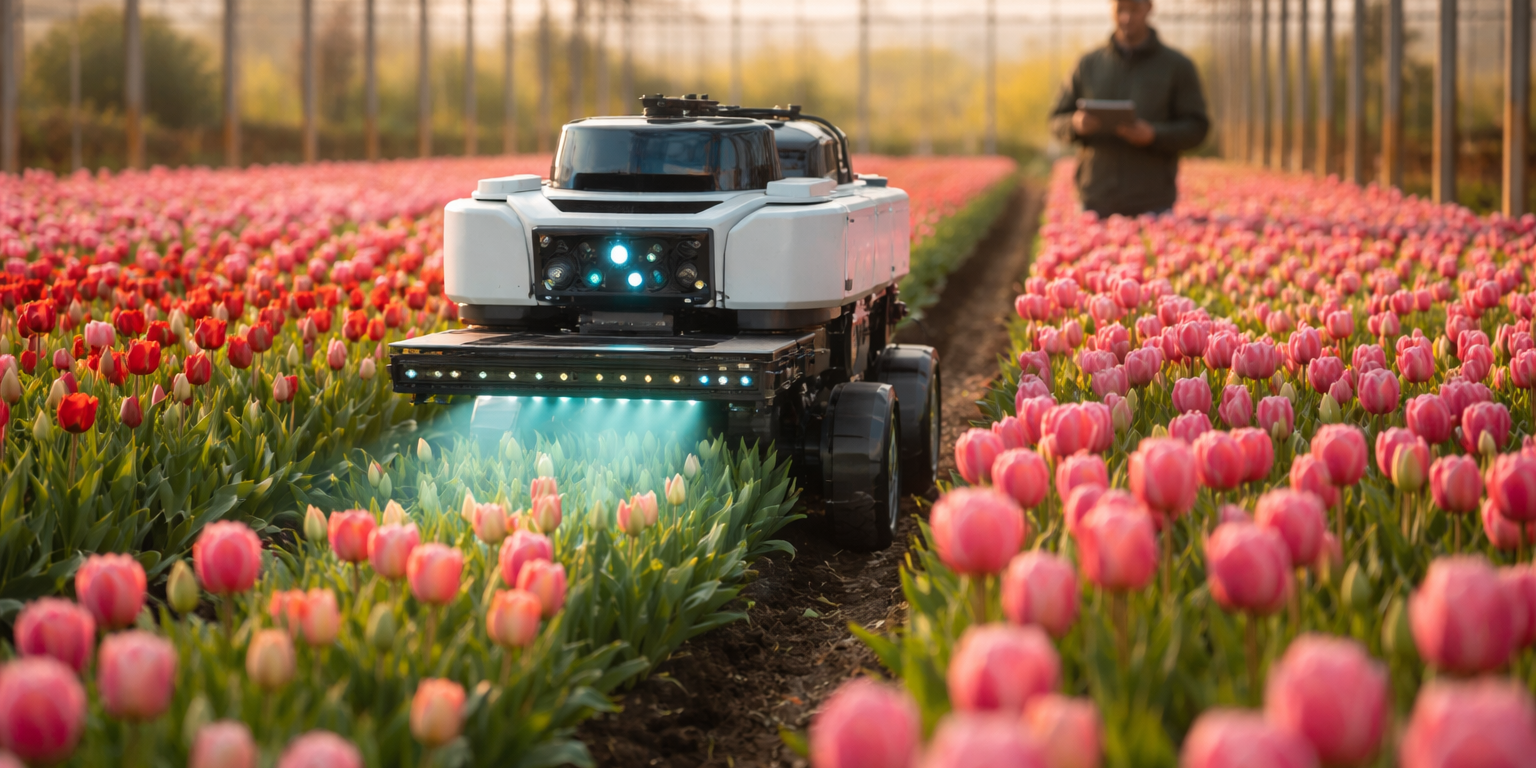
Tulip growers have installed 139 H2L Selector units across commercial operations, pushing automated disease identification from field trial status into mainstream production practice. The machines, which autonomously traverse tulip rows scanning for viral and fungal infections, have earned an average user rating of 4.1 out of 5 from farm operators who have integrated them into seasonal workflows. That satisfaction score represents a threshold moment for agricultural robotics: growers are no longer testing the concept but refining its execution. The transition matters because tulip production operates on narrow margins where disease can wipe out entire fields between morning inspection and evening harvest. Manual disease selection requires trained workers to visually identify infected bulbs and remove them before pathogens spread. Labor shortages across European flower-growing regions have made that increasingly difficult, while the cost of missing infections continues to climb. Robotic selection addresses both problems, but only if the machines prove reliable enough to replace human judgment rather than merely supplement it.
The H2L Selector deployment numbers indicate growers are willing to commit capital to automation despite lingering performance concerns. Each unit represents a significant investment for mid-size operations, and the 139 machines in service suggest adoption has moved beyond early-adopter enthusiasm into pragmatic assessment of return on investment. The 4.1 rating tells a more nuanced story. Growers report that the technology works well enough to justify continued use but not so flawlessly that they would recommend it without reservation. That gap between functional and exceptional defines the current state of agricultural robotics across multiple crop categories. Operators want machines that match or exceed human performance in variable field conditions, not systems that require constant supervision or produce inconsistent results. The H2L Selector appears to have cleared the minimum threshold while leaving room for improvement that could determine whether adoption accelerates or plateaus.
Developers of the H2L Selector face a familiar challenge in agricultural automation: proving that computer vision algorithms can match the pattern recognition abilities humans develop through years of field experience. Tulip disease identification requires distinguishing between multiple virus strains and fungal infections based on subtle color variations, leaf patterns, and growth abnormalities. Environmental factors including soil moisture, sunlight angle, and developmental stage affect visual presentation. A skilled human inspector processes those variables intuitively. Teaching a machine to do the same requires extensive training data covering diverse conditions and failure modes. The engineers building these systems must also account for processing speed, since commercial viability depends on covering acreage quickly enough to justify the equipment cost. The performance feedback from 139 deployed units provides development teams with real-world data that laboratory testing cannot replicate, accelerating the iteration cycle that separates adequate technology from industry-standard tools.
The broader agricultural robotics sector is watching tulip automation closely because it represents a proving ground for vision-based selection systems applicable to other high-value specialty crops. Strawberries, ornamental plants, and seed production all involve similar disease management challenges where automated inspection could deliver economic value. The tulip industry's tolerance for automation stems from production economics that favor technological investment over expanding manual labor forces. European flower growers operate in competitive international markets where production costs directly affect profitability. Robotic disease selection offers a path to maintain quality standards while controlling expenses, provided the technology continues improving. The current deployment numbers suggest the business case has been established. What remains uncertain is whether incremental improvements in machine performance will trigger exponential growth in adoption or whether the technology will settle into a niche role serving operations with specific cost structures and labor availability constraints.
What to Watch: Track whether H2L reports crossing 200 units deployed before the 2027 growing season begins, which would indicate accelerating rather than linear adoption. Monitor competitor entries into automated tulip disease selection, particularly from established agricultural equipment manufacturers with existing dealer networks. Watch for published data comparing detection accuracy rates between the current H2L Selector generation and human inspectors across multiple tulip varieties and disease types.