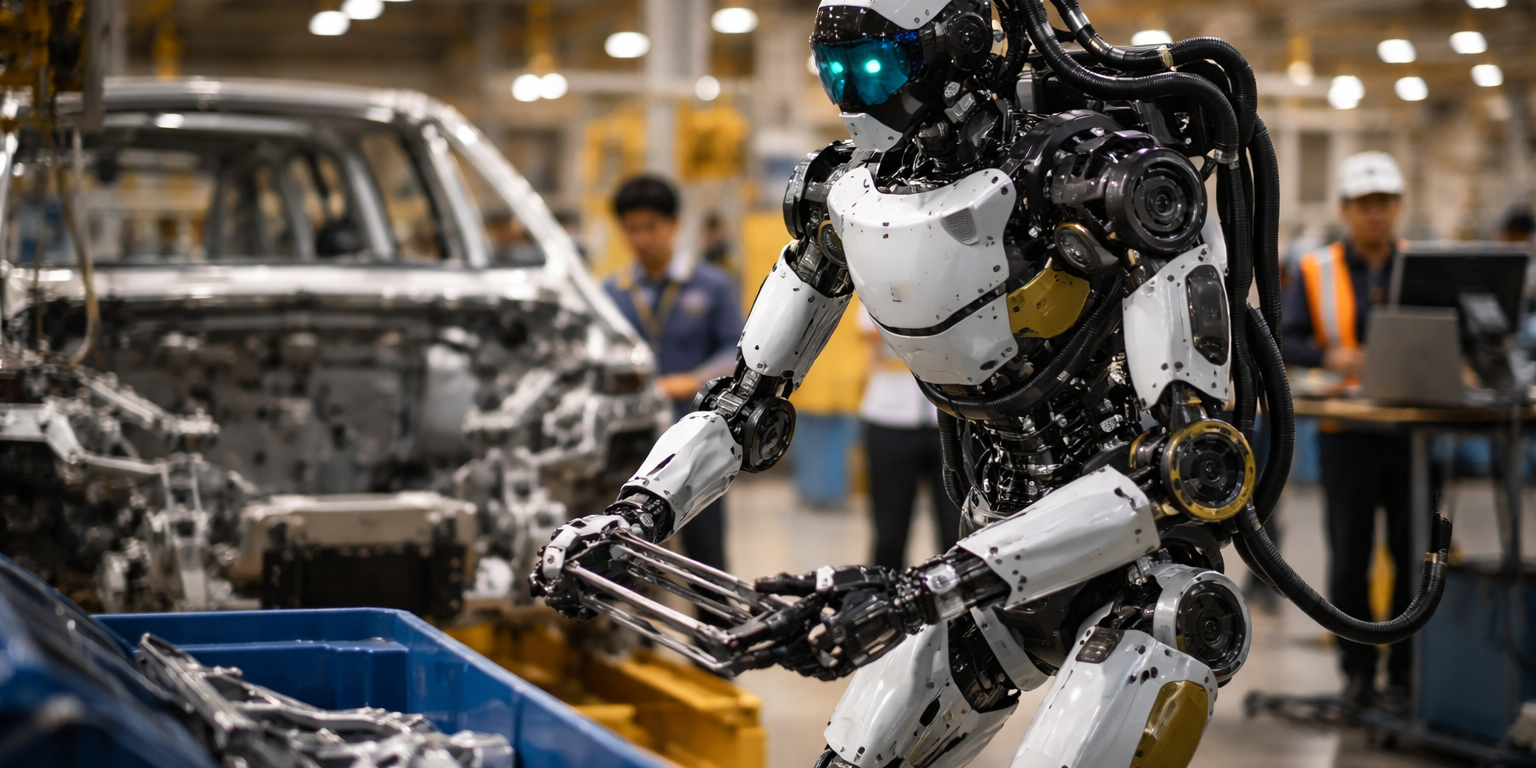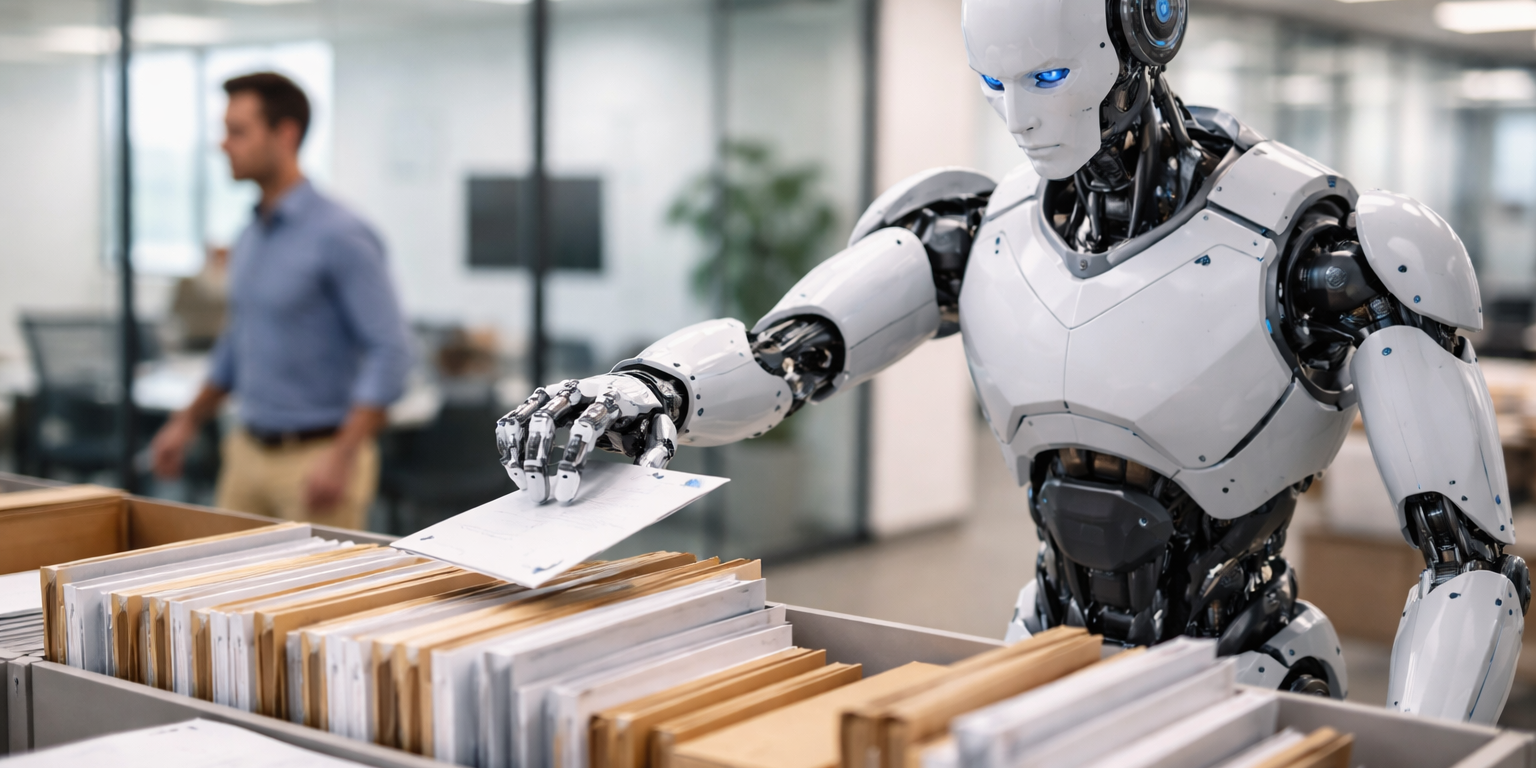
A humanoid robot at Flexion Robotics' headquarters now sorts incoming mail, schedules conference rooms, and stocks the break room refrigerator with a level of reliability that has surprised even the engineers who built it. The machine operates unsupervised for stretches of four to six hours, navigating around human colleagues, opening doors with standard handles, and manipulating objects ranging from envelopes to coffee mugs without specialized end effectors. Over three months of continuous operation, the robot has logged more than 400 hours of productive work across twelve distinct office tasks, a figure that places it among the longest-running autonomous humanoid deployments outside controlled factory settings.
Flexion emerged from stealth mode last month with $23 million in Series A funding led by Accel, though the company's three co-founders—Daniel Chao, formerly a senior engineer on Nvidia's Omniverse simulation platform; Priya Venkatesh, who led perception systems for Nvidia's automotive division; and Marcus Liu, a reinforcement learning specialist from DeepMind before his Nvidia tenure—have been refining their approach since early 2024. The founding team's thesis centered on a problem they observed repeatedly at Nvidia: simulation alone cannot capture the full complexity of real-world物理 interactions, yet purely real-world training remains prohibitively expensive and time-consuming. Their solution hybridizes the two. Human operators teleoperating the robot contribute the initial dataset, demonstrating tasks in the actual office environment where the robot will eventually work autonomously. Those demonstrations feed a reinforcement learning system that trains in simulation, then validates and refines its policies through additional real-world trials. The cycle repeats, with each iteration reducing the amount of human supervision required.
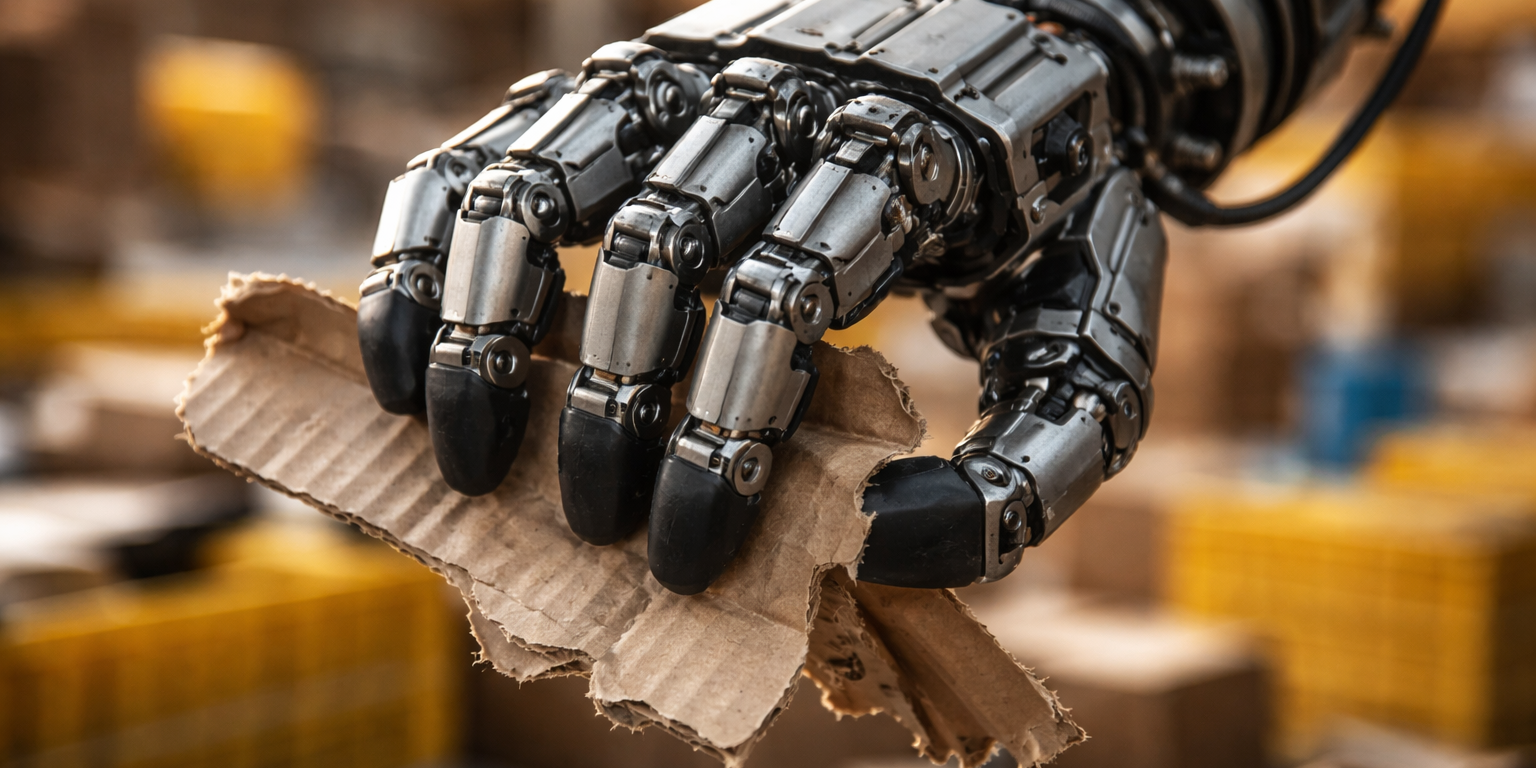
The Flexion humanoid itself stands 172 centimeters tall and weighs 68 kilograms, dimensions chosen deliberately to match the anthropometric median of the American workforce. The robot features 32 degrees of freedom, proprietary torque-controlled actuators in each major joint, and hands with five independently articulated fingers capable of applying up to 15 newtons of force at the fingertips. Critically, Flexion designed the platform to operate using only onboard sensors—six RGB cameras, two depth sensors, and an inertial measurement unit—without relying on external motion capture systems or fiducial markers in the environment. Chao emphasized in a recent interview with IEEE Spectrum that environmental modifications represented a dealbreaker for commercial office deployments. Companies will adopt humanoids only if the robots adapt to existing infrastructure, not the other way around. The processing stack runs on an Nvidia Jetson Orin NX module for real-time inference, with heavier model training offloaded to cloud-based GPU clusters during the robot's charging periods.
The implications extend beyond novelty demonstrations. Office work represents a $2.4 trillion labor market in the United States alone, according to Bureau of Labor Statistics data, with administrative and support roles accounting for roughly 18 percent of that figure. Even marginal automation of routine tasks within that segment creates a serviceable addressable market measured in billions. Flexion has structured its business model around a robot-as-a-service offering priced at $2,800 per month per unit for a minimum 24-month contract, a figure the company calculated to undercut the fully loaded cost of a full-time administrative employee working 20 hours per week. Six companies have signed pilot agreements for deployments beginning in the fourth quarter of 2026, including two Fortune 500 firms Flexion declined to name and a commercial real estate management company overseeing properties in eleven states. The robotics industry has watched dozens of humanoid startups announce ambitious timelines only to stumble on the path from demonstration to deployment, but Flexion's traction with paying customers suggests a different trajectory. Whether the technology scales beyond friendly early adopters remains the central question, one that will likely resolve itself over the next twelve to eighteen months as these pilots either expand or quietly wind down.
What to Watch: Flexion plans to release performance benchmarks from its pilot deployments in Q1 2027, including task success rates, intervention frequencies, and total autonomous operating hours across different office environments. Monitor whether competitors like Figure AI or Apptronik announce similar office-focused products, as Flexion's approach may force a strategic repositioning away from manufacturing and toward white-collar applications. Track any partnerships with commercial real estate firms or facility management companies, which could provide distribution channels into thousands of office buildings simultaneously. Pay attention to workforce reactions at pilot sites—employee acceptance or resistance will determine adoption velocity more than technical performance metrics.