The Federal Communications Commission's Covered List, which previously targeted specific manufacturers like Huawei and ZTE, now encompasses an entire class of robotics hardware. Any mobile robot over 2 kilograms that communicates wirelessly—whether from China, Germany, Japan, or any other foreign country—cannot be imported for sale in the United States as of July 28. The weight threshold captures nearly every commercial mobile robot currently on the market, from warehouse automation platforms to delivery robots to inspection drones with ground mobility. Solar power inverters, which convert DC to AC current and increasingly incorporate wireless monitoring capabilities, face the same blanket prohibition. The FCC published the expansion without advance notice to industry, leaving companies that had cleared customs shipments in transit scrambling to understand whether their inventory would be seized at the border or grandfathered under existing authorizations.
The Covered List originated in 2021 as a targeted mechanism to block communications equipment from companies the Department of Defense identified as national security threats. For three years, it named specific entities. The July expansion represents a categorical shift: the FCC now prohibits products based on physical characteristics and country of origin rather than corporate identity. A mobile robot qualifies for the ban if it weighs more than 2 kilograms, incorporates any form of wireless communication—Wi-Fi, Bluetooth, cellular, or proprietary protocols—and comes from outside U.S. borders. That definition sweeps in autonomous mobile robots used in manufacturing, last-mile delivery platforms, agricultural rovers, and even research prototypes destined for university labs. The Department of Defense drove the expansion, according to agency documentation, citing concerns that foreign-made robots with network connectivity could be compromised for surveillance or sabotage. The department did not release technical evidence supporting the 2-kilogram threshold, which robotics engineers note is arbitrary from an engineering standpoint—a 1.9-kilogram robot can carry the same sensors and communications hardware as one weighing 2.1 kilograms.
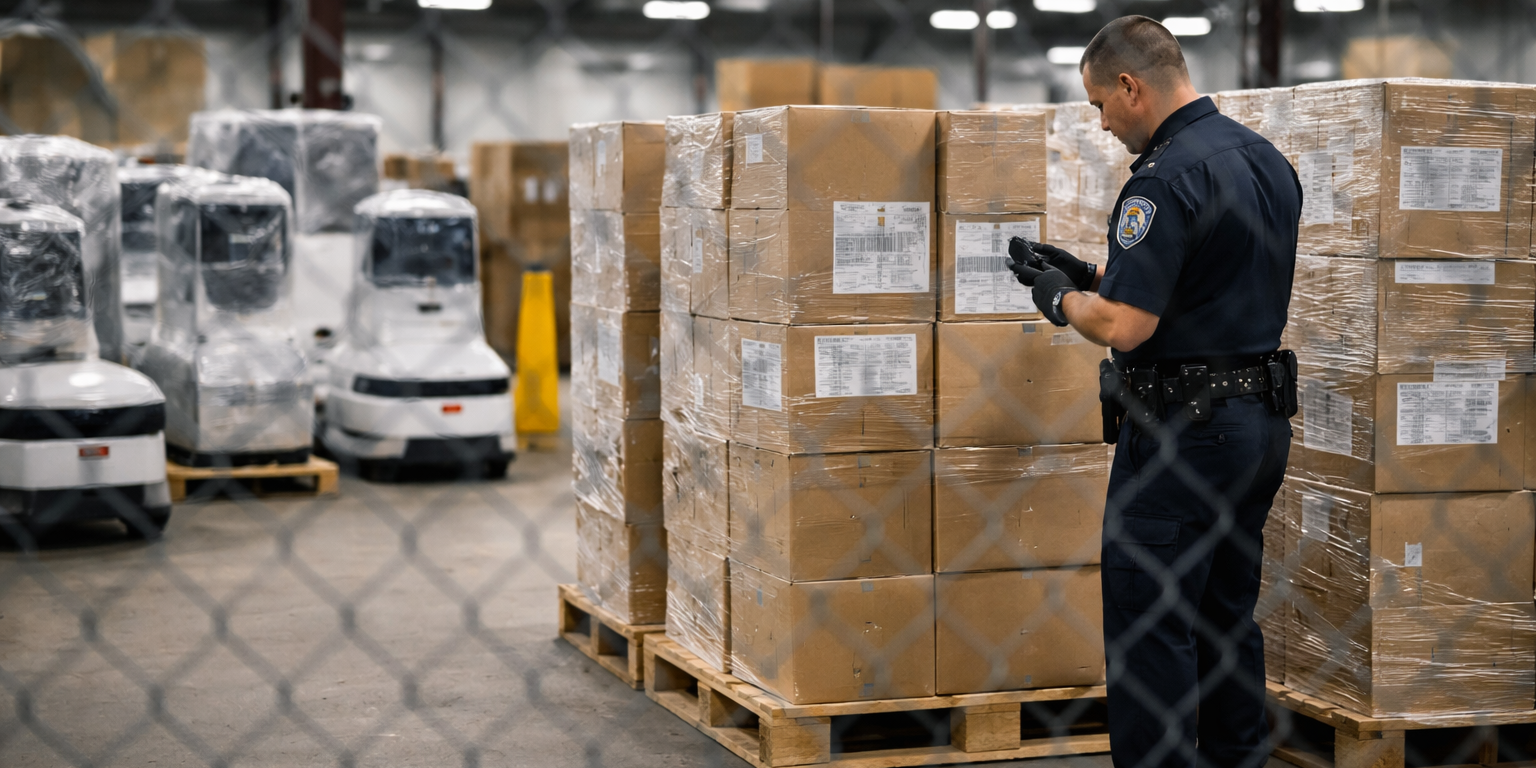
Companies with established U.S. supply chains face immediate operational disruptions. Locus Robotics, which manufactures its autonomous mobile robots domestically, sees no direct impact but competes against warehouse automation providers that source components or complete units from Asia. Fetch Robotics, acquired by Zebra Technologies in 2021, had already shifted final assembly to California but still imports subassemblies that may fall under the expanded rule. The solar inverter restriction compounds robotics industry challenges: many commercial robot deployments in outdoor environments—agriculture, infrastructure inspection, perimeter security—rely on solar charging systems with networked inverters to manage power. Enphase, SolarEdge, and Huawei dominate the global inverter market; Enphase manufactures in Mexico and China, SolarEdge in multiple Asian facilities. Robotics companies that designed systems around these components now face redesigns or domestic sourcing requirements that could extend development timelines by quarters. One logistics automation executive, speaking on condition of anonymity because his company is in acquisition talks, said the ban arrived without industry consultation: "We learned about this the same day as the press release. We have forty robots in customs right now, paid for, inspected, cleared for delivery. Nobody can tell us if they'll be released or sent back."
The ban exempts products already authorized under existing FCC equipment certifications, creating a two-tier market. Robots that received FCC ID numbers before July 28 can continue to be imported and sold, even if manufactured abroad, until those certifications expire—typically a five-year cycle. New models, or existing models from manufacturers that never pursued U.S. certification, cannot enter the market. This benefits incumbent players with established compliance infrastructure and penalizes startups or foreign companies that planned to enter the U.S. market in late 2026 or 2027. It also creates asymmetry in global competition: U.S. robotics companies can sell abroad without reciprocal weight-based restrictions in most markets, while foreign competitors lose access to the world's second-largest robotics market by revenue. China, which accounts for approximately 38 percent of global industrial robot installations according to the International Federation of Robotics, has not announced retaliatory measures, but trade policy analysts expect some form of response targeting U.S. automation exports. The European Union issued a statement calling the FCC rule "disproportionate and insufficiently justified," noting that it affects European manufacturers of agricultural robots and mobile inspection platforms with no ties to Chinese supply chains. Japan's Ministry of Economy, Trade and Industry is reviewing whether the rule violates World Trade Organization technical barriers to trade provisions.
Robotics industry groups are divided on the policy. The Association for Advancing Automation, which represents U.S. manufacturers and systems integrators, declined to take a public position, citing divergent member interests. The Robotic Industries Association, focused on industrial automation, released a measured statement acknowledging national security concerns while requesting clearer technical criteria for compliance. Smaller advocacy organizations representing drone manufacturers and delivery robot startups have been more critical, arguing that the 2-kilogram threshold lacks technical justification and that wireless communication security should be addressed through encryption and authentication standards, not blanket import bans. Security researchers who specialize in robotics vulnerabilities point out that domestic manufacturing offers no inherent protection against compromised components—chips, sensors, and communication modules in U.S.-assembled robots often originate from the same Asian suppliers as fully imported units. The Pentagon has not released threat assessments that would explain why a 2-kilogram threshold provides meaningful security benefits, leading some engineers to speculate that the weight cutoff was chosen to exclude consumer drones and handheld devices while capturing commercial mobile platforms.
What to Watch: FCC Commissioner filings over the next 60 days may clarify whether existing products can be updated with new firmware or require recertification under the expanded rule. Watch for guidance from U.S. Customs and Border Protection on how the 2-kilogram threshold is measured—shipping weight, operating weight, or payload capacity—which will determine whether companies can redesign products to fall below the limit. European and Japanese trade delegations are scheduled to meet with USTR officials in September 2026; any bilateral exemptions or technical standard agreements would reshape market access. Finally, monitor whether China's Ministry of Commerce adds U.S. robotics hardware to its Unreliable Entity List, which would restrict Chinese companies from purchasing American automation equipment.