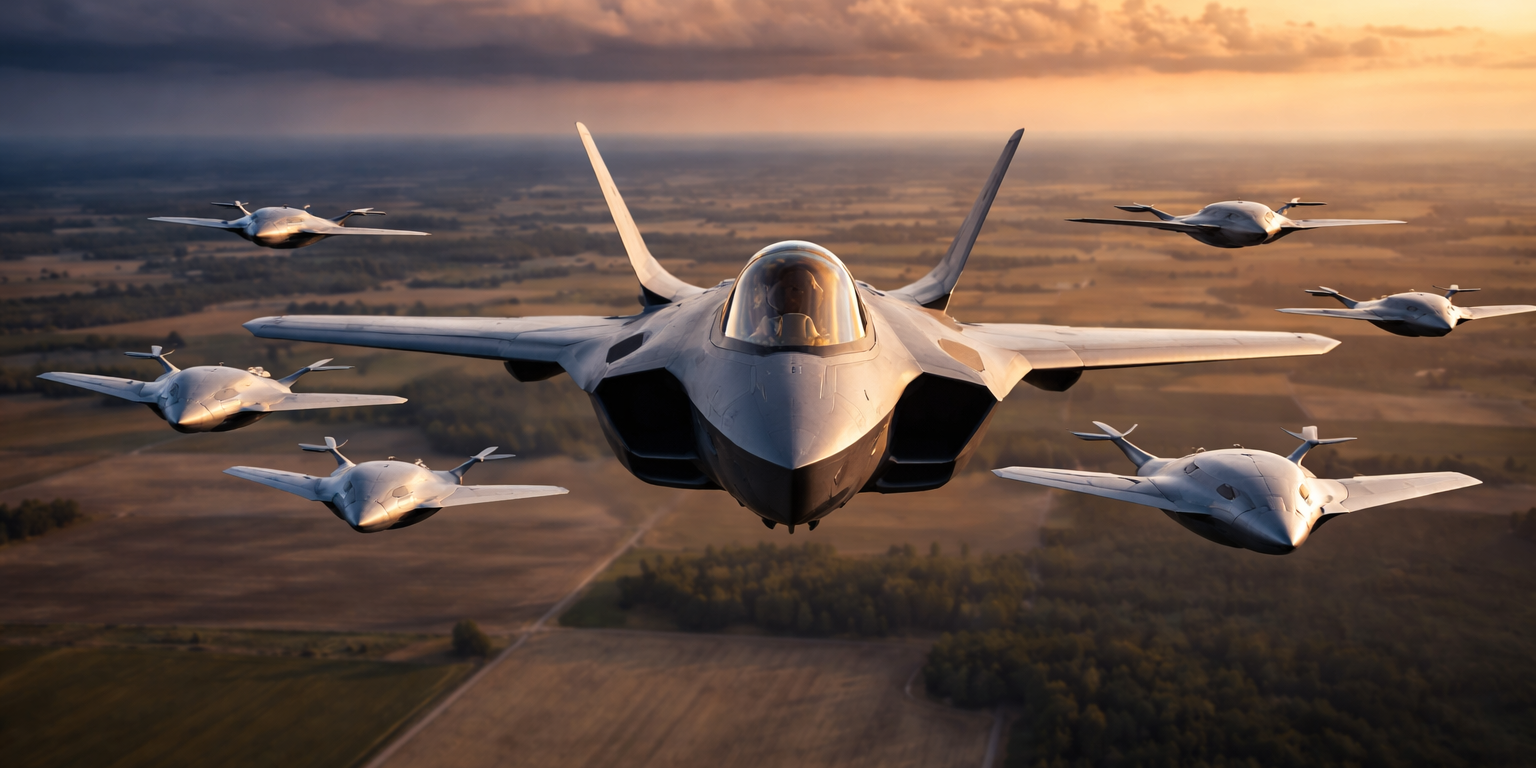
Germany's Federal Office of Bundeswehr Equipment announced in March 2026 that its Future Combat Air System (FCAS) Wingman program will enter full-scale development with Airbus Defence and Space, targeting an operational fleet of 60 autonomous aircraft by 2030. The decision, part of a €12 billion defense modernization package approved by the Bundestag, positions Germany as the first European nation to commit operational deployment dates for collaborative combat aircraft—unmanned platforms designed to operate in formation with manned fighters like the Eurofighter Typhoon. France followed two weeks later with a €8.4 billion allocation for its own Remote Carrier program under the broader SCAF (Système de Combat Aérien du Futur) initiative, while the United Kingdom expanded its Mosquito program funding by 40 percent to £2.1 billion through 2029. Spain's Ministry of Defense disclosed in May that it would participate in both FCAS and SCAF through a €3.2 billion joint procurement agreement, making it the only European nation formally bridging both programs.
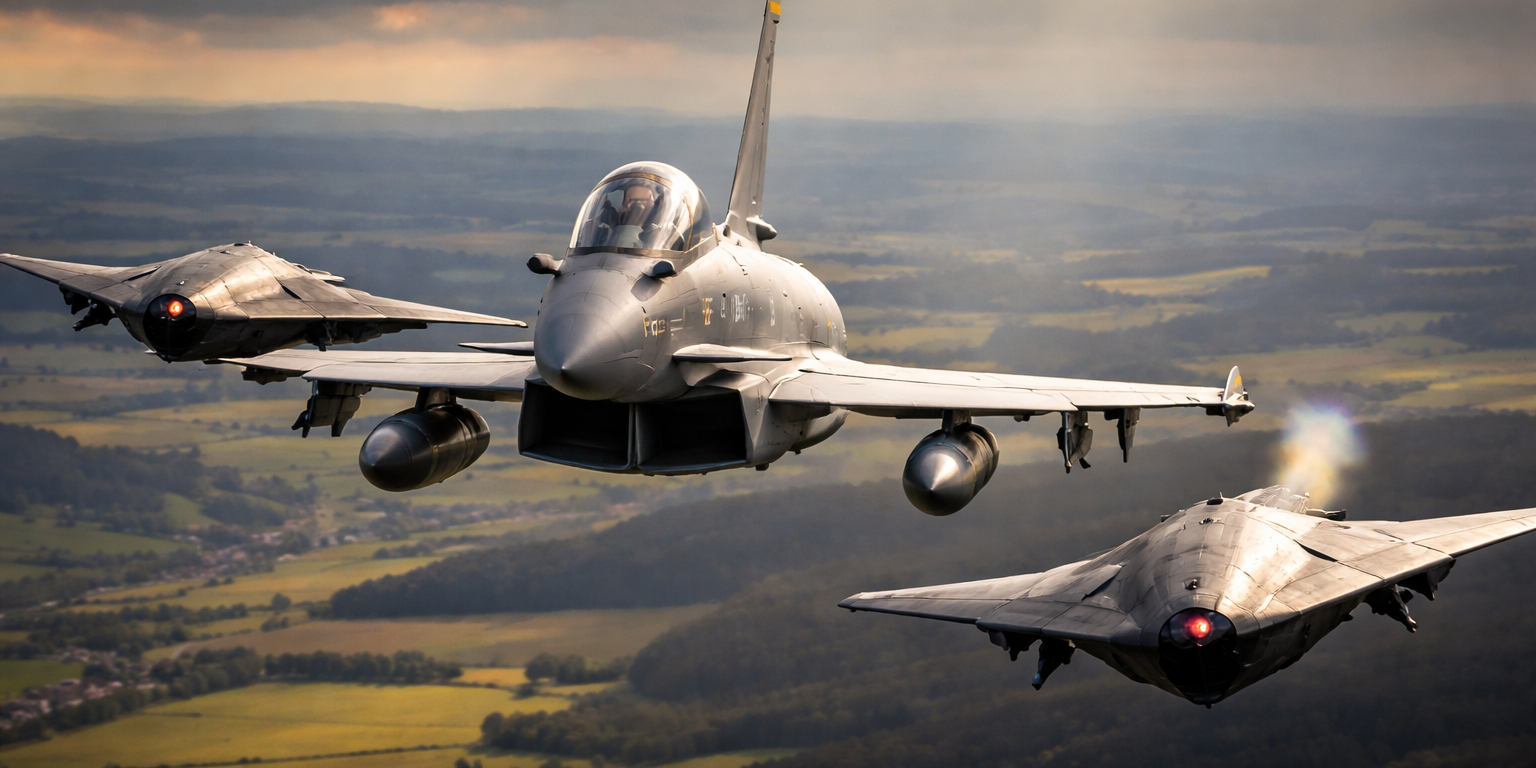
The convergence reflects a dramatic acceleration in defense spending triggered by geopolitical tensions and NATO commitments. Europe's aggregate defense budgets grew 22 percent in 2025, according to the Stockholm International Peace Research Institute, with collaborative combat aircraft emerging as the preferred architecture for air superiority modernization. Unlike traditional unmanned combat aerial vehicles (UCAVs) designed for strike missions, wingman drones function as sensor platforms, decoys, and weapons carriers that extend the reach of manned aircraft while keeping pilots out of high-threat environments. The aircraft carry no onboard pilot controls—autonomy is their defining feature. Airbus has publicly demonstrated formation flying between a Eurofighter and two prototype wingman drones at speeds exceeding Mach 0.9, with the unmanned aircraft maintaining separation tolerances within three meters while executing combat maneuvers. Dassault Aviation, leading France's Remote Carrier development, claims its platform can carry 2,500 kilograms of ordnance or electronic warfare equipment, nearly matching the payload capacity of a Rafale fighter at roughly one-fifth the unit cost.
The programs have triggered intense competition among defense contractors and autonomy vendors. BAE Systems holds the prime contract for the UK's Mosquito program and is pursuing sensor fusion partnerships with Shield AI, the San Diego-based autonomy company whose Hivemind software already operates on U.S. Air Force platforms. Leonardo S.p.A., Italy's largest defense contractor, announced in April it would supply radar and electronic warfare systems for both FCAS and SCAF variants, a €1.8 billion contract spanning seven years. Pratt & Whitney and Safran are competing to supply propulsion systems, with requirements calling for engines producing 10,000 to 15,000 pounds of thrust—enough for sustained supersonic flight but without the maintenance demands of full fighter-class powerplants. The European Union Aviation Safety Agency (EASA) is developing a certification framework specifically for collaborative combat aircraft, expected to be finalized by December 2026, which would establish interoperability standards across member nations and potentially smooth transatlantic integration with U.S. platforms like Boeing's MQ-28 Ghost Bat, currently in testing with the Royal Australian Air Force.
Transatlantic dynamics complicate the picture. The U.S. Air Force's Collaborative Combat Aircraft (CCA) program, managed by the Air Force Life Cycle Management Center, is developing similar systems with Anduril Industries, General Atomics, and Northrop Grumman as the three downselected vendors following a competitive prototype phase that concluded in February 2026. The Air Force plans to procure 1,000 CCA units by 2032 at a target unit cost of $25 million—a price point European programs have yet to match publicly. Industry analysts note European wingman efforts carry unit cost estimates ranging from €30 million to €45 million depending on configuration, raising questions about production economics. European defense officials have stated they will prioritize domestic production chains to minimize dependence on U.S. suppliers, particularly for flight computers and autonomy software, where American companies currently dominate. That preference has opened opportunities for smaller European robotics firms. Helsing, a Munich-based AI defense startup founded by former Palantir executives, secured a €223 million Series C round in January 2026 and is now providing machine learning infrastructure for target recognition and threat assessment on German Wingman prototypes. Sweden's Saab AB, though not participating in FCAS or SCAF directly, announced it will develop a wingman variant compatible with its Gripen E fighter for export customers, particularly in Eastern Europe.
What to Watch: Germany's Wingman prototype flight testing at Manching Air Base is scheduled for October 2026, with live weapons integration planned for the first quarter of 2027. France and Spain will finalize their industrial work-share agreement for SCAF Remote Carriers by September 2026, determining which subsystems each nation produces domestically. The U.S. Air Force's first CCA production contract award, expected in August 2026, will set the benchmark for pricing and capabilities that European programs must match to remain competitive in export markets. EASA's certification framework release in December will clarify whether European and U.S. platforms can operate together in NATO operations or remain siloed by regulatory barriers.