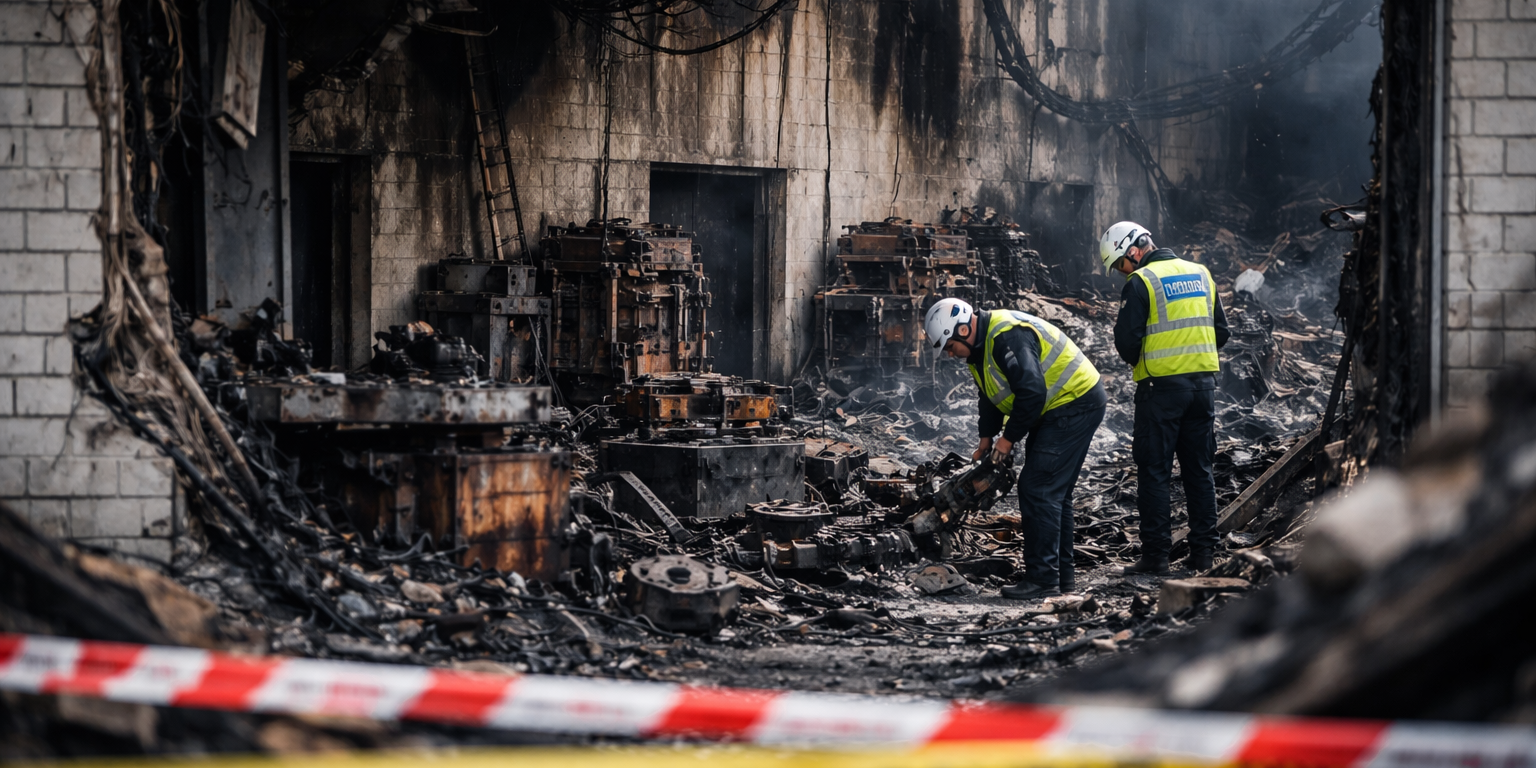
Estonia's government directly blamed Russian intelligence services for an arson attack on an Estonian robotics manufacturer this past August, marking the first time a NATO member has publicly attributed industrial sabotage to Moscow with robotics infrastructure as the explicit target. The accusation, delivered through formal diplomatic channels and accompanied by classified intelligence briefings to NATO allies, identifies the attack as part of what Estonian security officials describe as a coordinated campaign of hybrid warfare aimed at degrading European defense industrial capacity. The timing matters. Estonia hosts several emerging robotics firms supplying components and systems to European defense contractors, and the targeted facility had recently secured contracts related to autonomous ground vehicle development for NATO standardization programs.
The August incident destroyed approximately 4,000 square meters of manufacturing space and damaged specialized equipment used in robotic actuator production, according to reconstruction reports filed with European insurance underwriters. Estonian investigators concluded the attack involved multiple incendiary devices placed strategically to maximize damage to clean room environments and precision machining centers, suggesting advance reconnaissance and technical knowledge of robotics production requirements. No injuries were reported, but the facility remains offline seven months later. The company, which Estonian authorities have declined to name publicly citing ongoing criminal proceedings, employed roughly 180 people and represented one of the Baltic state's largest concentrations of robotics engineering talent. Industry sources familiar with the facility's operations indicated it specialized in electric motor controllers and sensor fusion systems for mobile platforms, technologies with direct application in both commercial logistics automation and military unmanned ground vehicles.
Poland's warnings about Russian intentions add urgency to the Estonian allegations. Polish Defense Minister Władysław Kosiniak-Kamysz told reporters in Warsaw that Polish intelligence had identified indicators of Russian planning for what he termed "provocation operations" designed to test NATO's Article 5 collective defense commitments without triggering full-scale retaliation. The statement, unusually direct for a sitting defense minister discussing adversary intentions, reflects growing anxiety among eastern European NATO members about the alliance's willingness to respond to attacks that fall below traditional military thresholds. Robotics facilities present attractive targets in this context precisely because damaging them disrupts defense supply chains without immediately appearing as acts of war. A burned warehouse attracts less international attention than a missile strike, yet the industrial impact can be equivalent when the facility produces components with limited alternative sourcing.
The European robotics industry has largely operated under the assumption that manufacturing assets in NATO territory enjoyed functional immunity from hostile action. That assumption no longer holds. Insurance premiums for industrial facilities in Estonia, Latvia, Lithuania, and Poland have increased between 18 and 34 percent since January, according to data compiled by Munich Re, with specific surcharges applied to facilities involved in defense-adjacent production. Several European robotics firms with operations near the Russian border have quietly begun exploring redundant manufacturing capacity in western Europe, though the capital costs of duplicating specialized production lines make this option viable only for the largest players. Smaller companies face a choice between accepting elevated risk or abandoning contracts that require production in proximity to end users, many of whom are military customers demanding secure supply chains within NATO territory. The Estonian incident demonstrates that geographic location inside the alliance no longer guarantees that security.
What to Watch: Monitor whether other Baltic states issue similar formal attributions in coming weeks, particularly if Latvia or Lithuania reveal previously unreported incidents targeting technology infrastructure. Track insurance market behavior for robotics facilities in Poland and the Baltics through year-end 2026, as premium changes will signal industry assessment of ongoing risk. Watch for NATO announcements regarding physical security standards for defense contractor facilities, especially any requirements for redundant production capacity or geographic distribution of critical component manufacturing. Pay attention to European defense procurement timelines, as sabotage-related production delays could force contract modifications or emergency sourcing from non-European suppliers.