
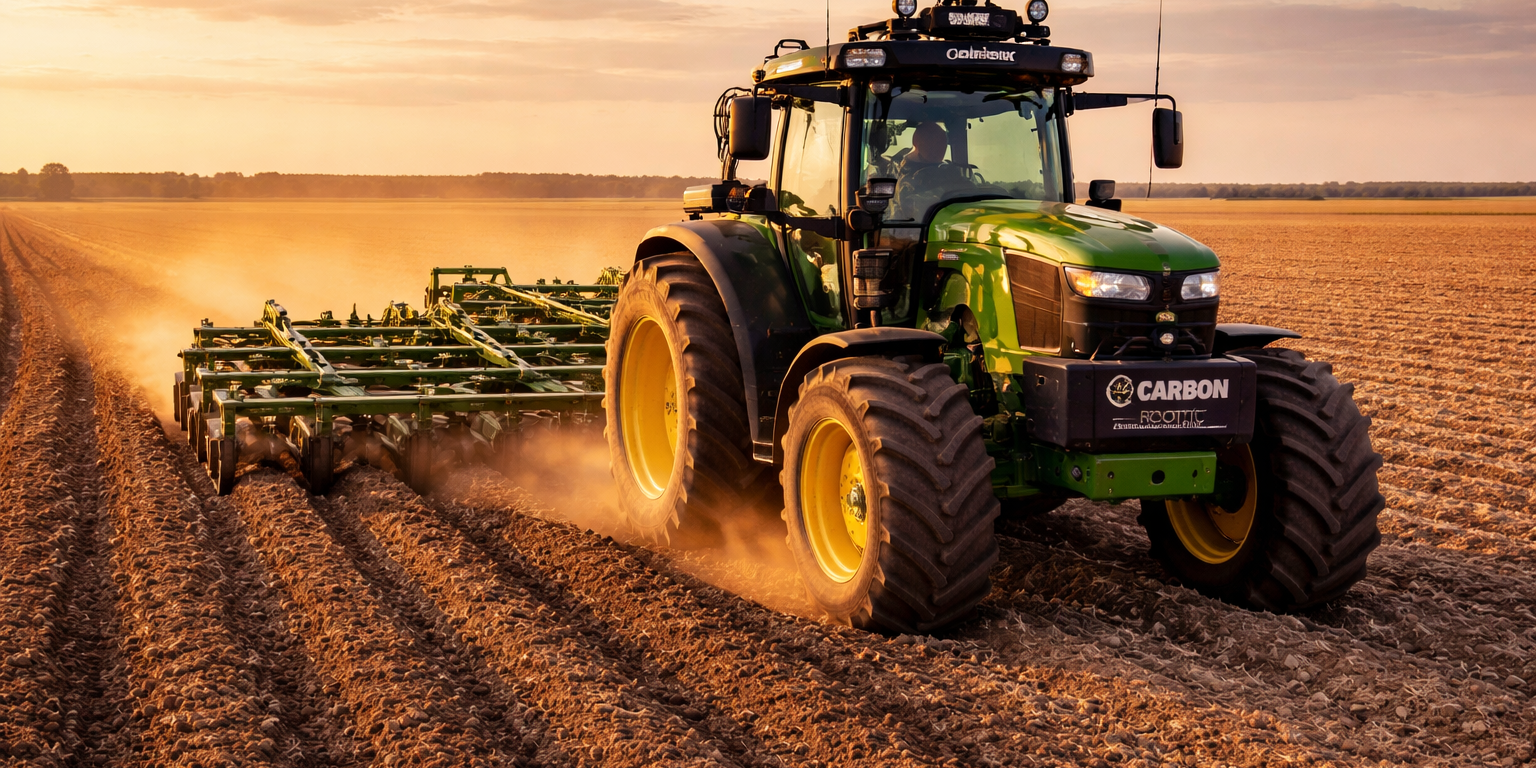
Great Plains Manufacturing will certify a suite of tillage, planting, and seeding implements under a new partnership program that Carbon Robotics launched to expand the operational envelope of its autonomous tractor system. The Salina, Kansas-based implement maker joins as the founding member of what Carbon calls the Autonomy Ready Program, a framework designed to validate third-party equipment for use with Carbon's platform. Financial terms were not disclosed, but the arrangement signals a strategic shift for Carbon Robotics from purely proprietary hardware development toward building an ecosystem play in agricultural autonomy.
Carbon Autonomy, the company's flagship platform, retrofits existing tractors with autonomous driving capability using a combination of lidar, radar, GPS-RTK positioning, and computer vision. The system has been deployed on farms across the Midwest since 2024, primarily for repetitive field operations like discing, tilling, and mowing. Expanding that capability to a wider array of implements requires more than mechanical compatibility. Autonomous systems need to monitor implement performance in real time, adjusting tractor speed, hydraulic pressure, and three-point hitch positioning without human oversight. That integration work historically fell to farmers or dealers, creating friction in adoption. The Autonomy Ready certification ostensibly moves that burden upstream to manufacturers, who will work directly with Carbon's engineering team to validate sensors, control interfaces, and failure mode behavior before equipment ships.
Great Plains operates twelve manufacturing facilities and distributes equipment in over seventy countries, giving Carbon access to a significant installed base. The company's Turbo-Max vertical tillage tools and 3P series grain drills represent high-value targets for autonomous compatibility, as those implements see heavy use during narrow planting windows when labor shortages hit hardest. For Great Plains, the partnership offers a hedge against the likelihood that autonomous tractors will become table stakes in row crop production over the next decade. Equipment manufacturers face mounting pressure to ensure their products remain relevant as autonomy providers like Monarch Tractor, Bear Flag Robotics, and now Carbon build competing ecosystems. Sitting out certification programs risks obsolescence if farmers begin selecting implements based on software compatibility rather than purely mechanical performance.
The certification process itself involves hardware and software validation across multiple failure scenarios, according to details shared by Carbon. Implements must support CANbus communication for real-time data exchange with the tractor's autonomy stack. Sensors monitoring seed depth, ground engagement, and hydraulic load must meet specified latency and accuracy thresholds. Carbon also requires manufacturers to define safe stop behaviors, such as how an implement should disengage if the autonomy system detects an obstacle or loses GPS signal. These technical requirements mirror emerging standards discussions within ASABE, the professional association for agricultural and biological engineers, which has been working to codify interoperability protocols for autonomous farm equipment since 2025. Carbon's program effectively establishes a de facto standard in advance of formal industry consensus, a competitive move that could position the company as a reference architecture if other autonomy providers adopt similar certification frameworks.
Broader implications extend beyond agriculture. The Autonomy Ready Program resembles ecosystem strategies deployed by companies like Boston Dynamics, which certifies third-party payloads for Spot, and NVIDIA, which maintains a partner network for Jetson-based robotics applications. In each case, the platform provider trades some control for faster market expansion, betting that a larger validated ecosystem will drive adoption more effectively than closed proprietary systems. For Carbon, the calculus appears straightforward: autonomous tractors become more valuable as the catalog of certified implements grows, and implement manufacturers gain competitive differentiation by securing early certification. The wildcard is whether competing autonomy platforms will honor Carbon's certification or demand separate validation, fragmenting the market and burdening manufacturers with redundant engineering work. John Deere's autonomy efforts, for instance, remain tightly coupled to its own implement lineup, creating a potential standards conflict as the market matures.
What to Watch: Monitor whether additional implement manufacturers join the Autonomy Ready Program before the end of 2026, particularly AGCO-owned brands like Sunflower or Salford, which would signal broader industry acceptance. Track whether Carbon publishes technical specifications publicly, as open standards would pressure competitors to align or risk ecosystem fragmentation. Watch for ASABE to release formal autonomy interoperability guidelines, expected in mid-2027, which could either validate Carbon's approach or force costly re-certification.