The most telling detail about the Ecovacs Deebot T90S Pro Omni is not on its spec sheet. It is where the machine sits. A rotating mop roller, the cleaning mechanism that until recently defined the top shelf of the robot vacuum market, now ships in a model Notebookcheck describes as outstanding value for money. The reviewer's central question was whether the T90S Pro Omni could surpass the strong showing of its predecessor, and the verdict leans toward yes. That framing matters. When a trade publication evaluates a mid-range unit against its own previous generation rather than against a flagship rival, the segment has matured to the point where iteration, not novelty, drives purchasing decisions.
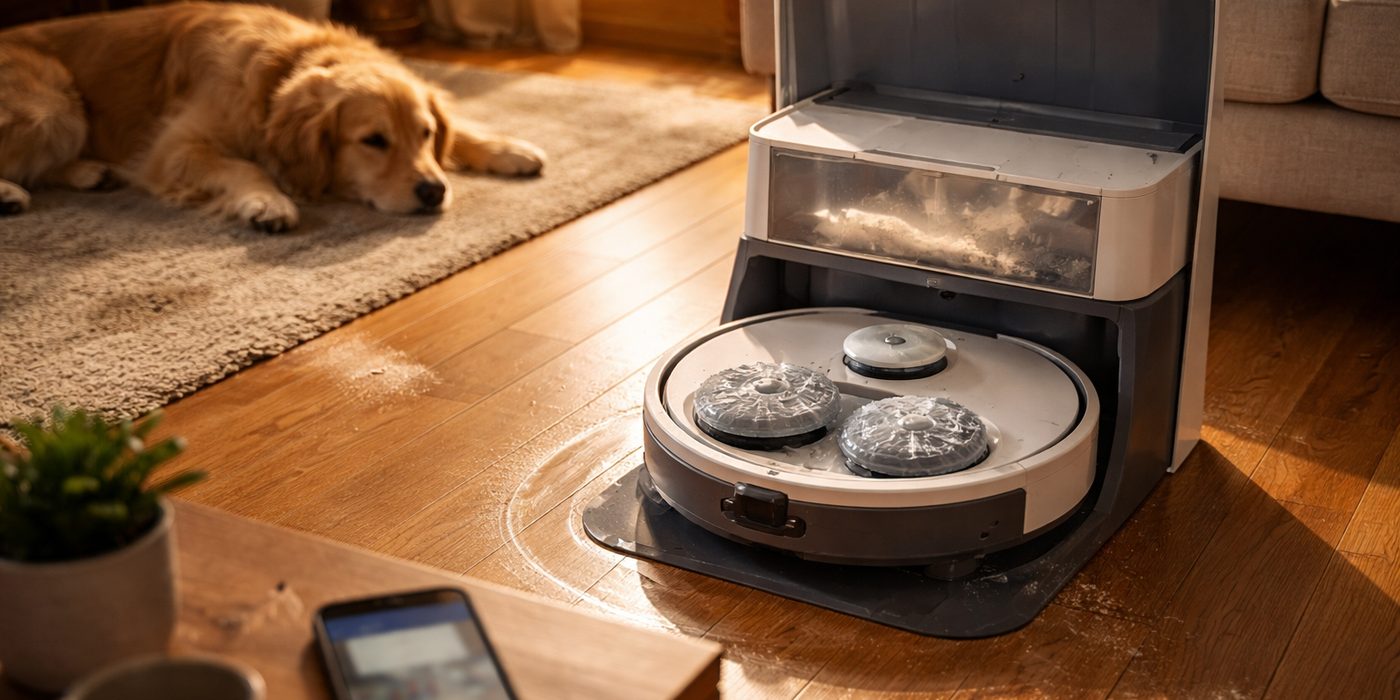
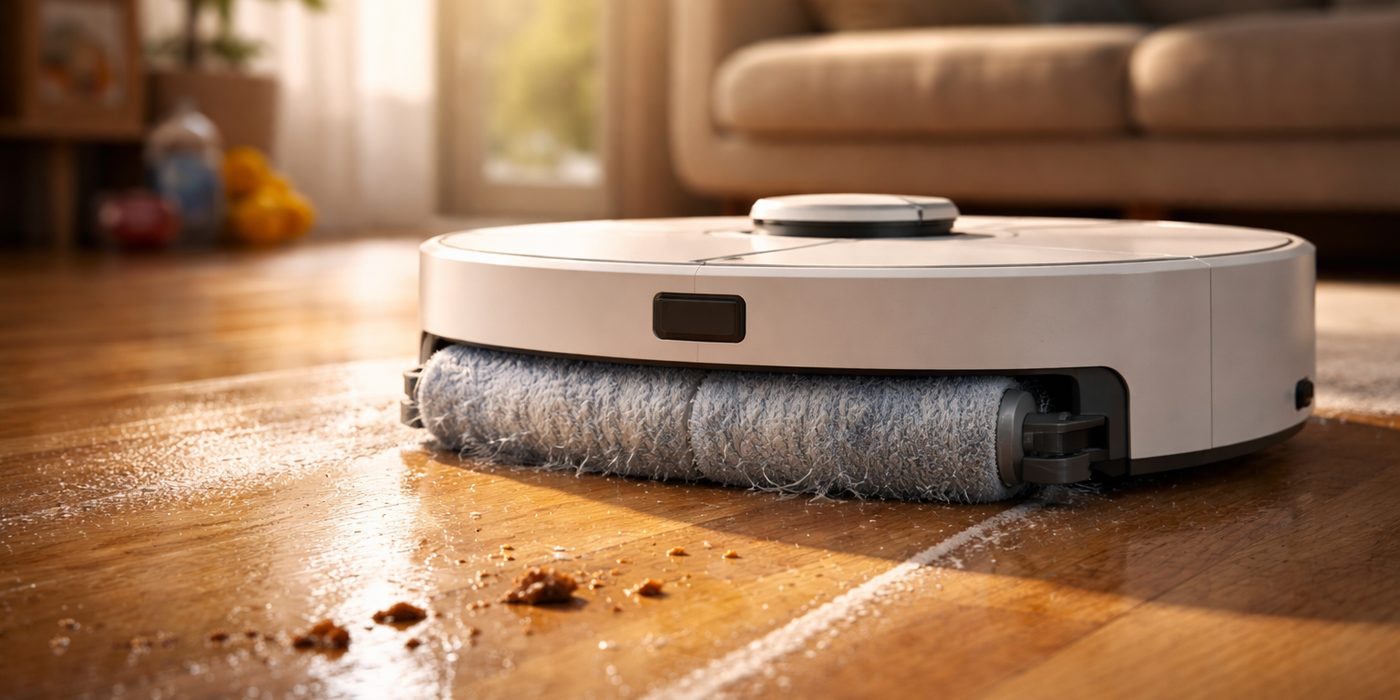
The mop roller is the point of the exercise. Early robot mops relied on a damp cloth pad dragged across the floor, or on a pair of spinning pads that rubbed at stains with limited downward pressure. A roller works differently. A cylindrical fabric drum turns against the floor while a scraper and water system continuously strip dirt off the surface, so the cleaning element is rinsed as it works rather than smearing grime around. That approach has proven more effective on dried spills and sticky residue, and it keeps the mop surface cleaner between dock visits. Ecovacs has pushed in this direction across its lineup, and the Omni designation signals the full dock experience: automatic dust emptying, mop washing, and drying, which removes the chores that made earlier robot mops feel only half automated.
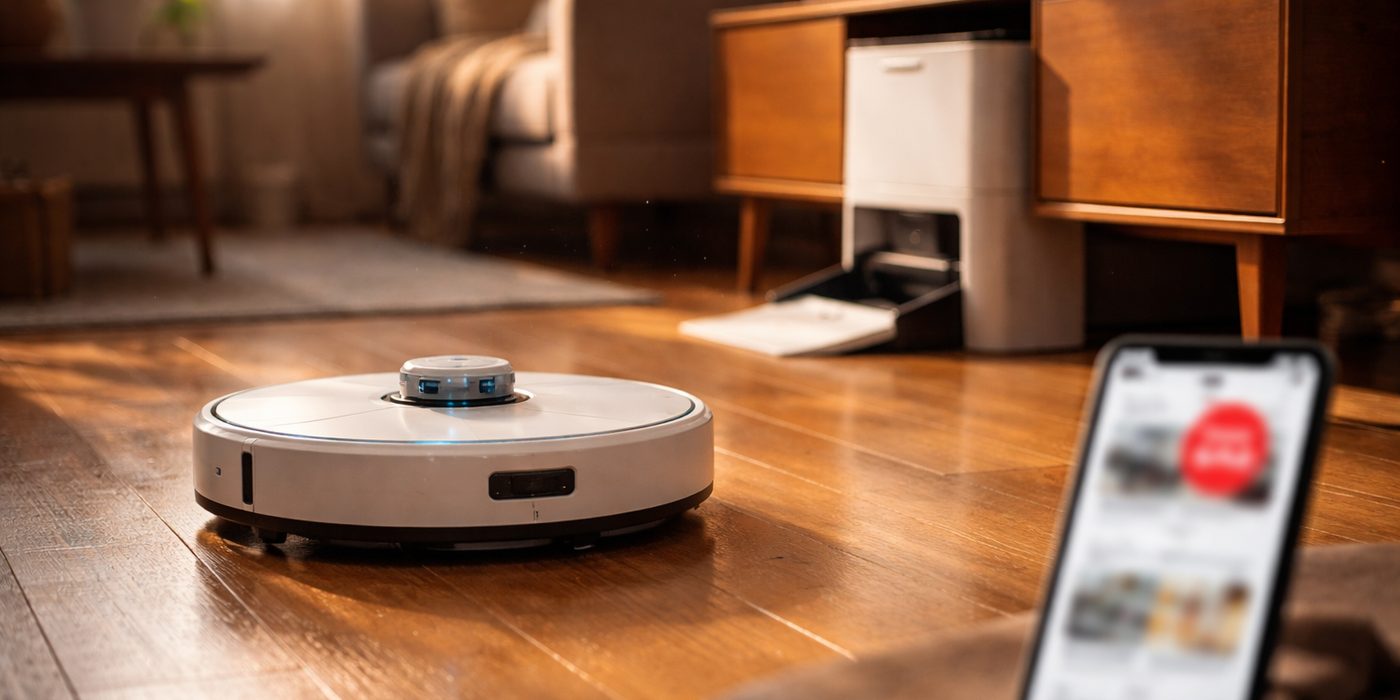
Price is where the story turns from product review to market signal. Ecovacs, a Chinese manufacturer competing directly with Roborock, Dreame, iRobot, and a growing field of challengers, has spent several years compressing the cost of features that once commanded four-figure price tags. Self-emptying docks, obstacle-avoiding sensors, and now roller mops have all followed the same curve: debut at the high end, then filter downward within one or two product cycles. For buyers, the effect is immediate. A shopper who would once have stretched to a flagship to get thorough mopping can now find comparable core performance in a mid-range box, with the premium models retaining advantages mainly in extras such as extending side brushes, advanced object recognition, and refined docking hardware.
For the people who build and fund these machines, the more interesting question is what remains defensible. Hardware features copy quickly. A roller mop mechanism, once proven, can be reverse-engineered or independently developed within a year, and the supply chain concentrated around Shenzhen and Suzhou lets competitors reach similar bills of materials at similar costs. That leaves software, navigation reliability, and long-term service as the durable moats: how well a robot maps a cluttered apartment, how rarely it gets stuck on a rug fringe, how gracefully it handles a pet accident, and how many years of updates and spare parts the maker will support. Engineers should read a review like this one as a benchmark of the baseline now expected at the mid-tier, not as a celebration of any single component. The bar for what counts as table stakes has moved, and every manufacturer in the category has to keep running to stay in place.
There is also a quieter implication for the broader consumer robotics sector. The home cleaning robot is the one category in which autonomous machines have achieved genuine mass adoption, and it continues to serve as the proving ground for navigation, perception, and manipulation techniques that later migrate into other products. Cost reductions achieved here, in sensors, motors, compact water management, and docking mechanics, feed the economics of the wider ecosystem, from lawn mowers to window cleaners to early domestic humanoid experiments. When a mid-range vacuum can integrate a roller mop, an automated dock, and capable obstacle avoidance at a price ordinary households accept, it demonstrates that complex electromechanical systems can be manufactured at scale without sacrificing reliability expectations. That is the real lesson for investors watching home robotics: volume and cost discipline in cleaning robots underwrite everything that comes after.
What to Watch
Track how rivals respond with roller-mop models in the same mid-range band, particularly new launches from Roborock and Dreame heading into the holiday shopping period, since discounting around Singles' Day on November 11 and Black Friday will reveal real street pricing for the T90S Pro Omni. Watch whether Ecovacs publishes firmware updates that expand obstacle recognition or mop-lifting behavior on carpet, as software changes often matter more than hardware over a product's life. Monitor independent long-term reliability reports on roller wear and dock maintenance over the next 60 to 90 days, which will show whether the value verdict holds up beyond launch-week testing. Finally, follow Ecovacs' quarterly earnings commentary for signs of margin pressure as mid-range pricing tightens.