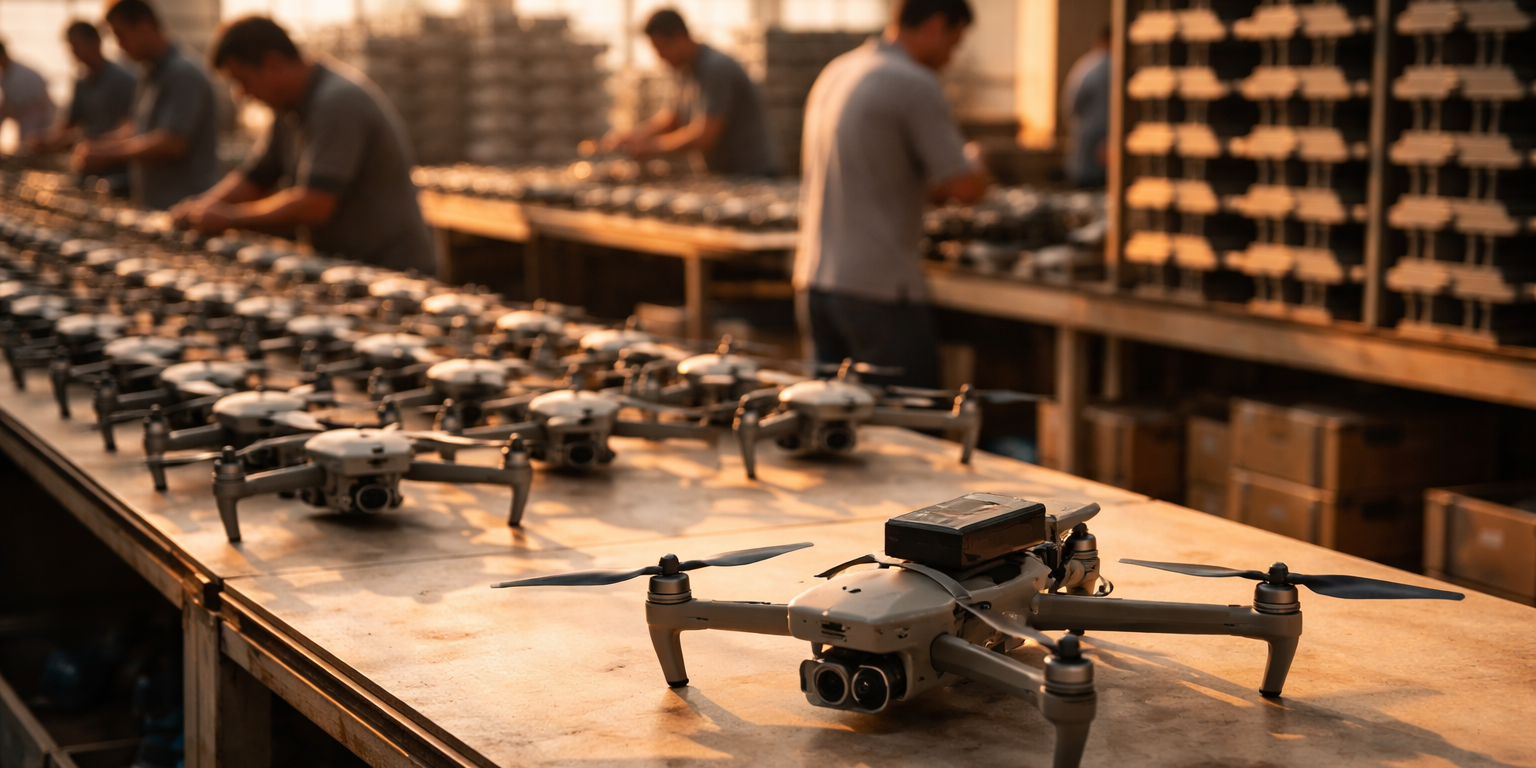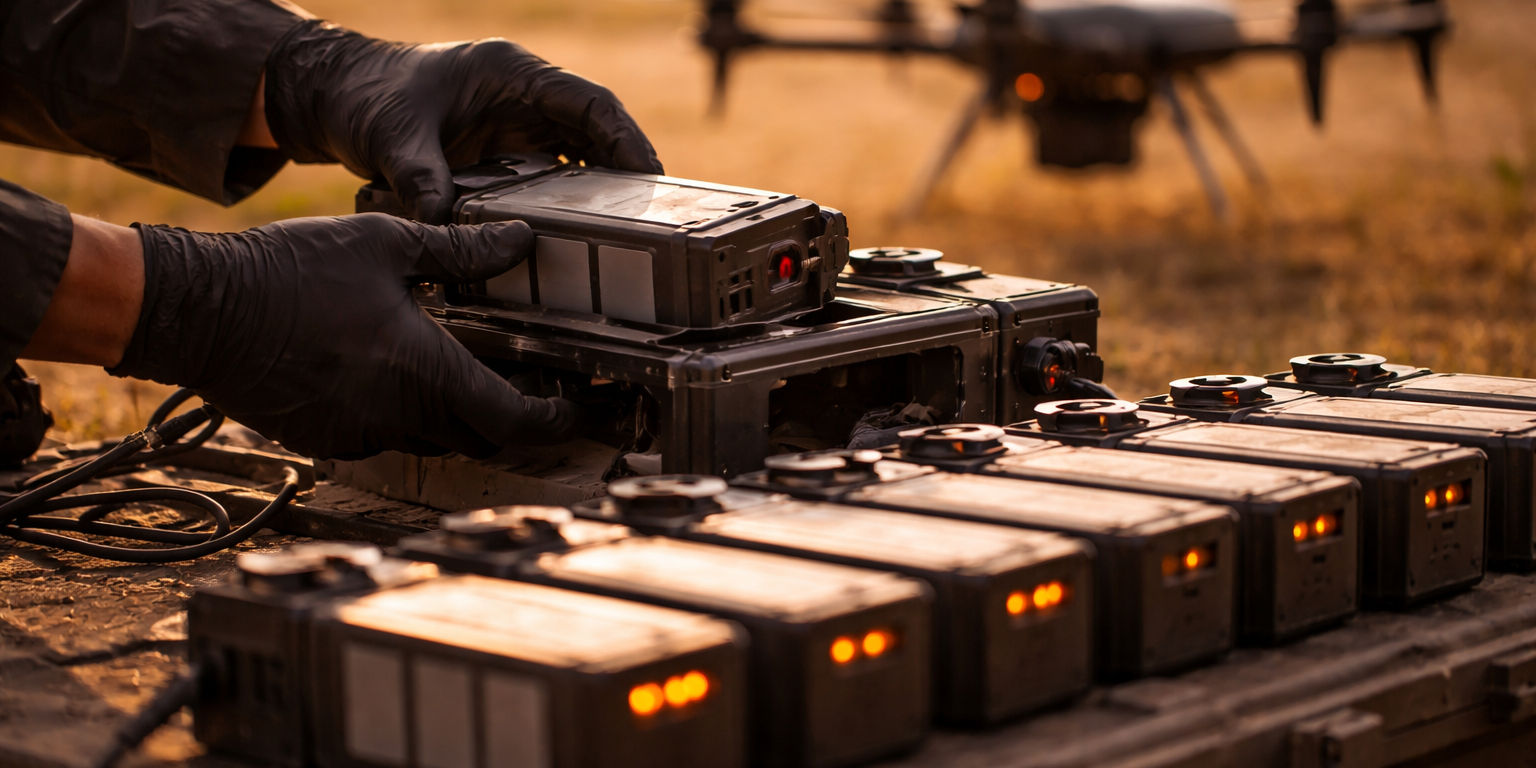
An 8.2% compound annual growth rate is not the number that makes an investor sit up. It is the number that should make an engineer pause. MarketsandMarkets, in a report dated October 9, 2026, puts the global drone battery market at $1.65 billion this year and $2.45 billion by 2031, an increase of roughly $800 million across five years. Unmanned aircraft are being fielded in logistics, inspection, agriculture, public safety, and military roles at a pace that outstrips that growth. The battery, in other words, is expanding more slowly than the thing it powers, and that gap is the quiet constraint running through the entire sector.
The reason is chemistry, not demand. Most commercial and tactical UAVs still run on lithium-polymer or lithium-ion packs, and the gravimetric energy density of those cells has improved in single-digit percentages per year for well over a decade. A multirotor that flew 30 minutes a few years ago flies perhaps 35 today on a comparable airframe. Fixed-wing and hybrid VTOL platforms stretch that into hours, but they pay for it in weight, complexity, and launch requirements. Every incremental gram of cell capacity competes directly with payload, which is why operators treat battery selection as a mission-planning decision rather than a procurement afterthought. Hydrogen fuel cells and hybrid gas-electric systems have carved out niches in long-endurance work, yet they have not displaced lithium in volume.
That volume dynamic explains the shape of the forecast. Growth is being driven less by a leap in per-unit battery value than by sheer fleet expansion, and by the swap cycle that comes with it. Drone batteries are consumables. Packs degrade after a few hundred charge cycles, and commercial operators running daily missions replace them far more often than they replace airframes. Defense users add another layer: military programs tend to specify ruggedized, cold-weather-tolerant, and ammunition-grade-certified packs that command higher prices and tighter qualification requirements. For suppliers, that makes the aftermarket and the defense channel more attractive than the consumer end, where pricing pressure from high-volume Asian manufacturers is relentless.
The supply chain is where the competitive picture gets complicated, and where a market this size can still carry real strategic weight. A large share of cells and finished packs originates in China, and Western defense ministries have spent the last several years pushing to reduce reliance on those sources for military-grade UAVs. That pressure favors domestic and allied manufacturers, even at higher unit cost, and it is one reason a market growing at 8.2% can still attract serious investment in solid-state, silicon-anode, and lithium-sulfur development. None of those technologies has yet reached the production maturity or cost curve needed to move the aggregate numbers, but each is being funded on the logic that a meaningful jump in energy density would reshape platform design overnight. Until one of them clears qualification at scale, the industry will keep optimizing around the lithium cell it already has: smarter battery management systems, better thermal control, faster charging, and swappable pack architectures that cut turnaround time on the flight line.
What to Watch
Track whether any solid-state or silicon-anode supplier announces a UAV-qualified pack with verified energy density above 400 Wh/kg before year-end, since a credible figure would challenge the assumption baked into an 8.2% growth curve. Watch Western defense procurement notices over the next 60 to 90 days for domestic-sourcing requirements on small-UAS batteries, which would signal how aggressively governments intend to reshape the supply base. Monitor hydrogen fuel cell and hybrid-power announcements from long-endurance drone makers, as any shift in fielded endurance would pull demand away from conventional packs. Finally, compare this forecast against competing analyst estimates as they surface, because the spread between them will show how uncertain the market's own forecasters are about adoption pace.