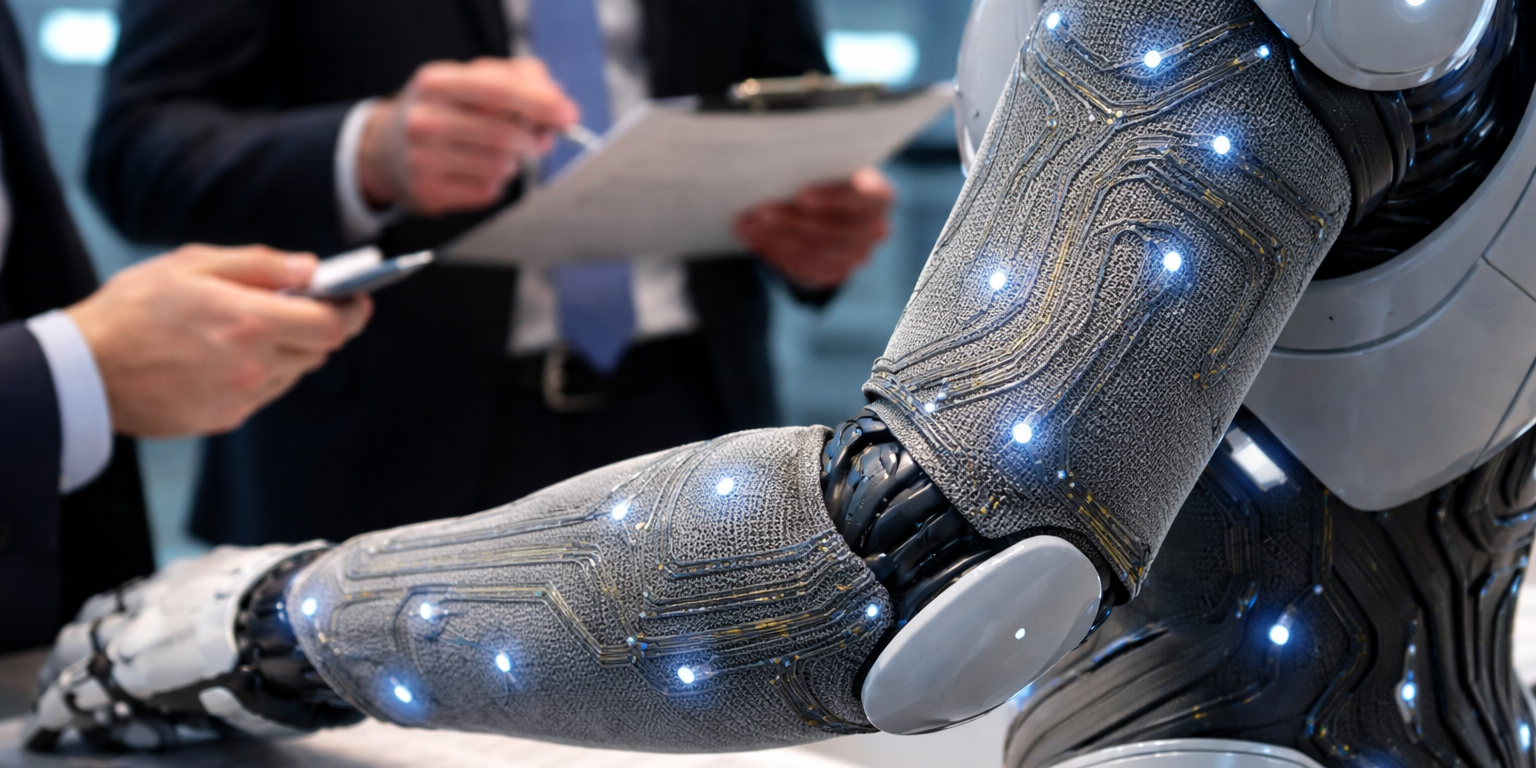
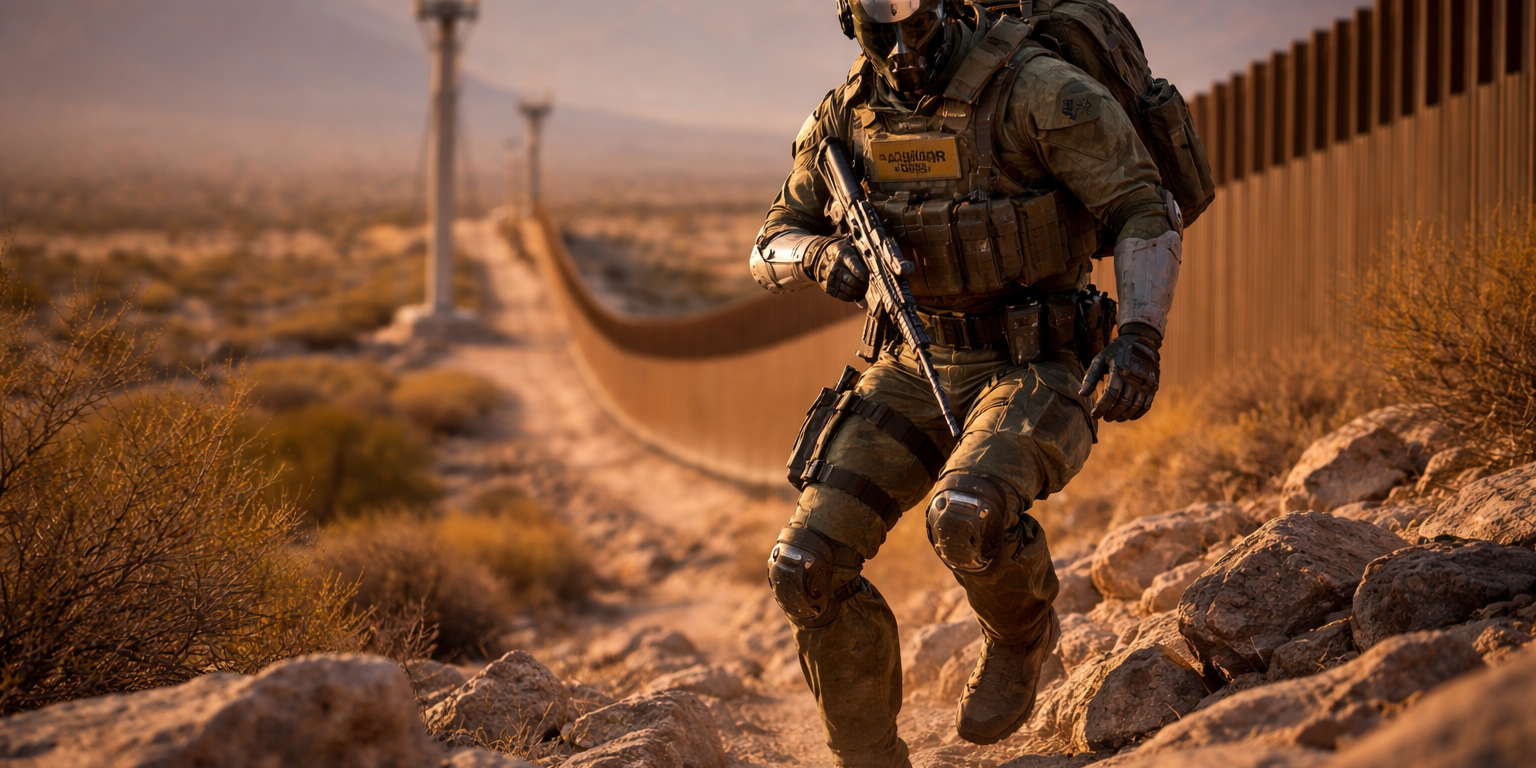
The Department of Homeland Security has opened discussions with robotics manufacturers about deploying humanoid robots for border patrol operations, a significant departure from the agency's current reliance on drones and fixed surveillance infrastructure. The inquiry, first reported through federal procurement channels, asks vendors to address a question posed by border security officials: if drones and watchtowers solve every problem, why do human agents remain necessary at the border? The answer, implicit in the solicitation itself, is that mobile bipedal platforms capable of navigating irregular terrain, opening doors, climbing obstacles, and interacting with physical infrastructure represent capabilities no wheeled or aerial system currently provides at scale. For humanoid robotics companies still searching for commercial applications that justify development costs running into hundreds of millions, a federal security contract represents both validation and revenue.
The timing reflects broader momentum in the humanoid robotics sector. Boston Dynamics, Figure AI, Apptronik, and Agility Robotics have all demonstrated platforms capable of autonomous navigation and manipulation tasks in the past eighteen months. Figure's Figure 02 model demonstrated stair climbing and object retrieval at multiple industry events throughout 2025 and early 2026. Agility's Digit has logged thousands of hours in warehouse operations for customers including Amazon. Apptronik's Apollo participated in automotive assembly trials with Mercedes-Benz. These platforms share common architecture: electric actuators, onboard compute for real-time decision-making, and battery systems providing four to six hours of continuous operation. What they lack is a killer application that moves units at volume. Defense and security procurement, with its tolerance for high unit costs and willingness to fund customization, could provide exactly that. A single border patrol humanoid contract, even at pilot scale, would likely involve dozens of units at price points exceeding $150,000 per platform, dwarfing current commercial orders.
Border Patrol operates in environments that stress robotics hardware. The southern border spans desert, mountains, riverbeds, and dense vegetation across nearly 2,000 miles. Summer temperatures in Arizona and Texas exceed 110 degrees Fahrenheit. Dust infiltrates electronics. Terrain includes loose sand, rocky slopes, and unpredictable obstacles. Any humanoid platform deployed in this context would need weatherproofing beyond what current commercial models offer, along with extended battery life and ruggedized components. It would also need to operate semi-autonomously, since connectivity across remote border regions remains spotty. These requirements favor platforms with modular designs, field-replaceable components, and onboard intelligence that does not rely on cloud computing. They also create opportunity for smaller robotics firms specializing in ruggedization, thermal management, and power systems. The solicitation does not specify whether DHS expects tele-operation capabilities, full autonomy, or a hybrid model, but border security experts interviewed for this piece suggested that human oversight would remain mandatory for any system interacting with civilians or making detention decisions. That implies persistent communication links and control interfaces, adding another layer of technical complexity.
The political and operational context matters as much as the technical specifications. Border security has become a flashpoint in federal policy debates, with both major parties positioning enforcement as a priority. Funding for border infrastructure increased 40 percent between fiscal year 2023 and fiscal year 2026, according to Congressional Budget Office data. Much of that money has gone toward physical barriers, surveillance technology, and personnel. Humanoid robots, if successfully deployed, would represent a new category of border enforcement technology, one that combines mobility with presence in ways drones cannot match. Whether that presence translates to deterrence, operational effectiveness, or simply political messaging depends on implementation details not yet public. What is clear is that DHS leadership views automation as a path to augmenting an agent workforce stretched thin across vast territories. Current Border Patrol staffing stands at approximately 19,000 agents, a number that has remained relatively flat even as border encounters fluctuated. Robots would not replace agents, according to agency statements, but could handle routine patrol tasks, surveillance, and initial response to sensor alerts, freeing agents for situations requiring human judgment.
What to Watch: Monitor procurement filings from Boston Dynamics, Figure AI, Agility Robotics, and Apptronik through the Federal Business Opportunities portal over the next 60 days for formal responses to the DHS solicitation. Watch for partnerships between humanoid manufacturers and defense contractors like Northrop Grumman or Lockheed Martin, who hold existing border security contracts and understand federal compliance requirements. Pay attention to whether Customs and Border Protection announces pilot sites, as operational testing would likely begin at a single high-traffic sector like Rio Grande Valley or Tucson before expanding. Finally, track whether other federal agencies, particularly the Department of Defense, issue similar solicitations, as inter-agency coordination on autonomous systems has become standard practice.