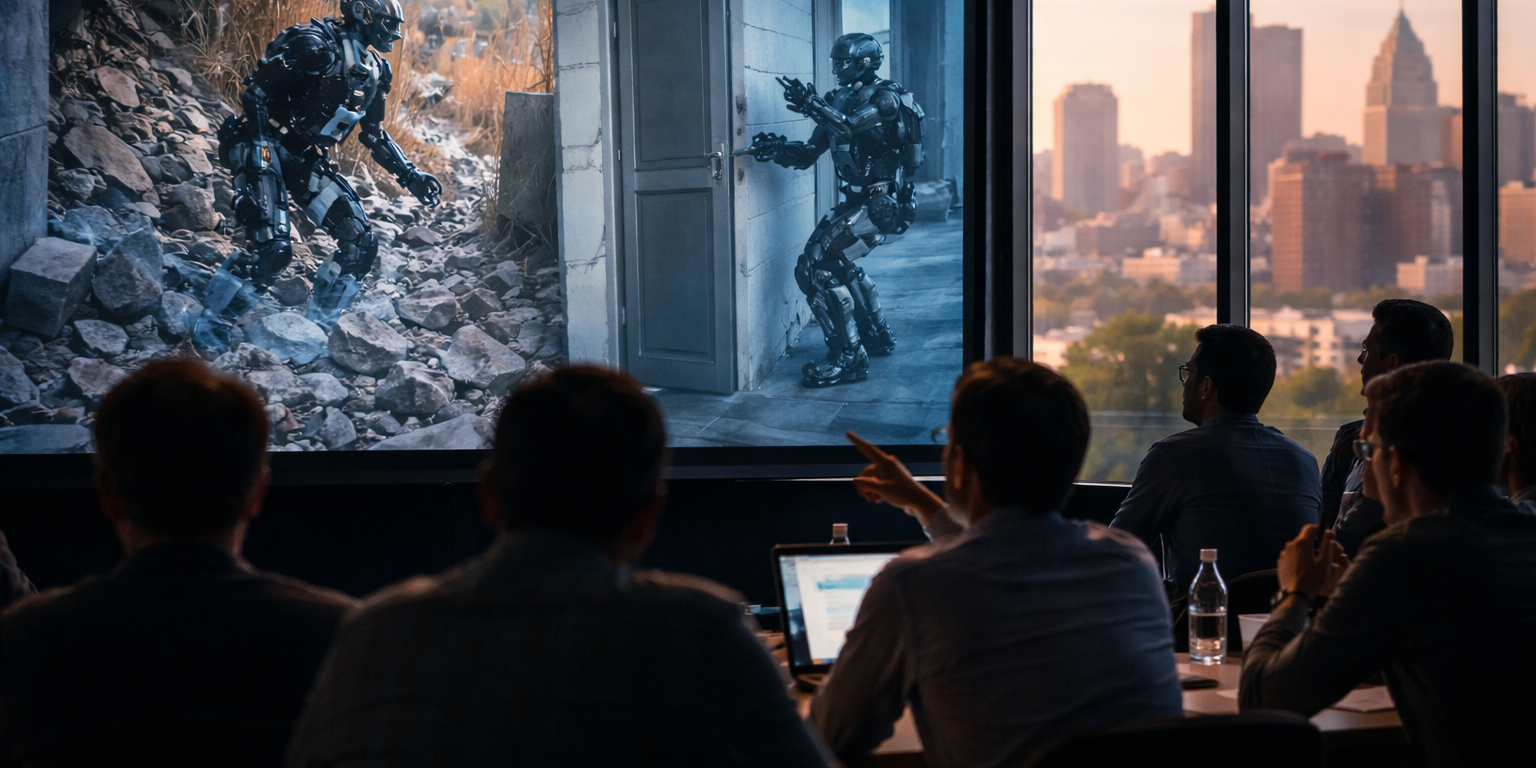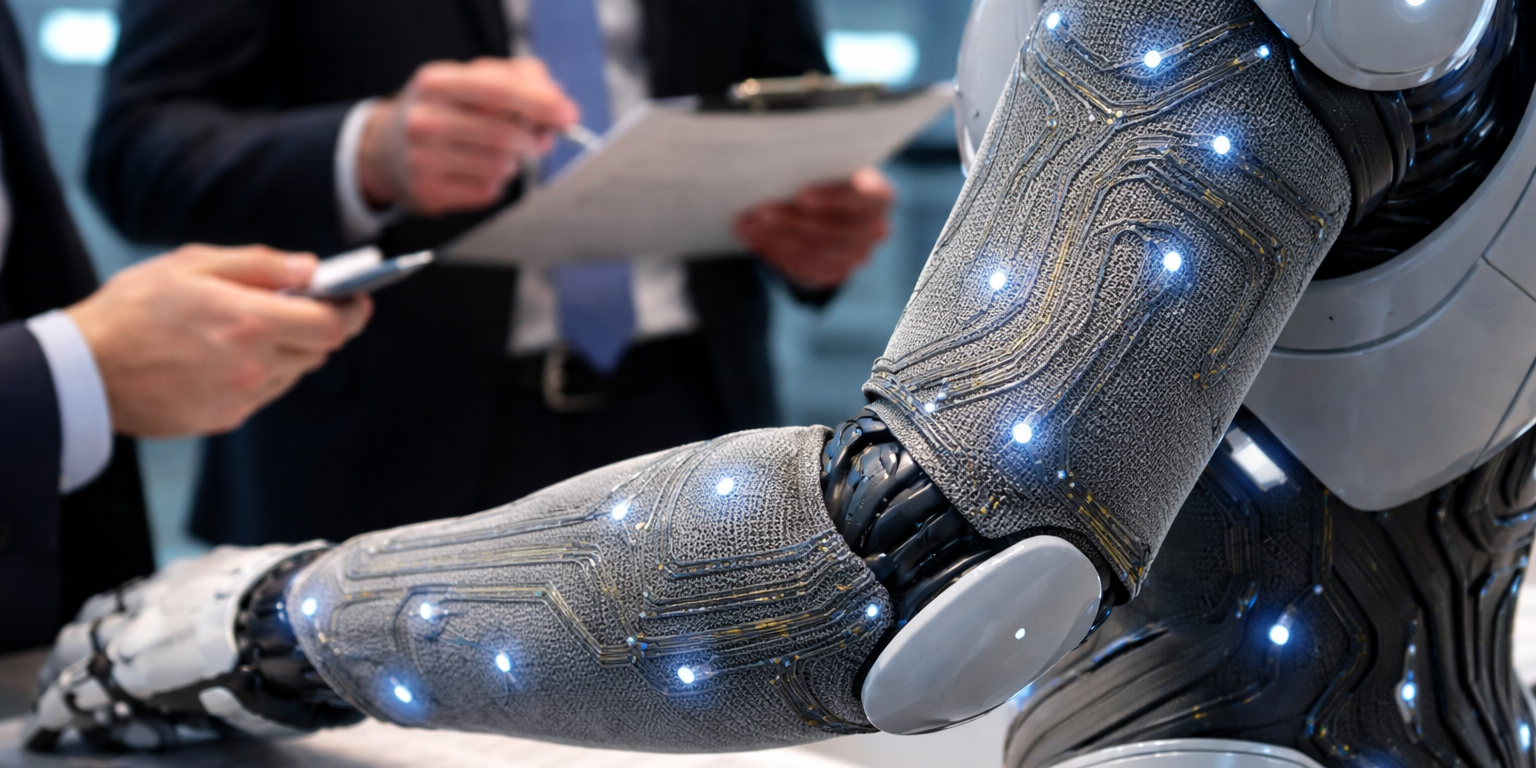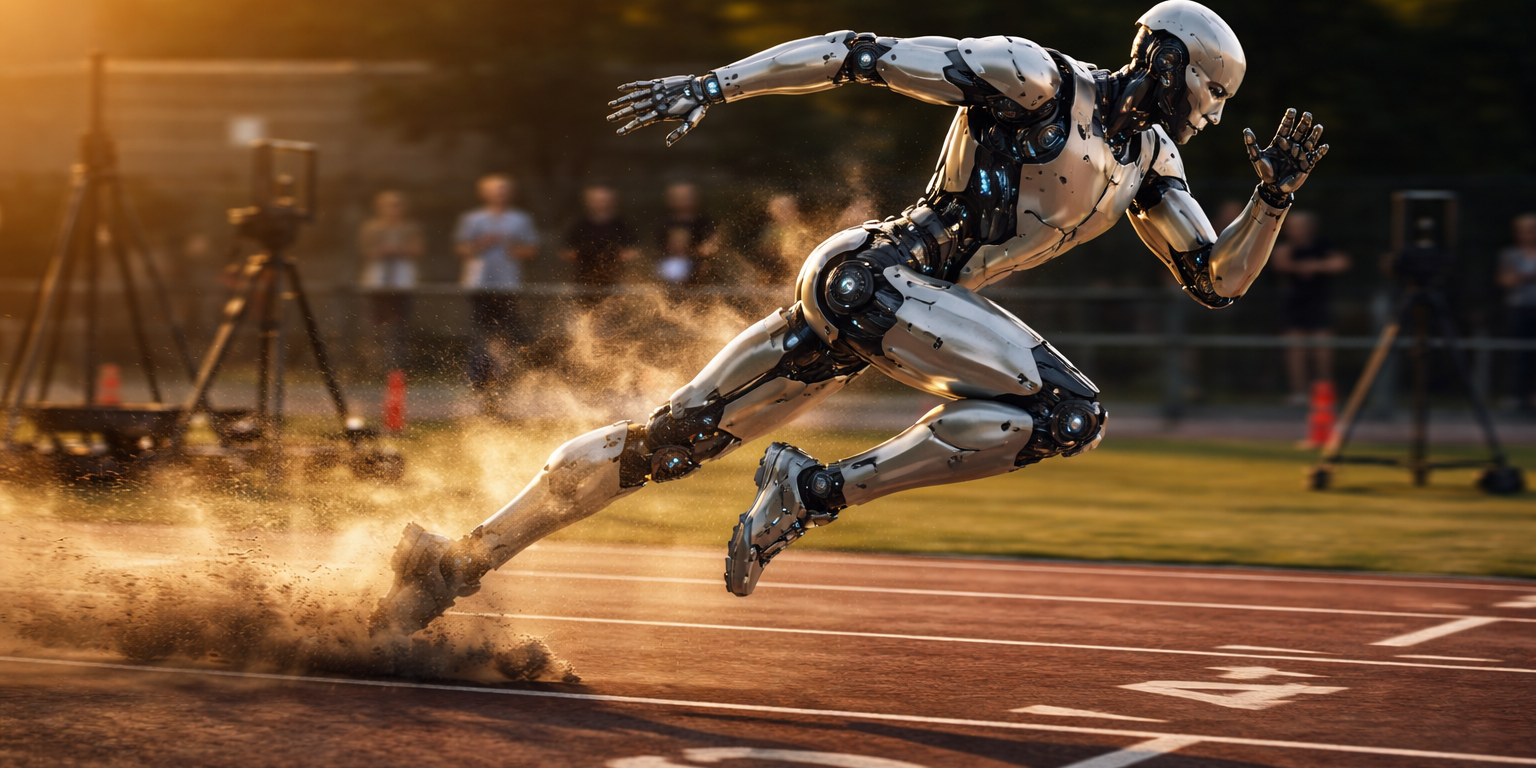
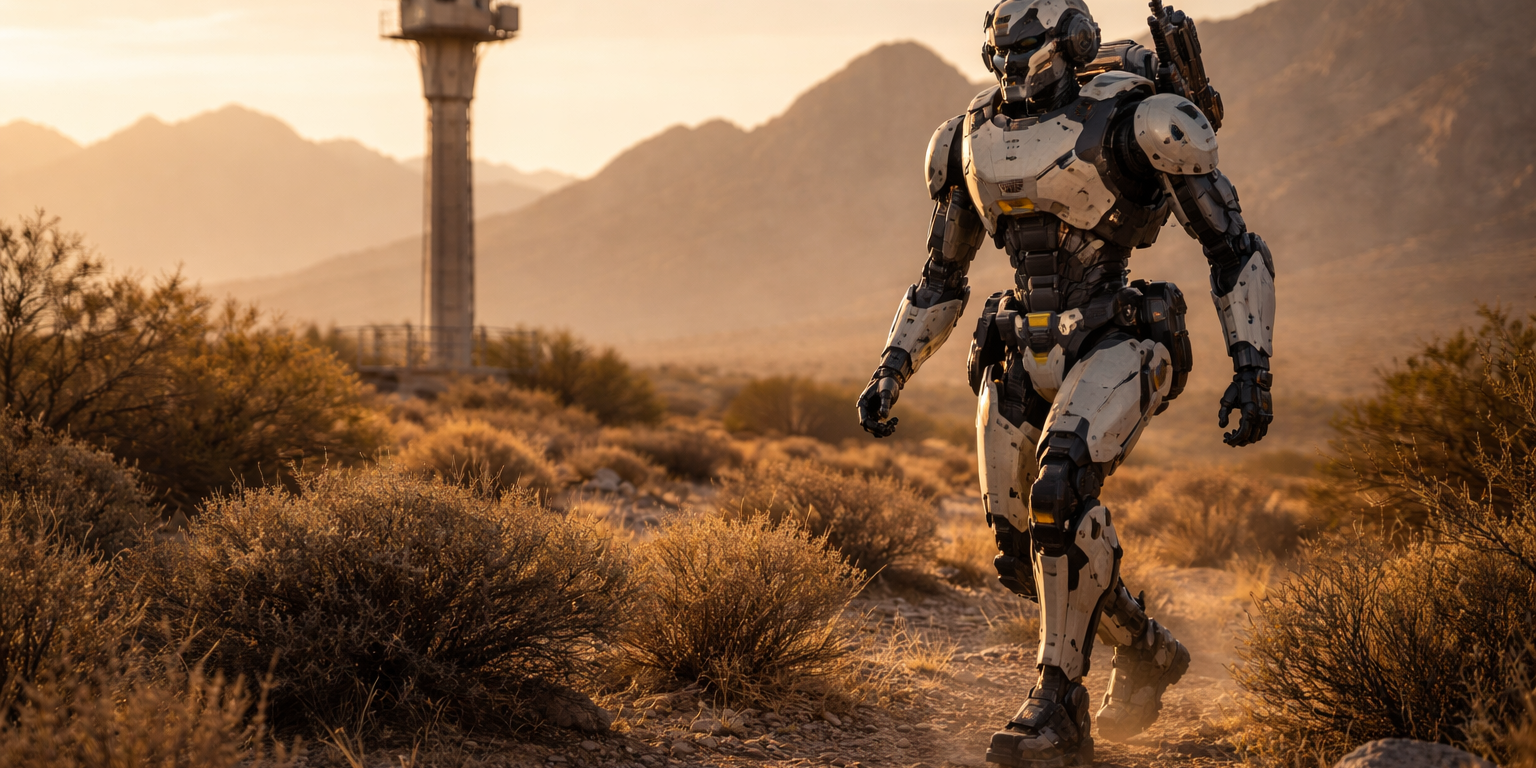
The Department of Homeland Security has opened discussions with robotics manufacturers about deploying humanoid robots as patrol agents along the U.S.-Mexico border, according to industry sources familiar with the inquiry. The conversations, which began in early 2026, represent the first time a federal law enforcement agency has formally considered bipedal robots for field operations in unstructured outdoor environments. One senior DHS official involved in the assessment framed the rationale bluntly: existing surveillance technology can observe, but cannot physically respond to what it sees.
Customs and Border Protection currently deploys approximately 360 integrated fixed towers along the southern border, each equipped with radar and electro-optical sensors manufactured primarily by Anduril Industries and previously by Elbit Systems. These systems feed data to command centers where human analysts determine whether to dispatch agents. The agency also operates a fleet of unmanned aerial systems, primarily Aeronautics Defense Aerostar and General Atomics MQ-9 variants, for longer-range surveillance. Despite this layered sensor architecture, CBP has maintained a uniformed agent workforce of roughly 20,000 to conduct foot and vehicle patrols, make apprehensions, and perform other tasks that require physical presence and judgment. The agency's interest in humanoid platforms stems from a recognition that static sensors create awareness but do not reduce the need for mobile responders who can navigate rough terrain, climb obstacles, and interact with individuals or objects.
The technical requirements for border patrol work differ substantially from the controlled environments where most commercial humanoid development has focused. Any platform considered for this mission would need to operate continuously in desert heat exceeding 110 degrees Fahrenheit, traverse sandy washes and rocky slopes, and maintain stability in high winds. Battery endurance becomes critical in areas where agents routinely patrol 10 to 15 miles from the nearest vehicle access point. The robots would also need to carry communications equipment, possibly non-lethal deterrent systems, and sufficient onboard processing to operate in areas with degraded or absent network connectivity. These specifications effectively rule out most current-generation humanoids designed for warehouse or light manufacturing applications, which typically operate on flat floors in climate-controlled buildings and assume reliable power infrastructure.
Several defense contractors with existing DHS relationships have begun adapting commercial humanoid designs for evaluation, though none have publicly disclosed border-specific variants. Boston Dynamics, which has supplied quadruped Spot robots to multiple federal agencies since 2020, has not announced any bipedal platform for law enforcement use. Figure AI and Apptronik, both of which have focused on logistics and manufacturing applications, have similarly not revealed government-specific development programs. The most likely near-term approach involves ruggedized versions of platforms already in late-stage testing, fitted with mission-specific payloads and wrapped in evaluation protocols that will likely extend through 2027 before any operational deployment. The DHS inquiry also raises questions about human oversight protocols, rules of engagement for autonomous or semi-autonomous systems in law enforcement contexts, and the legal framework governing robot-human interactions in border zones where constitutional protections apply differently than in interior regions.
What to Watch: CBP will likely issue a formal request for information in late 2026 or early 2027, which will reveal specific technical thresholds and provide the first public window into operational concepts. Watch for defense primes including Anduril, which already holds multiple DHS contracts, to announce humanoid partnerships or acquisitions targeting this application. Any prototype field trials will require coordination with Border Patrol sectors in Arizona or Texas, where terrain and climate present the most demanding conditions. Industry observers should also monitor whether DHS seeks standalone humanoid patrols or human-robot teaming models, as that architectural choice will determine platform autonomy requirements and development timelines.