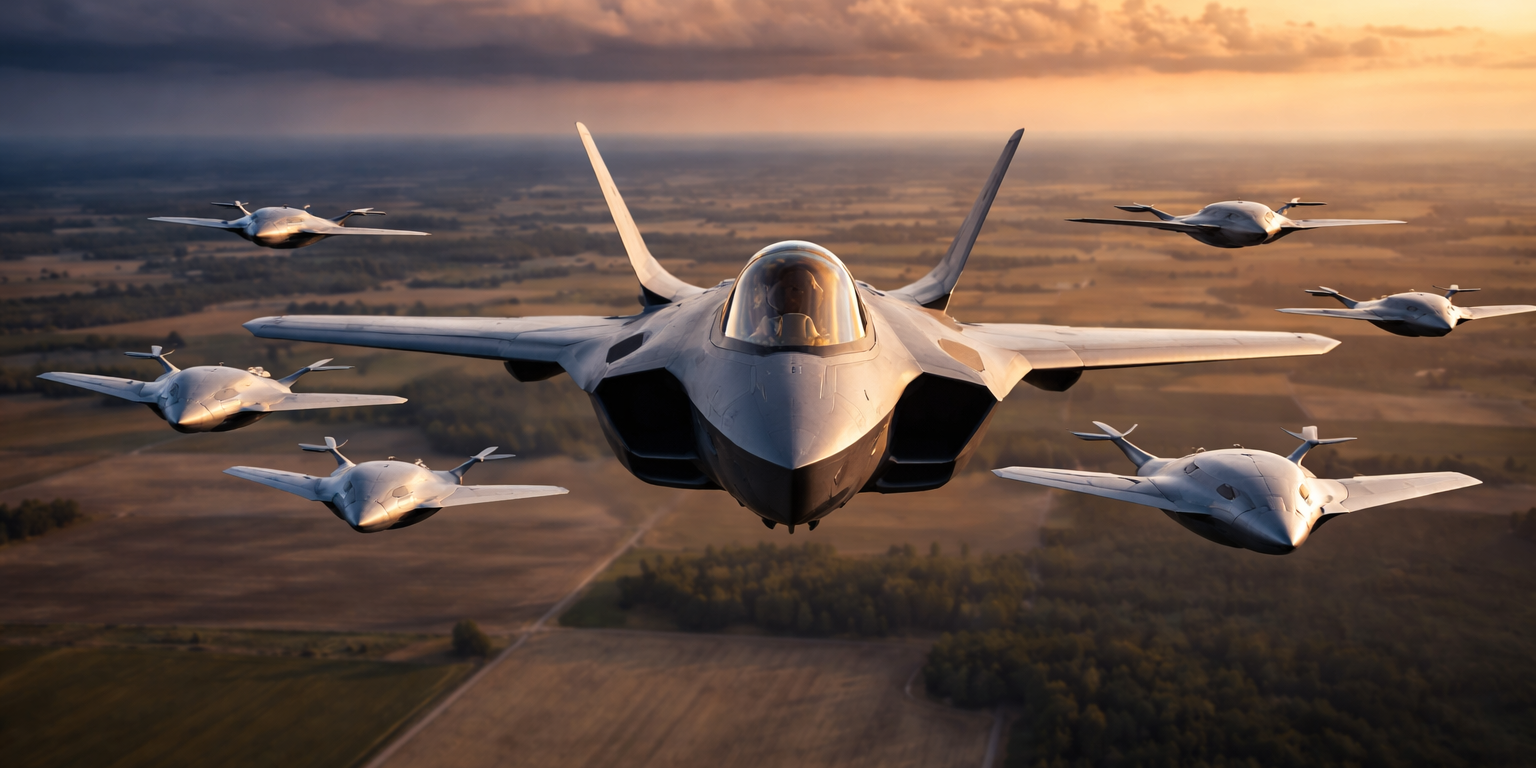
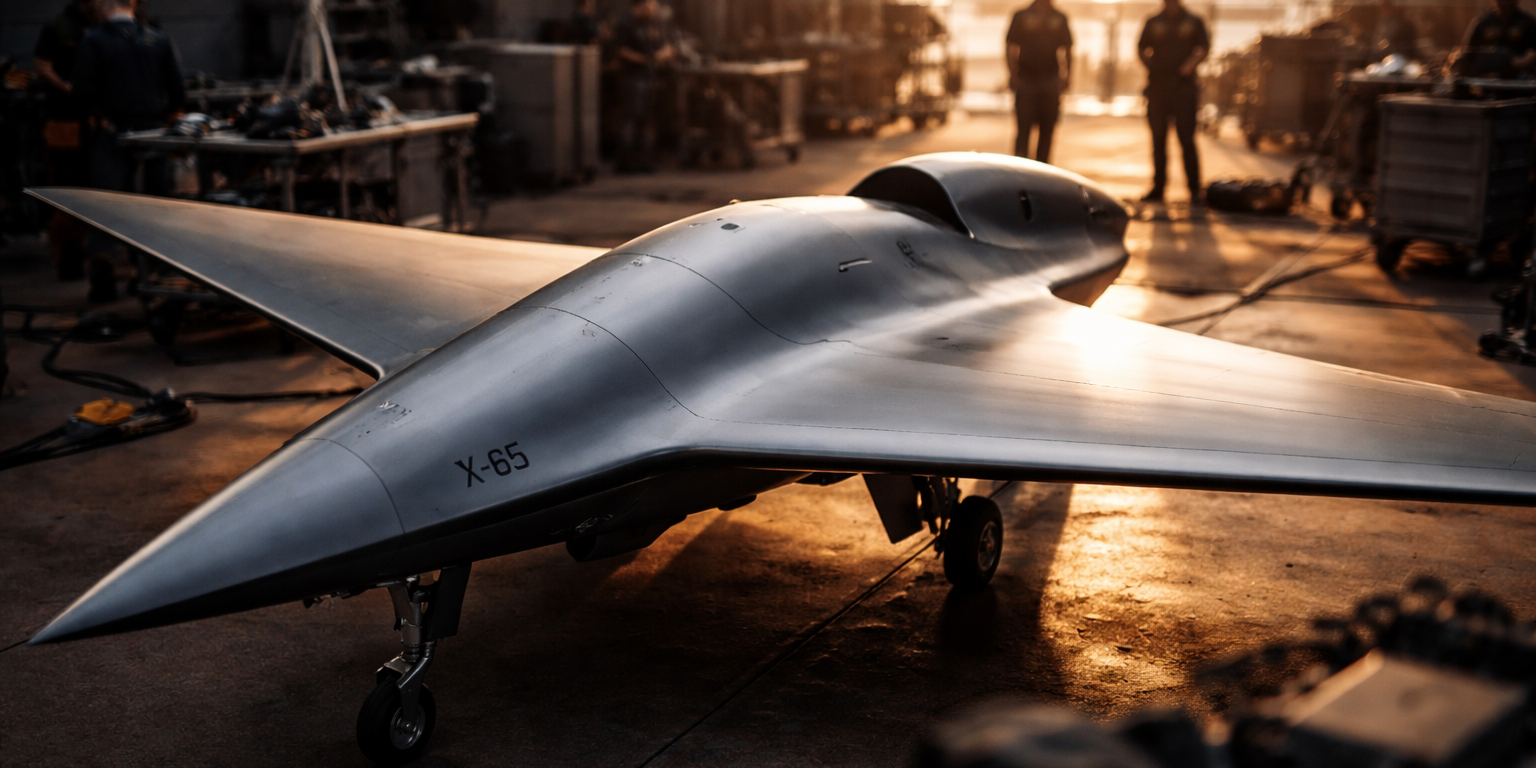
Aurora Flight Sciences has bolted wings onto the X-65, nearly two years after the experimental drone was supposed to take its first flight. The aircraft represents DARPA's attempt to prove that compressed air bursts can replace flaps, ailerons, and rudders entirely—a concept called active flow control that's been stuck in wind tunnels for decades. The delay matters because every month the X-65 sits on the ground is another month the defense industry waits to see whether this approach works outside a laboratory. Flight testing now won't begin until sometime in 2027, according to program updates shared with defense contractors.
The X-65 eliminates every moving control surface from a conventional aircraft. No hinges, no actuators, no hydraulic lines snaking through the wings. Instead, the drone redirects airflow by shooting pressurized air through tiny slots along the wing's trailing edge. Blow air down, the wing generates more lift. Blow it sideways, the aircraft yaws. The entire flight control system reduces to a network of valves and compressed air reservoirs. Aurora and DARPA argue this simplifies maintenance, cuts weight, and makes the aircraft harder to jam since there are fewer mechanical parts to fail or hack. The concept isn't new—NASA and Boeing have tested active flow control on subscale models for two decades—but no one has built a full-scale autonomous aircraft around it until now. The X-65 wing integration means the hardware exists. Whether it flies as advertised is the question keeping program managers awake.
Cost growth has shadowed the program since its 2023 inception. DARPA originally funded Aurora through its Control of Revolutionary Aircraft with Novel Effectors (CRANE) initiative, with initial flight tests penciled in for late 2024. That deadline came and went. By mid-2025, the program had burned through its Phase 1 budget and required additional congressional approval to continue. Senate Armed Services Committee staffers questioned whether active flow control justified the expense when existing drones already maneuver effectively. Aurora countered that the X-65's simplified architecture could cut lifecycle costs by thirty percent compared to conventional UAVs, though the company has yet to release validated figures. The wing attachment in recent weeks suggests Aurora has worked through whatever integration problems stalled progress last year. The airframe itself is relatively simple—a delta-wing design optimized for subsonic flight testing rather than operational deployment. Aurora built it at its Bridgeport, West Virginia facility, where the company produces the Centaur optionally-piloted aircraft and other DARPA prototypes.
The robotics implications extend beyond defense. Active flow control inverts the traditional relationship between software and hardware in autonomous systems. Current drones use machine learning to command mechanical actuators—servos that physically move control surfaces in response to flight computer instructions. The X-65 makes the control surface itself software-defined. Adjust the timing and pressure of the air jets, and you change how the wing behaves aerodynamically. That opens the door to in-flight reconfiguration: the same wing could optimize for speed during cruise, then switch to a high-lift profile for landing, all without moving parts. Commercial cargo drones and urban air mobility platforms face similar tradeoffs between mechanical complexity and operational flexibility. If Aurora demonstrates reliable flight control using only compressed air, companies like Zipline and Volansi will pay attention. The technology also maps onto underwater robotics, where active flow control could replace dive planes and rudders on autonomous submarines. The Navy has funded related research through its Small Business Innovation Research program, though no full-scale prototypes have emerged.
What to Watch: First flight of the X-65 remains officially unscheduled but is expected between March and June 2027 based on typical post-integration timelines. Watch for Aurora to announce high-speed taxi tests at Mojave Air and Space Port, where the company has reserved runway access. DARPA's CRANE program office will publish Phase 2 solicitations later this year if the X-65 achieves stable flight, opening active flow control development to additional contractors. Monitor whether Lockheed Martin's Skunk Works, which has parallel research into plasma flow control, accelerates its own flight testing in response to Aurora's progress.