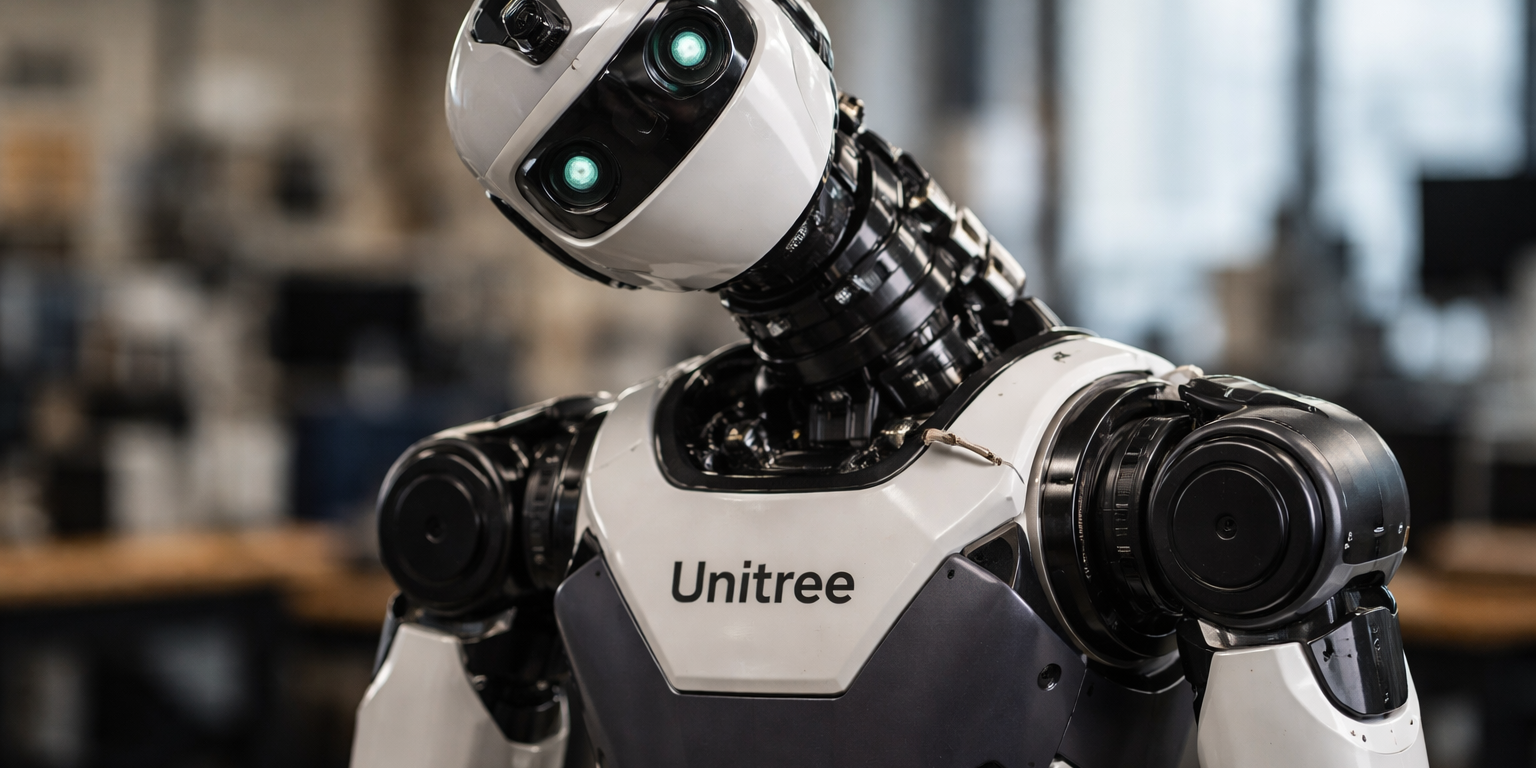
The Defense Advanced Research Projects Agency is putting $3.5 million toward robotic systems that can perform trauma surgery autonomously when human surgeons are unavailable or overwhelmed. The DARPA Surgical Competition, announced this week, targets what military medical planners call "infinite surgical capacity" the ability to treat mass casualties when trained personnel are scarce or unreachable. Development teams will compete to build systems capable of identifying injuries, planning procedures, and executing soft tissue manipulation without real-time human control. The program assumes scenarios where communication networks are degraded, human expertise is unavailable, and survival depends on immediate intervention.
Military medicine has operated under a constraint since the wars in Iraq and Afghanistan: surgical capability scales linearly with the number of trained surgeons available. Forward surgical teams saved thousands of lives in those conflicts, but casualty rates never exceeded what humans on the ground could handle. Pentagon war games modeling high-intensity conflict with peer adversaries consistently show surgical demand spiking beyond available capacity within the first 72 hours. Distributed operations compound the problem. Forces operating across vast distances in the Pacific or Baltic theaters may face hours-long delays before a surgeon arrives. DARPA's program assumes autonomous systems could stabilize patients during that window, performing procedures like hemorrhage control, airway management, and damage control laparotomy the basic interventions that prevent preventable death. The agency is not asking for systems that replace surgeons in routine care. It wants robots that operate when no human alternative exists.
The competition structure remains under development, but DARPA has indicated it will require demonstrated capabilities in perception, planning, and manipulation across multiple trauma scenarios. Participating teams must show their systems can assess injury patterns using onboard sensing, generate surgical plans that account for anatomical variation, and execute those plans on realistic tissue models or cadaveric specimens. The agency has not specified whether competitors will use custom hardware or adapt existing surgical robot platforms. Da Vinci systems and other teleoperated robots dominate current military medical facilities, but those require expert human operators. Converting teleoperation into autonomy represents a significant software and sensing challenge. Computer vision algorithms must distinguish bleeding vessels from surrounding tissue under variable lighting and blood obscuration. Motion planning must account for tissue deformation, unexpected anatomy, and instrument interaction forces. Execution must be fast enough to matter in hemorrhagic shock but precise enough to avoid iatrogenic injury.
Several research groups have published work relevant to the competition in the past three years. Johns Hopkins University demonstrated autonomous suturing on porcine intestine in 2024, using stereo cameras and force sensors to adapt stitching patterns in real time. The Smart Tissue Autonomous Robot system achieved success rates above 90 percent in controlled laboratory conditions. University of California Berkeley researchers showed autonomous debridement of simulated shrapnel wounds in 2025, using a combination of RGB-D cameras and spectral imaging to identify devitalized tissue. Neither system has been tested in field conditions or scaled to handle multiple injury types. The transition from laboratory demonstration to field-ready hardware requires environmental robustness, sterilization protocols, and failsafe mechanisms that academic prototypes typically lack. Military environments add requirements civilian medical robotics never face: vibration tolerance, electromagnetic interference resistance, operation in austere conditions without reliable power or network connectivity. DARPA's funding will test whether current surgical autonomy research can meet those demands. The competition also signals a policy shift. Autonomous weapons systems face intense scrutiny over targeting decisions and rules of engagement. Autonomous medical systems present a different ethical framework. Treating a wounded combatant or civilian carries less moral ambiguity than engaging one. The military medical community has generally supported technologies that expand treatment capacity, and trauma robots face fewer regulatory barriers than combat drones.
What to Watch: DARPA will release a solicitation with detailed technical requirements and evaluation criteria by December 2026. Teams from Johns Hopkins, Berkeley, MIT, and potentially commercial surgical robotics companies are expected to compete. First-round demonstrations are scheduled for late 2027, focusing on specific procedures like bowel anastomosis and vascular repair. Watch for announcements about testing partnerships with military medical centers and trauma hospitals, which will provide realistic injury models and clinical feedback.