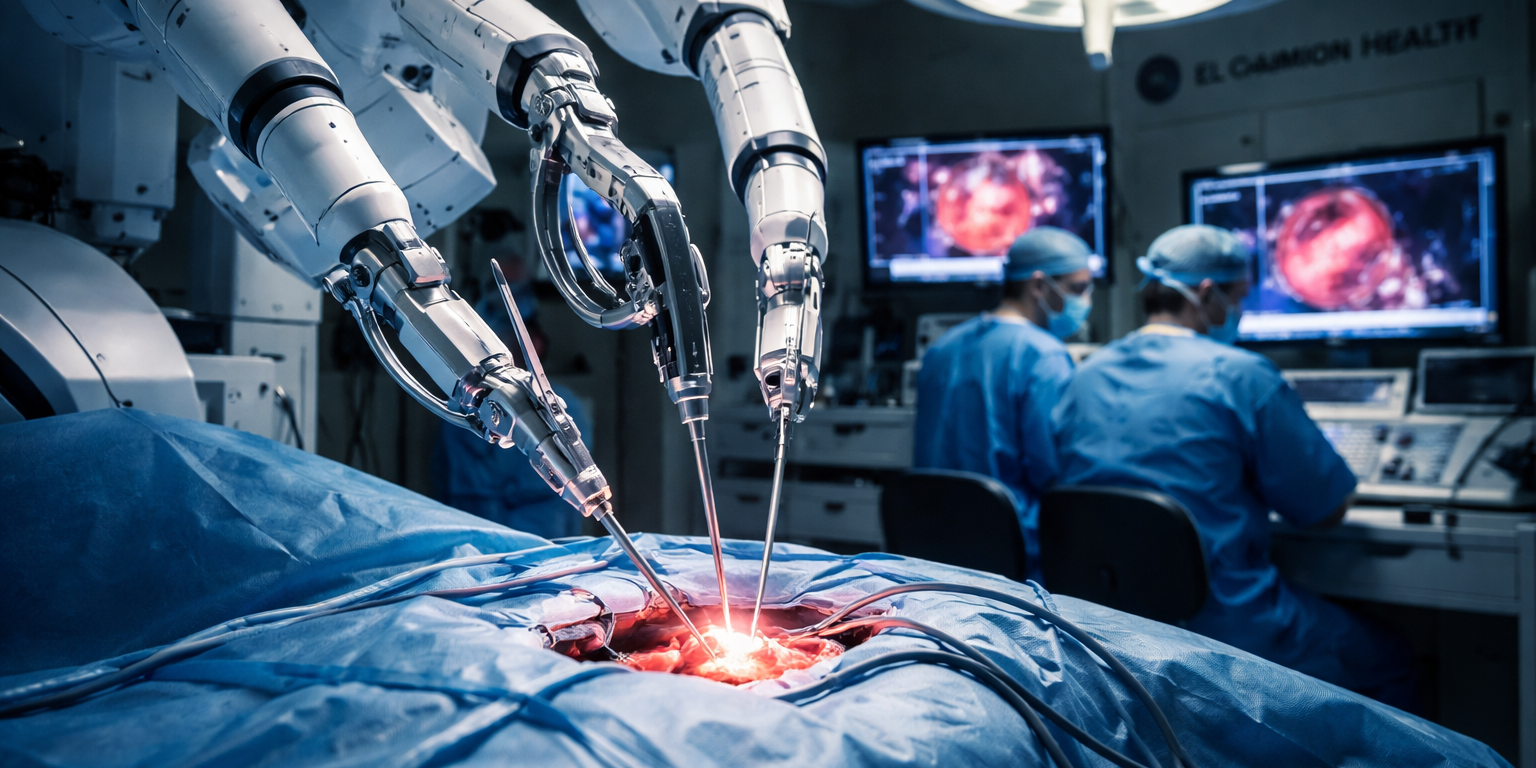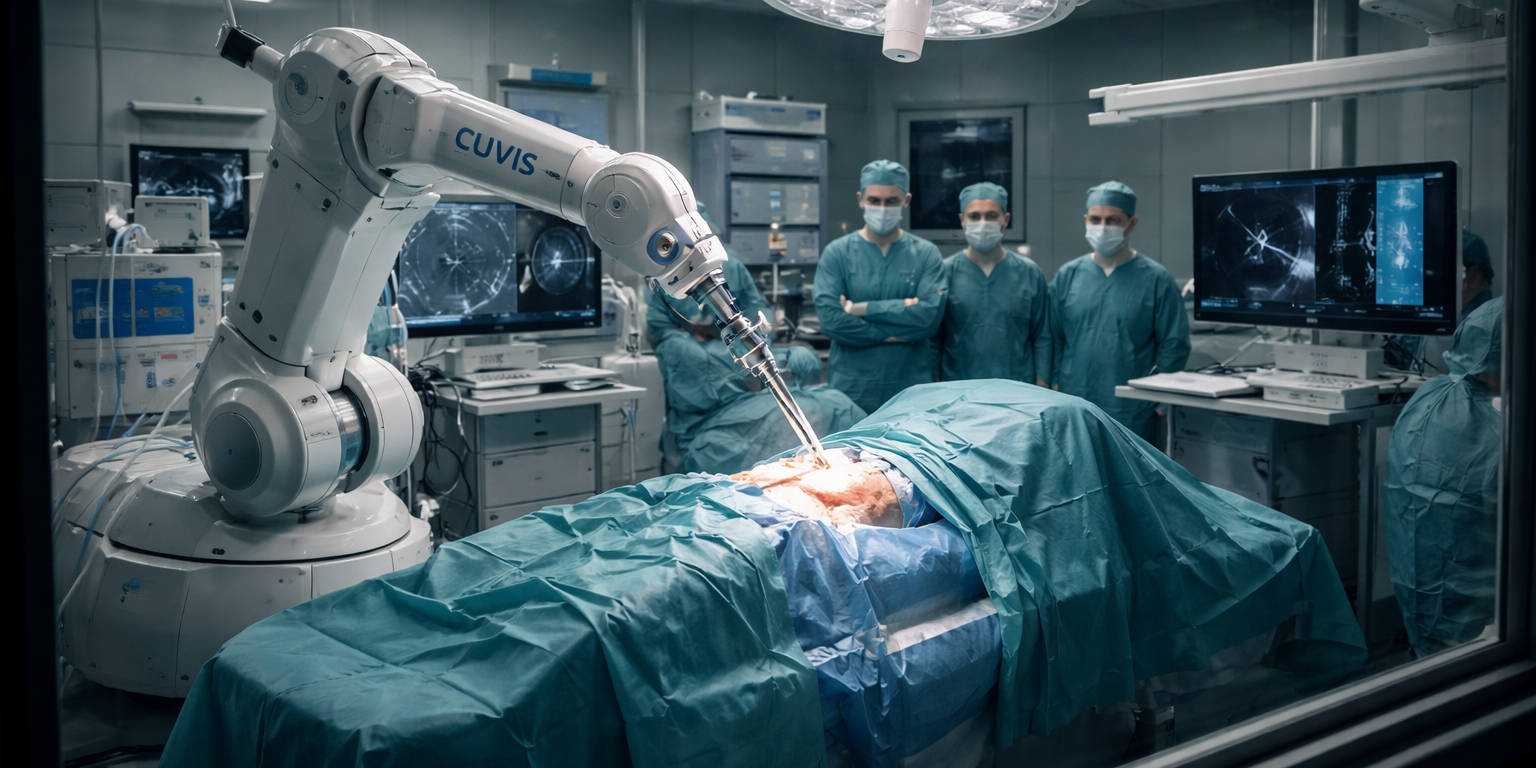
A surgical team at Savelyeva Hospital in Moscow stepped back from the operating table and allowed the CUVIS Hip robotic system to execute an entire hip replacement without manual intervention, the first such autonomous procedure recorded in Russia. Anastasia Rakova, Deputy Mayor for Social Development, confirmed the operation to reporters, describing the deployment as a validation point for domestically developed surgical automation. The procedure eliminates the surgeon-as-puppeteer model common in most robotic surgery today, where machines amplify a physician's movements but never act independently. Here, the robot owned the task from incision to implant seating.
The CUVIS Hip platform represents a strategic pivot for Russian orthopedics. Western sanctions following the 2022 invasion of Ukraine severed access to Stryker's Mako and Zimmer Biomet's Rosa systems, the dominant robotic hip platforms in Europe and North America. Russian hospitals capable of robotic surgery faced a choice: revert to manual techniques or commission local alternatives. CUVIS, developed by a consortium that includes state-backed research institutes, emerged as the primary domestic answer. The system combines preoperative CT imaging with intraoperative force feedback to position acetabular cups and femoral stems without surgeon override. Industry sources indicate the platform passed clinical trials at three Moscow-area hospitals before the Savelyeva deployment, though regulators have not released performance benchmarks comparing revision rates or recovery timelines to manual procedures.
Fully autonomous surgical robots carry engineering challenges absent in teleoperated systems. The machine must interpret soft tissue deformation in real time, detect unexpected bone density variations, and abort maneuvers if resistance exceeds safety thresholds. For hip replacement specifically, acetabular cup orientation errors exceeding three degrees correlate with accelerated implant wear and dislocation risk, a margin too narrow for slow-loop decision algorithms. CUVIS reportedly uses a hybrid control architecture: a pre-planned trajectory derived from imaging data, adjusted millisecond-by-millisecond via haptic sensors embedded in the cutting and reaming tools. The robot does not learn intraoperatively; its behavior remains deterministic, bounded by parameters the surgical team sets during case planning. This design philosophy mirrors approaches taken by European developers like THINK Surgical, whose TSolution One platform automates portions of knee arthroplasty but reserves final implant placement for the surgeon.
The announcement carries implications beyond orthopedic circles. Russia's broader medical robotics sector remains fragmented, with limited serial production capability and dependence on imported precision actuators. Analysts tracking the defense-to-civilian technology pipeline note that CUVIS components likely share lineage with systems developed for remote munitions handling and UAV maintenance, areas where Russian engineering has achieved measurable autonomy. If CUVIS proves durable across high-volume hospital deployments, the platform could anchor a domestic supply chain for surgical actuators, vision systems, and sterile-rated control electronics. That would parallel China's trajectory: Beijing leveraged restrictions on imported surgical robots to bootstrap local manufacturers like Tinavi Medical, which now exports navigation systems to Southeast Asia. The question for Russia is whether commercial incentives alone can sustain production, or whether state procurement will need to subsidize output indefinitely. Savelyeva Hospital's adoption suggests at least one major Moscow institution believes the technology merits clinical integration, though broader uptake will hinge on reimbursement policies and surgeon training pipelines that remain opaque.
What to Watch: Track whether Russia's Ministry of Health updates reimbursement codes to cover CUVIS-assisted procedures by Q4 2026, a regulatory prerequisite for multi-site adoption. Monitor reports from orthopedic conferences in Moscow and St. Petersburg through early 2027 for case series data comparing revision rates and functional outcomes to manual baselines. Watch for export licensing activity if CUVIS targets markets in Central Asia or the Middle East, regions where Western sanctions create procurement gaps. Finally, observe whether other Russian surgical robotics developers, particularly those focused on abdominal and thoracic procedures, accelerate timelines based on CUVIS's apparent regulatory clearance pathway.