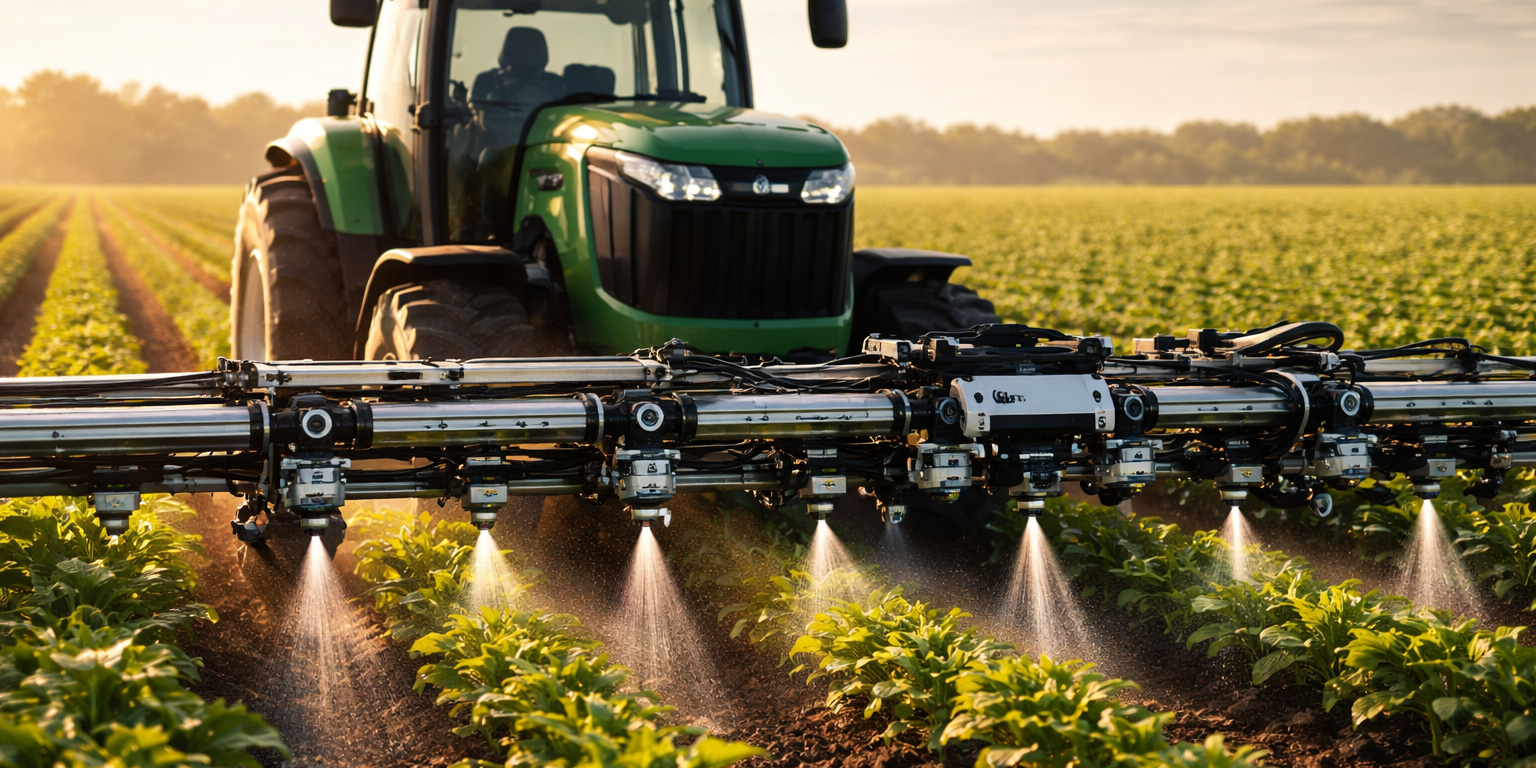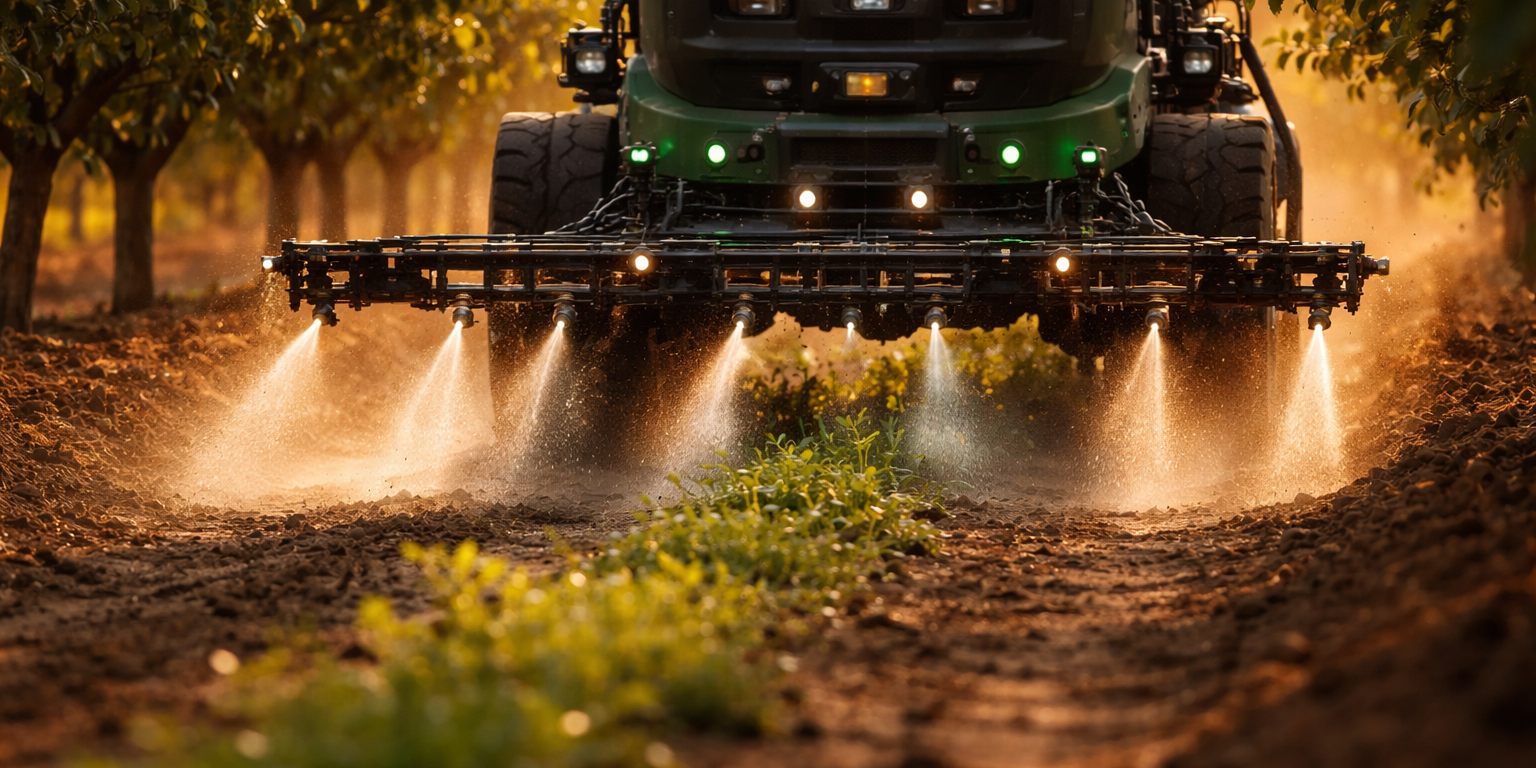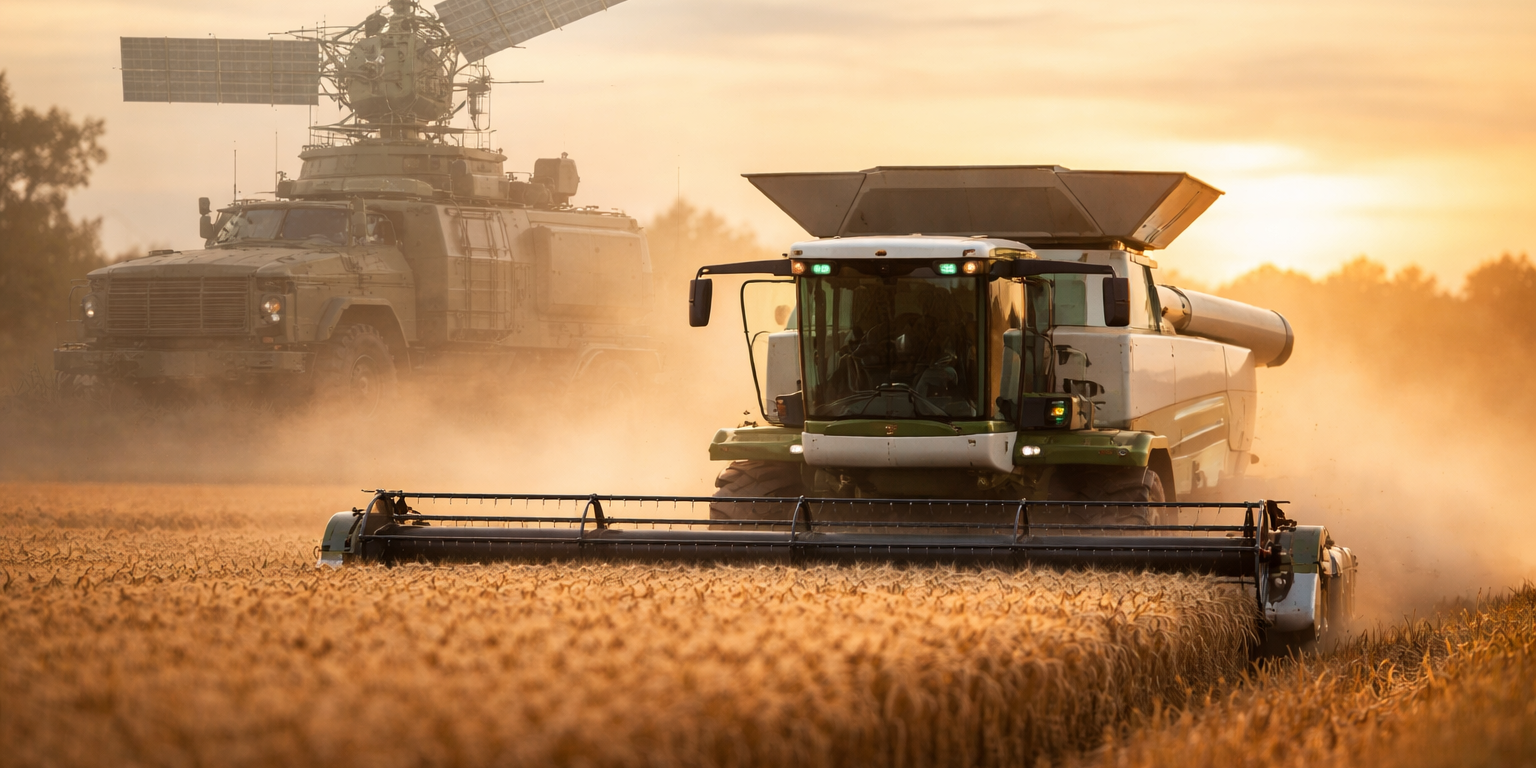
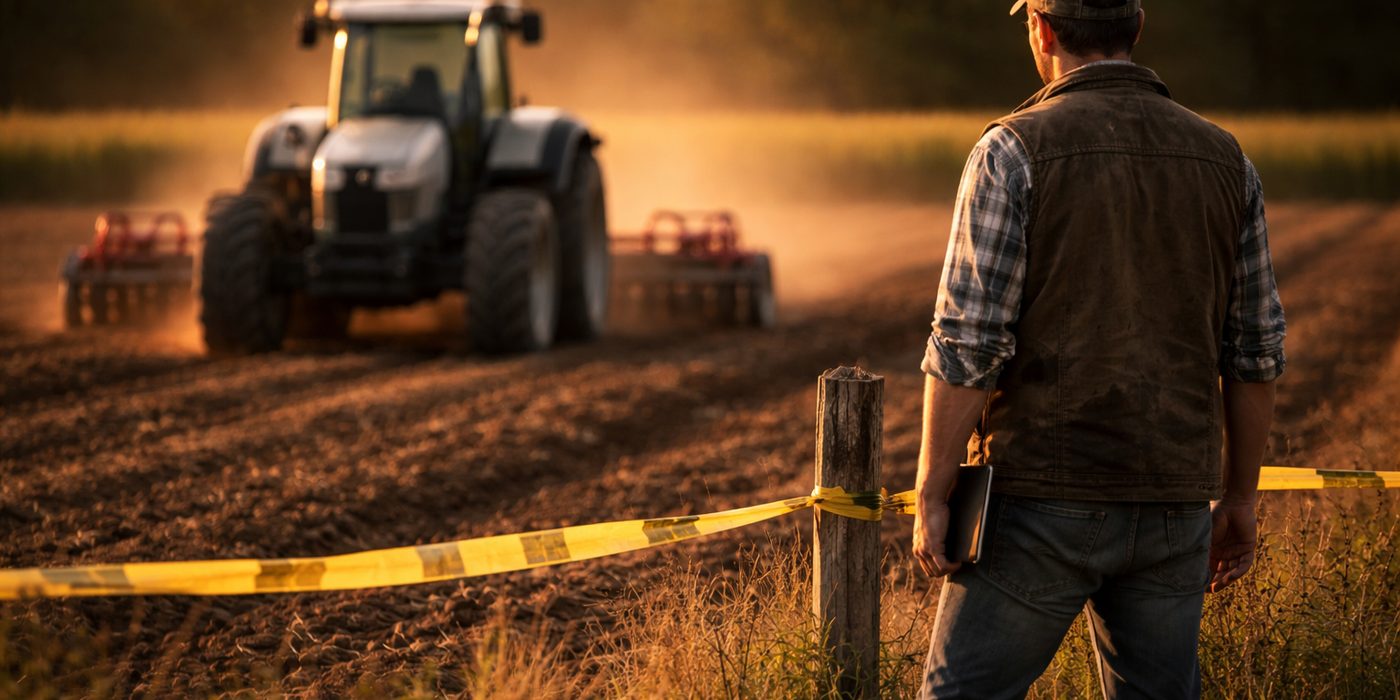
Nobody knows who goes to court when a robot tractor kills a person, and that is the problem. Autonomous tractors, weeders, and harvesters are already working fields across Europe and North America, but the legal framework governing them was written for a world in which a human sat in the cab. When a conventional tractor rolls over a bystander, the operator answers for it. Remove the operator and the chain of responsibility fractures into at least three directions: the farmer who deployed the machine, the manufacturer who built it, and the developer who wrote the software that made the decision. Future Farming recently framed the question as one the agricultural industry will be wrestling with for years, and the sober reading is that it has barely started.
The uncertainty exists because agriculture sits in an awkward regulatory gap. Road vehicles have decades of liability precedent and, increasingly, purpose-built autonomous vehicle statutes. Industrial robots operate inside fenced cells under well-understood machinery safety standards. A self-driving tractor does neither. It works on private land, often alongside family members, seasonal laborers, and the occasional trespasser, in an environment that is unstructured, muddy, and unpredictable. Existing product liability doctrine can reach manufacturers when a defect causes harm, yet proving that a neural network's perception failure constitutes a design defect, rather than an unforeseeable edge case, is far harder than pointing to a snapped brake line. Negligence claims against farmers face their own test: did they supervise the machine to a reasonable standard, and what does reasonable mean for a vehicle sold on the promise that it needs no supervision?
The commercial stakes explain why the question keeps surfacing in board meetings. Autonomy vendors sell on labor savings, and labor scarcity is real. Farms across the American Midwest and the European Union struggle to hire seasonal workers, and a machine that runs through the night is an attractive answer. But buyers are conservative, capital-constrained, and personally exposed. A farm is frequently a family business where the owner's home, land, and livelihood sit inside the same legal entity. Asking such a buyer to accept open-ended criminal and civil risk for a machine whose decision-making they cannot inspect is a hard sell. Manufacturers, meanwhile, are reluctant to absorb that risk by default, because a single fatality could produce litigation that dwarfs the revenue of an entire product line. The result is a standoff in which each party prefers that someone else go first.
In practice, the gap is being filled by contracts and insurance rather than statute. Expect more indemnification clauses, tiered operating-domain restrictions, and geofencing that confines machines to areas where humans are excluded by design. Several manufacturers already restrict fully driverless operation to fields with defined perimeters and require remote monitoring or physical safeguards before the machine will move. Insurers, for their part, are building actuarial models with almost no loss history to draw on, which pushes premiums up and coverage terms toward the narrow. The sharpest observation for engineers is this: the liability question is not only a legal puzzle but a design constraint. Event logging, deterministic safety layers, and auditable decision records are becoming the evidence that determines who pays. A vendor that can reconstruct exactly why its machine acted as it did holds a far stronger defensive position than one that cannot. Safety architecture is turning into legal architecture, and the companies that treat it that way earliest will likely carry less risk into the courtroom.
What to Watch
Track how standards bodies handle agricultural autonomy, particularly revisions to ISO 18497, the machinery safety standard covering highly automated agricultural machines, and whether functional-safety requirements tighten for driverless operation. Watch the European Union's rollout of its AI Act obligations and Machinery Regulation, whose provisions on high-risk and self-evolving systems will shape manufacturer duties for farm robots sold into the bloc. Follow insurance developments closely: any major carrier launching a dedicated autonomous-agriculture product, or conversely withdrawing coverage after a serious incident, will reset the market quickly. Finally, monitor the first fatal or serious-injury case involving a driverless farm machine, because the legal reasoning in that dispute, wherever it lands, will become the template everyone else is forced to follow.