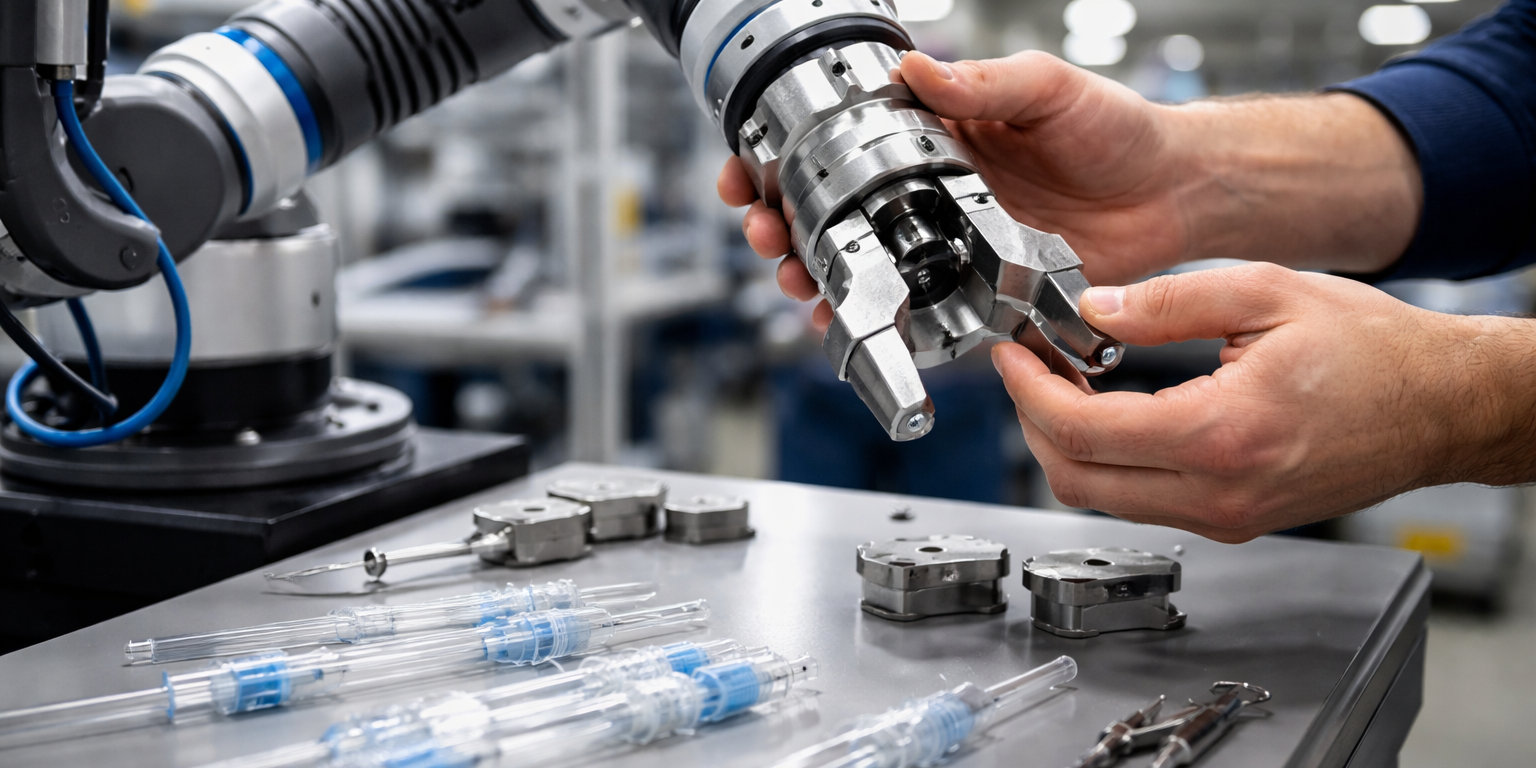
A medical device contract manufacturer in Minnesota reprograms its robotic assembly cell three times per week to handle different catheter designs, each production run spanning just 200 units. The economics work because the vision system cost $4,200 and the gripper swap takes eleven minutes. Five years ago, the engineering time alone to set up such a cell would have exceeded the revenue from the entire production run.
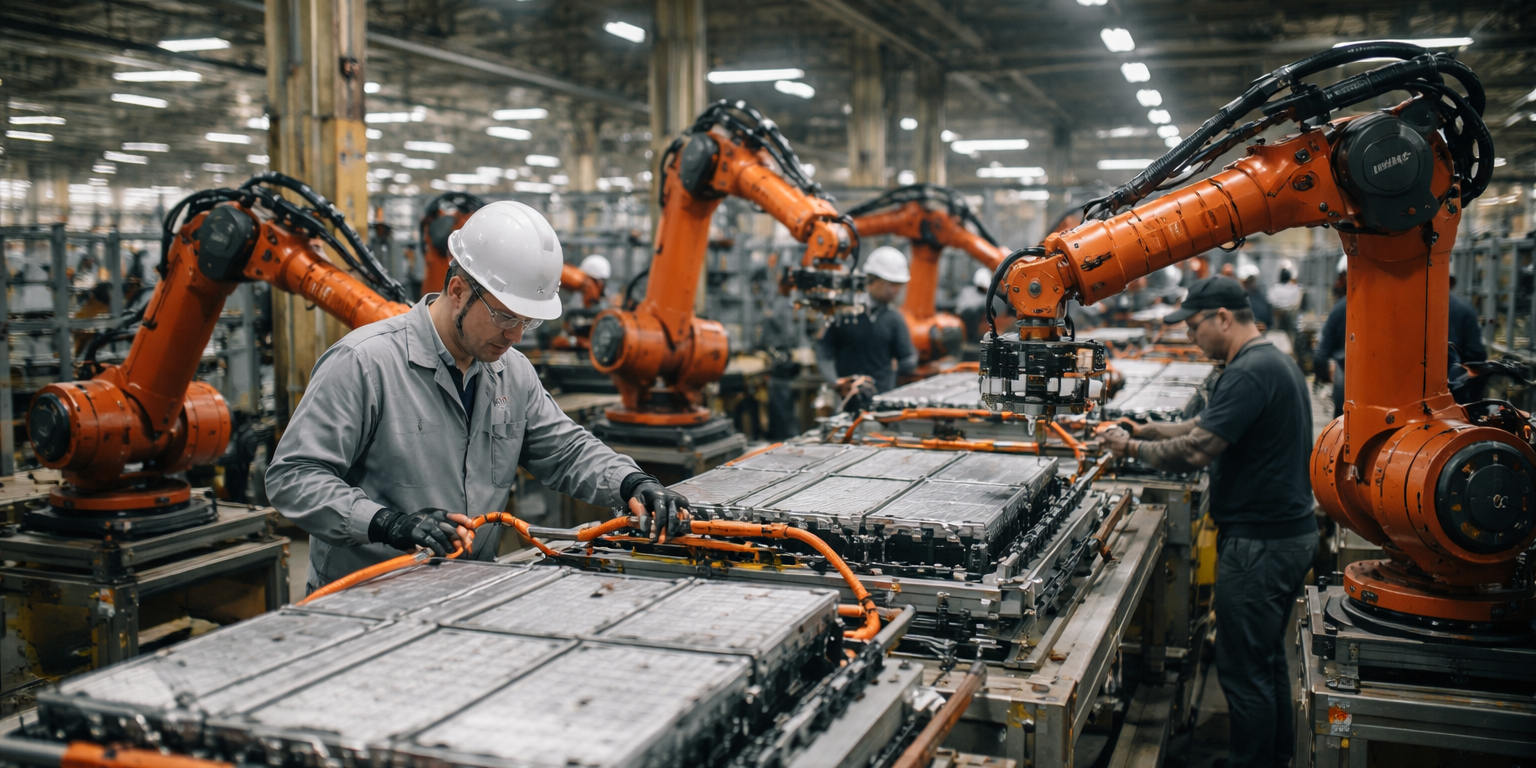
Industrial robots have historically clustered in sectors where products never change and volume justifies dedicated automation. Automotive assembly accounts for roughly 30 percent of global robot installations, electronics another 25 percent, according to International Federation of Robotics data through 2025. Both industries produce millions of identical units using materials and assembly sequences that lend themselves to mechanical repetition. The capital cost of a robotic cell—often $150,000 to $400,000 installed—made sense only when amortized across years of unchanging production. That math excluded the vast majority of manufacturing, where batch sizes number in the hundreds or low thousands and product variants proliferate. Contract manufacturers, aerospace suppliers, food processors, and specialty chemical producers largely remained manual operations because the cost of reprogramming a robot between batches exceeded any labor savings.
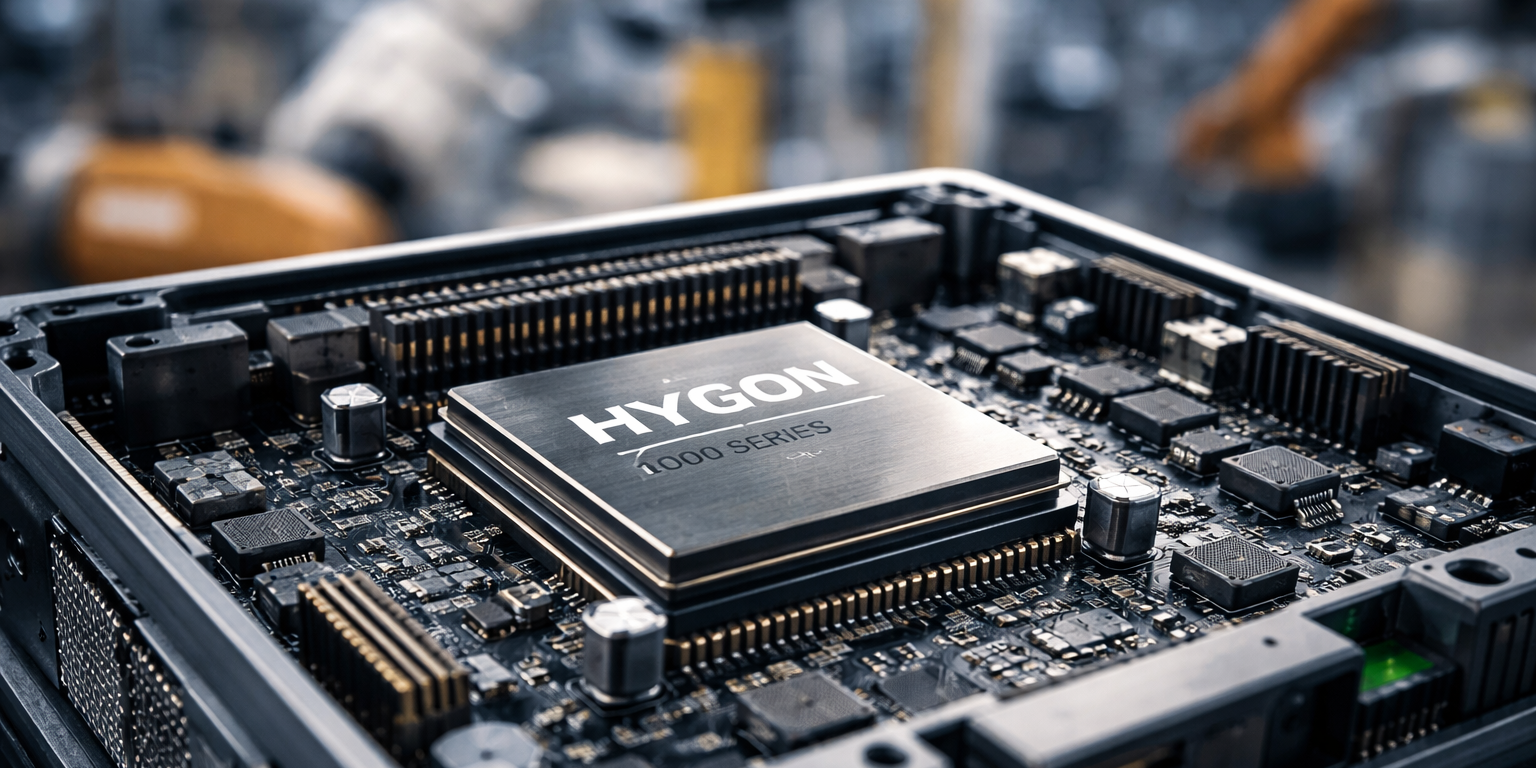
What changed is not the robot arm itself but the peripheral technology that tells the arm what to do. Vision systems from companies including Cognex, Zebra Technologies, and Omron now run inference models that identify part orientation and surface defects in real time, eliminating the need for custom fixtures that hold components in precisely the same position every cycle. A gripper ecosystem from Schunk, OnRobot, and Robotiq offers tool changers that swap end effectors in under fifteen seconds, letting one arm handle fragile glass vials one hour and metal brackets the next. Offline programming software from Siemens and ABB lets engineers simulate and debug robot paths on a laptop rather than tying up production floor time. The cumulative effect: setup time for a new task has dropped from weeks to hours, and the engineering labor from $40,000 per deployment to under $8,000. Suddenly a production run of 500 aerospace brackets justifies a robotic cell that reconfigures the next day for 300 hydraulic manifolds.
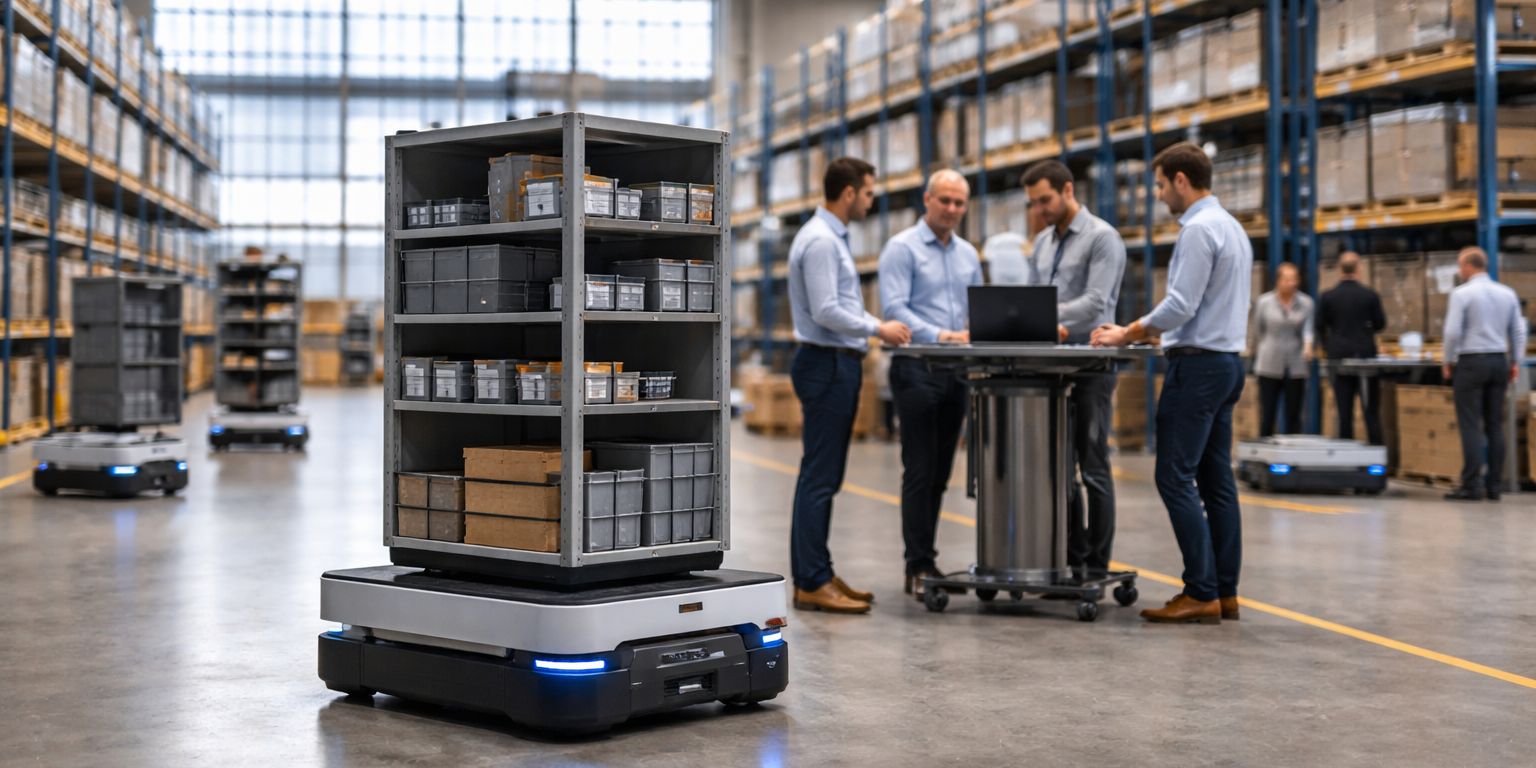
The implications ripple through capital equipment markets and labor economics alike. Smaller manufacturers who never considered robotics now compete for the same collaborative robot models—chiefly Universal Robots, Fanuc, and ABB units in the 5-to-10-kilogram payload class—that previously sold almost exclusively to automotive suppliers. Machine vision revenue is growing faster in food and beverage than in electronics, a reversal from the prior decade. Meanwhile, the labor case for automation has shifted. High-mix, low-volume production historically required skilled assemblers who could adapt to new tasks daily; now the requirement is for technicians who can operate vision system interfaces and swap gripper jaws. Workforce development programs are pivoting accordingly, with community colleges in Michigan and Tennessee adding robot programming certificates tailored to small batch manufacturing rather than automotive repetition. The human role is becoming more supervisory and less tactile, but the transition is uneven. Shops with fewer than fifty employees often lack the in-house expertise to maintain vision systems or debug path planning errors, creating demand for regional integrators who service multiple low-volume clients rather than installing one massive automotive line.
What to Watch: Track whether Cognex and Keyence maintain vision system pricing below $5,000 as competition from Chinese suppliers including Hikrobot intensifies through late 2026. Monitor adoption rates in food processing, where sanitary requirements have historically added $30,000 to cell costs; ABB and Stäubli both plan washdown-rated collaborative models for Q4 2026 release. Watch for regional integrator consolidation as private equity identifies recurring service revenue from low-volume manufacturers as a more stable income stream than project-based automotive work.