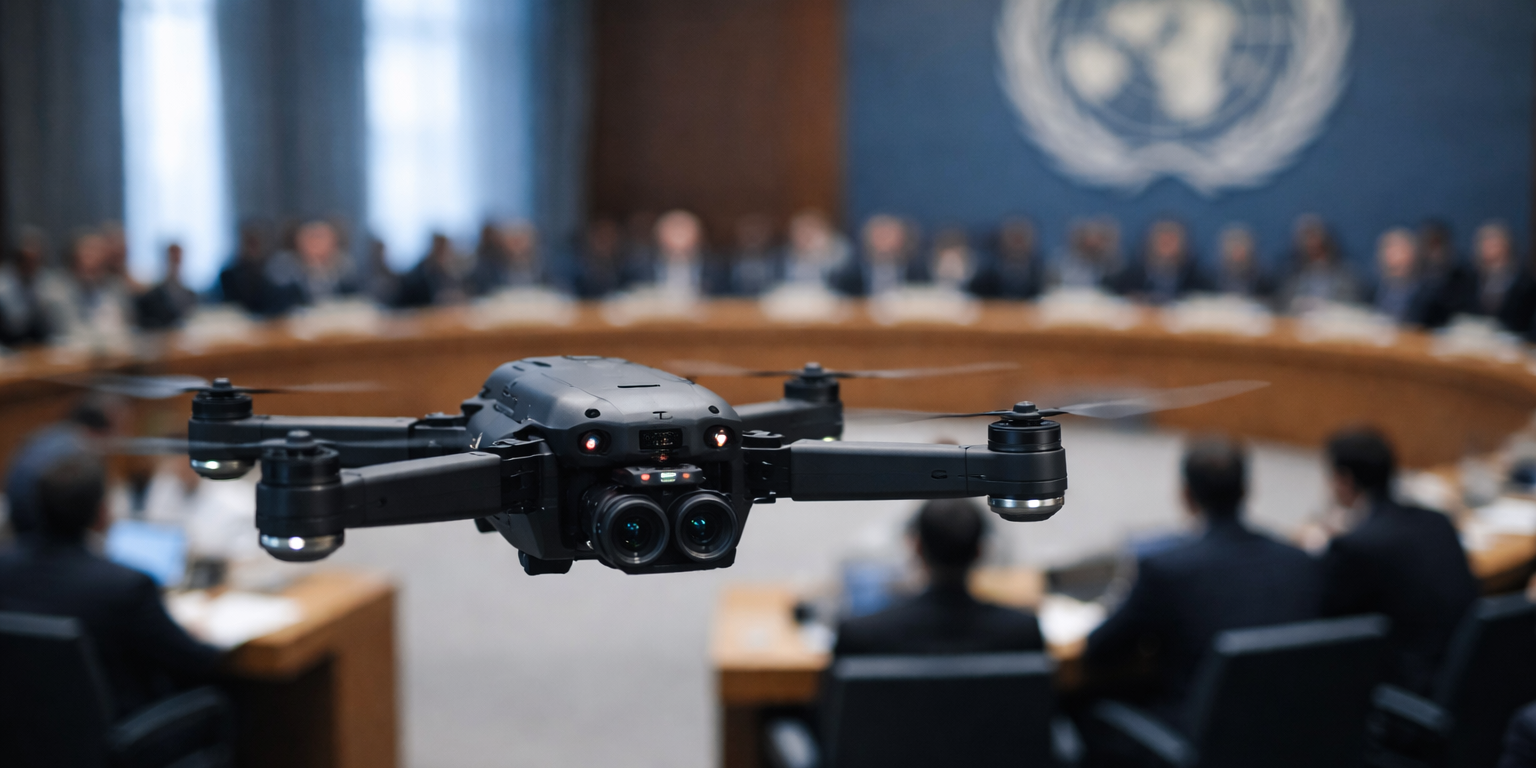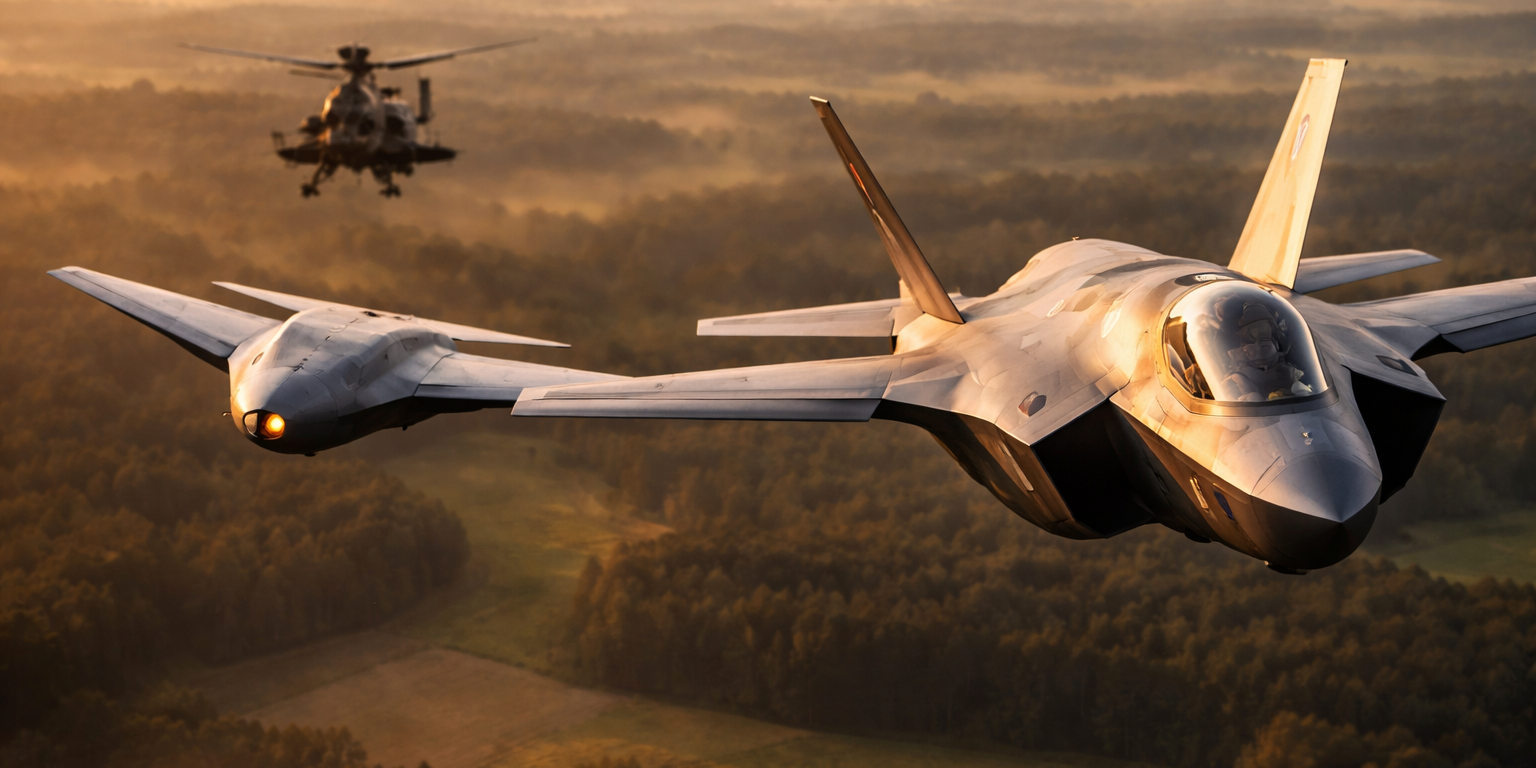
Anduril Industries has presented Poland's Ministry of National Defence with autonomous aircraft designed to fly in formation with the country's incoming F-35 fighter jets and Apache helicopters, extending the company's footprint in a European market where defense spending has climbed sharply since Russia's full-scale invasion of Ukraine. The drones under discussion belong to the company's collaborative combat aircraft portfolio, purpose-built for what defense planners call manned-unmanned teaming operations. Poland operates no such systems today. Anduril declined to specify which airframe variants it proposed or whether the pitch involves adaptations of its Fury uncrewed combat aerial vehicle platform, though industry observers note the Fury's modular design allows mission-specific configurations.
The timing aligns with Poland's procurement calendar. Warsaw ordered 32 F-35A aircraft in a $4.6 billion deal finalized in 2020, with deliveries scheduled to run through 2030. Separately, Poland committed to purchasing 96 AH-64E Apaches in a transaction valued at approximately $12 billion, making it the largest single foreign buyer of the Boeing-manufactured helicopter. That fleet is expected to reach initial operational capability in 2028. Both programs represent cornerstone investments in Poland's military modernization plan, which allocated roughly $137 billion over the current decade. The Polish government has publicly stated its intention to field loyal wingman drones alongside crewed aircraft, viewing such pairings as force multipliers that reduce risk to pilots while expanding tactical options. Anduril's proposal directly addresses that stated requirement, arriving as competing firms from the United States, Israel, and Turkey vie for similar contracts across Eastern Europe.
Anduril's prior work in Poland gives the company an operational track record Warsaw can evaluate. The firm secured a contract in 2023 to supply counter-drone systems to Polish forces, delivering variants of its Anvil interceptor drone and associated command software. Those systems saw deployment along Poland's eastern border, where airspace incursions by small uncrewed aircraft became a recurring security concern. Polish defense officials have spoken favorably about Anduril's integration speed and the interoperability of its hardware with existing NATO sensor networks. That experience likely informed the decision to pursue a more ambitious pitch involving autonomous wingmen, which demand far greater system complexity than point-defense interceptors. Collaborative combat aircraft must manage air-to-air datalinks, navigate contested electromagnetic environments, and execute coordinated maneuvers with crewed platforms traveling at high subsonic speeds. Poland's F-35s will carry Link 16 datalinks and advanced sensor fusion capabilities, requiring any accompanying drone to match those communication protocols. The Apache fleet, meanwhile, operates in a lower-altitude, higher-threat environment where autonomous systems must distinguish between friendly ground forces, enemy combatants, and civilian populations in real time.
The broader European market for autonomous combat aircraft is heating up. Germany, the United Kingdom, and France are all developing indigenous loyal wingman programs, while smaller NATO members increasingly look to American and Israeli suppliers for off-the-shelf solutions. Turkey's Baykar has marketed its Kizilelma jet-powered drone as a candidate for such missions, though export approvals remain uncertain given Ankara's complex relationship with NATO. Anduril competes most directly with General Atomics, Kratos Defense, and Northrop Grumman in the U.S. market, but its software-first development approach and venture capital backing allow faster iteration cycles than traditional defense primes. The company raised $1.5 billion in a Series F round last year at a reported $14 billion valuation, funds it has directed toward scaling production infrastructure and expanding its international footprint. Poland represents a strategic market not only for its direct procurement dollars but also for the credibility a European NATO deployment confers. If Anduril secures a production contract with Warsaw, neighboring countries facing similar security pressures—Romania, the Baltic states, and potentially Finland—may view the platform as a de-risked option for their own requirements.
What to Watch: Poland's Ministry of National Defence is expected to issue formal requests for proposals on loyal wingman systems by mid-2027, which will clarify technical specifications and budget allocations. Track whether Anduril announces additional European partnerships or local manufacturing arrangements, as NATO members increasingly favor suppliers with in-country production capacity. Watch for flight demonstrations involving the F-35 or Apache, as live teaming exercises typically precede contract awards in this category. General Atomics is likely preparing a competing bid involving its Gambit series, making the next twelve months a critical period for market positioning.