
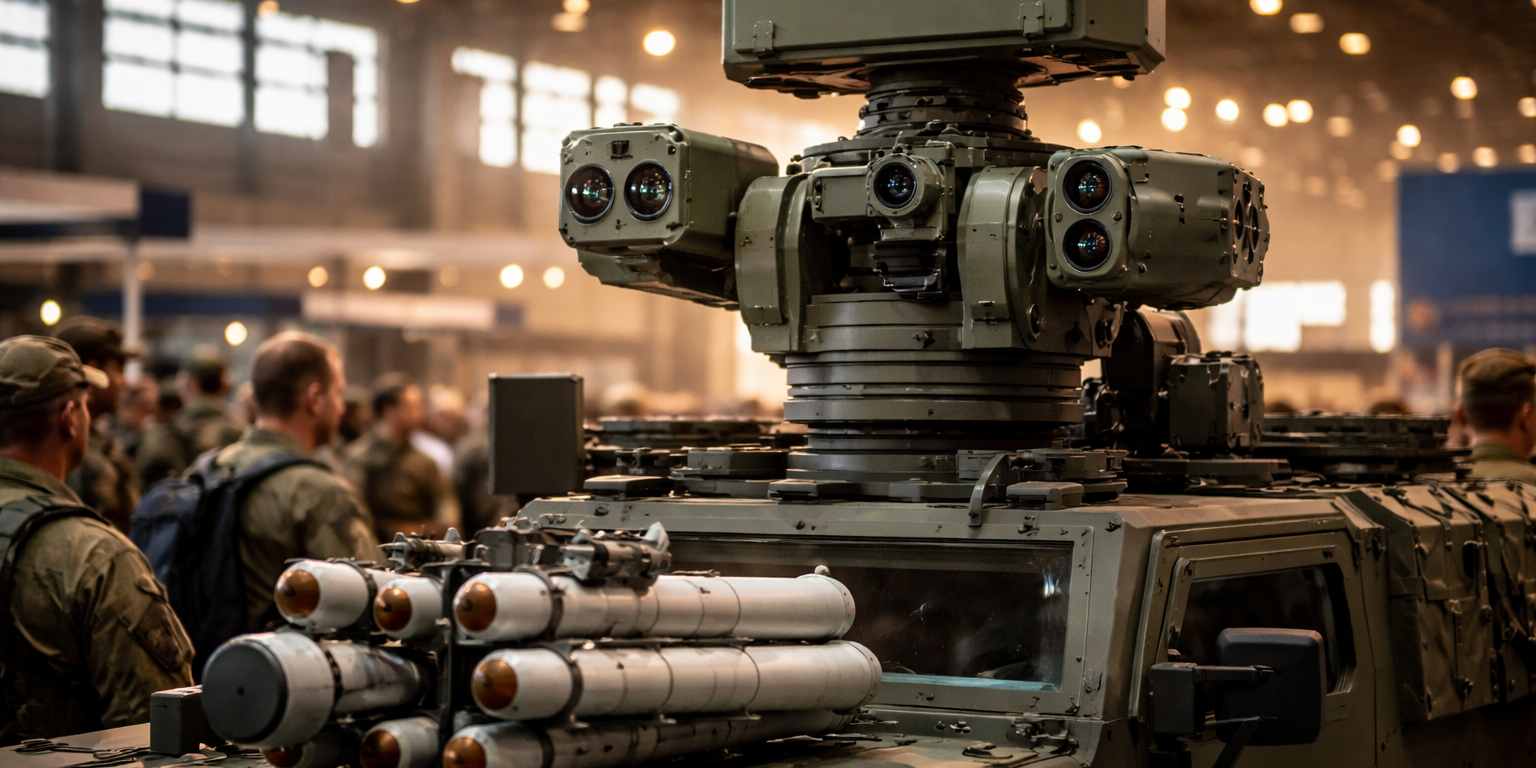
Alpine Eagle and Origin Robotics unveiled a technical partnership at Eurosatory 2026 that integrates two distinct counter-drone technologies into a single sensor-to-effector chain. The collaboration pairs Alpine Eagle's Sentinel detection and tracking platform with Origin Robotics' BLAZE kinetic interceptor, creating what both companies describe as a layered defense architecture capable of engaging multiple small unmanned aircraft simultaneously. The combined system addresses a persistent problem for military operators: detection systems and interdiction tools typically come from different vendors, requiring custom middleware and introducing latency that can mean the difference between a successful intercept and a penetrated perimeter.
Sentinel operates as a multi-sensor fusion platform, drawing data from radar, radio frequency scanners, and electro-optical cameras to build a composite air picture. Its core value proposition lies in classification algorithms that distinguish between commercial quadcopters, fixed-wing reconnaissance drones, and false positives like birds or weather balloons. BLAZE, by contrast, is a tube-launched rotary interceptor designed for short-range engagements inside 500 meters. Origin Robotics claims a kill probability above 85 percent against Group 1 and Group 2 UAS, the categories that include everything from DJI Mavics to tactical reconnaissance platforms like the RQ-11 Raven. Both companies are headquartered in Europe and have secured defense contracts within NATO member states, though neither has disclosed production volumes or unit economics publicly.
The integration work centers on a common messaging protocol that allows Sentinel's tracking module to hand off target coordinates directly to BLAZE's launch controller, eliminating the manual cueing step that slows reaction time in existing counter-UAS setups. Alpine Eagle's chief technology officer noted during the Eurosatory announcement that the protocol is vendor-agnostic, potentially allowing other effector systems to plug into Sentinel without re-engineering the detection stack. That interoperability claim matters in a market where procurement officers increasingly demand open architectures rather than proprietary lock-in. European defense ministries have been particularly vocal about avoiding dependence on single suppliers following supply chain disruptions during the Ukraine conflict, which exposed vulnerabilities in systems built around closed ecosystems.
The counter-drone sector has expanded rapidly since 2024, driven by the proliferation of cheap commercial drones adapted for military use. Battlefield footage from Ukraine showed small quadcopters delivering grenades and conducting reconnaissance with impunity, forcing NATO planners to prioritize counter-UAS capabilities in budgets that had historically emphasized traditional air defense. The result has been a crowded vendor landscape with dozens of startups and established defense primes competing for contracts. Alpine Eagle and Origin Robotics are betting that a pre-integrated, multi-vendor solution will appeal to operators who lack the engineering resources to build bespoke integrations themselves. Their joint demonstration at Eurosatory includes a live engagement scenario where Sentinel detects, classifies, and cues BLAZE against simulated drone swarms, a setup designed to showcase end-to-end kill chain speed. Whether this translates into procurement contracts depends on competitive testing against rival systems from American, Israeli, and other European manufacturers, all of whom are converging on similar architectural concepts.
What to Watch: Alpine Eagle and Origin Robotics plan to announce their first joint customer during the third quarter of 2026, according to executives speaking at Eurosatory. NATO members conducting counter-UAS trials this summer—including France, Poland, and the Netherlands—are likely candidates. Track whether the two companies publish independent test data on intercept success rates and reaction times, metrics that procurement officers will demand before signing multi-year contracts. Also watch for announcements around third-party effector integrations, which would validate their open architecture claims and differentiate them from competitors offering tightly coupled, single-vendor solutions.