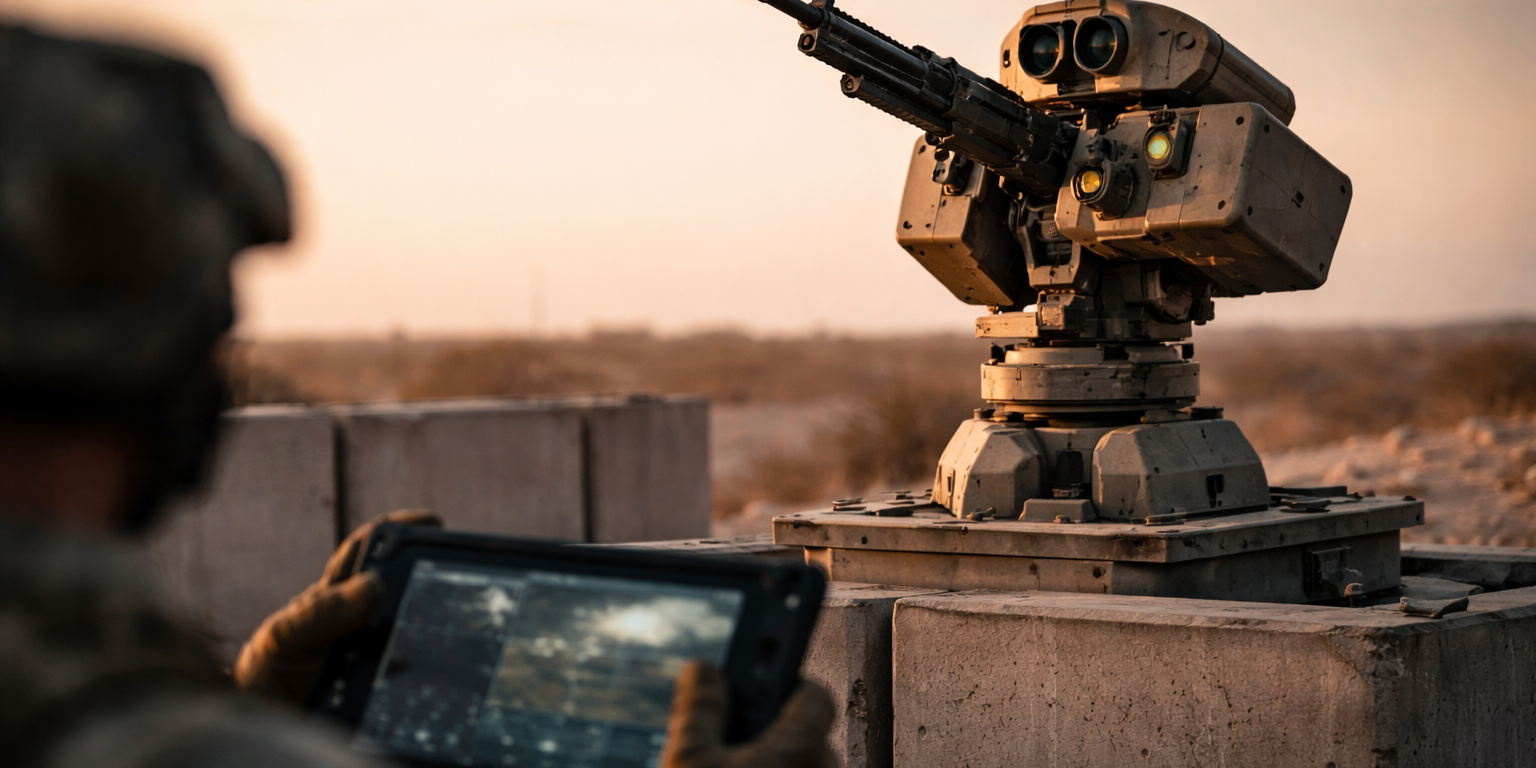
Allen Control Systems secured a contract with the US Marine Corps to field AI-driven counter-drone turrets that mount standard machine guns instead of purpose-built interceptor missiles. The Bullfrog system, as ACS calls it, pairs computer vision algorithms with existing crew-served weapons to autonomously track and engage small unmanned aircraft. Each interception costs less than ten dollars in ammunition, according to company statements, compared to the several thousand dollars required for a Coyote or Stinger missile. The Marine Corps has not disclosed contract value or initial deployment quantities, but the service confirmed it will begin field evaluations at undisclosed installations in late 2026. ACS, a Portland-based firm founded in 2019, has positioned the platform as a cost-effective solution for countering the proliferation of cheap consumer and military drones that have reshaped frontline combat in Ukraine and the Middle East.
The technical approach relies on sensor fusion and targeting algorithms rather than novel hardware. Bullfrog mounts a .50-caliber M2 Browning or 7.62mm M240 machine gun on a two-axis gimbal controlled by electromechanical actuators. An onboard Jetson Orin compute module processes feeds from thermal and RGB cameras, running object detection models trained on thousands of drone silhouettes. The system calculates lead angles and burst timing, then fires under supervision of a human operator who retains authority to abort engagements. ACS executives emphasize that the weapon never operates fully autonomously; a Marine must authorize each firing sequence. That design reflects Department of Defense Directive 3000.09, which requires human judgment in lethal force decisions. The directive has become a flashpoint as autonomy becomes more capable. ACS argues its approach satisfies policy because humans remain in the loop, even if reaction times compress to seconds. Critics counter that compressed timelines erode meaningful control, but the Marine Corps has accepted the architecture for counter-UAS missions where hostile intent is often unambiguous.
The contract arrives as the Pentagon confronts a mismatch between threat costs and defense costs. Small quadcopters and fixed-wing drones cost between five hundred and five thousand dollars to produce, yet interception typically requires missiles priced from ten thousand to over one hundred thousand dollars. That arithmetic becomes unsustainable in high-tempo conflicts where adversaries launch dozens of drones daily. Ukraine has documented hundreds of daily drone incursions along its front lines, many intended to exhaust air defenses before manned aircraft or artillery strikes. The Marine Corps, anticipating similar dynamics in a Pacific conflict scenario, has spent two years evaluating lower-cost counter-UAS options. Directed energy systems remain immature; high-energy lasers struggle with atmospheric attenuation and require significant power infrastructure. Kinetic solutions like Bullfrog offer immediate deployment on existing vehicle platforms without generator trucks or cooling systems. ACS demonstrated the turret in November 2025 at Yuma Proving Ground, destroying twenty-one of twenty-three drone targets across three days of testing. Marine Corps Systems Command observed those trials and initiated negotiations shortly afterward.
Allen Control Systems competes in a crowded field. Anduril Industries recently fielded its Sentry Tower system, which also uses machine guns but integrates with the company's Lattice software mesh. D-Fend Solutions and DroneShield offer electronic warfare systems that jam or spoof drone navigation. Israel's Rafael Advanced Defense Systems has sold its Drone Dome to multiple militaries. Each approach trades different variables: electronic warfare avoids kinetic risk but struggles against frequency-hopping or autonomous drones; missiles guarantee kills but drain budgets; guns offer cheap shots but require line-of-sight and generate safety concerns in populated areas. The Marine Corps views Bullfrog as complementary rather than exclusive. Officials indicated the service will layer multiple counter-UAS technologies depending on mission profile. ACS aims to differentiate on cost per engagement and ease of integration. The company retrofits existing weapons rather than requiring new procurement, a selling point for budget-constrained units. It has also pursued international sales, with demonstrations scheduled for allied militaries in 2027.
What to Watch: Monitor Marine Corps field evaluation results expected in Q4 2026, particularly engagement success rates and false positive incidents. Track whether ACS announces production contracts or just limited testing orders. Watch for international sales disclosures, especially among Pacific allies like Australia or Japan facing similar drone threats. Finally, observe whether competing systems from Anduril or legacy defense primes undercut ACS on price or performance as the counter-UAS market consolidates through 2027.