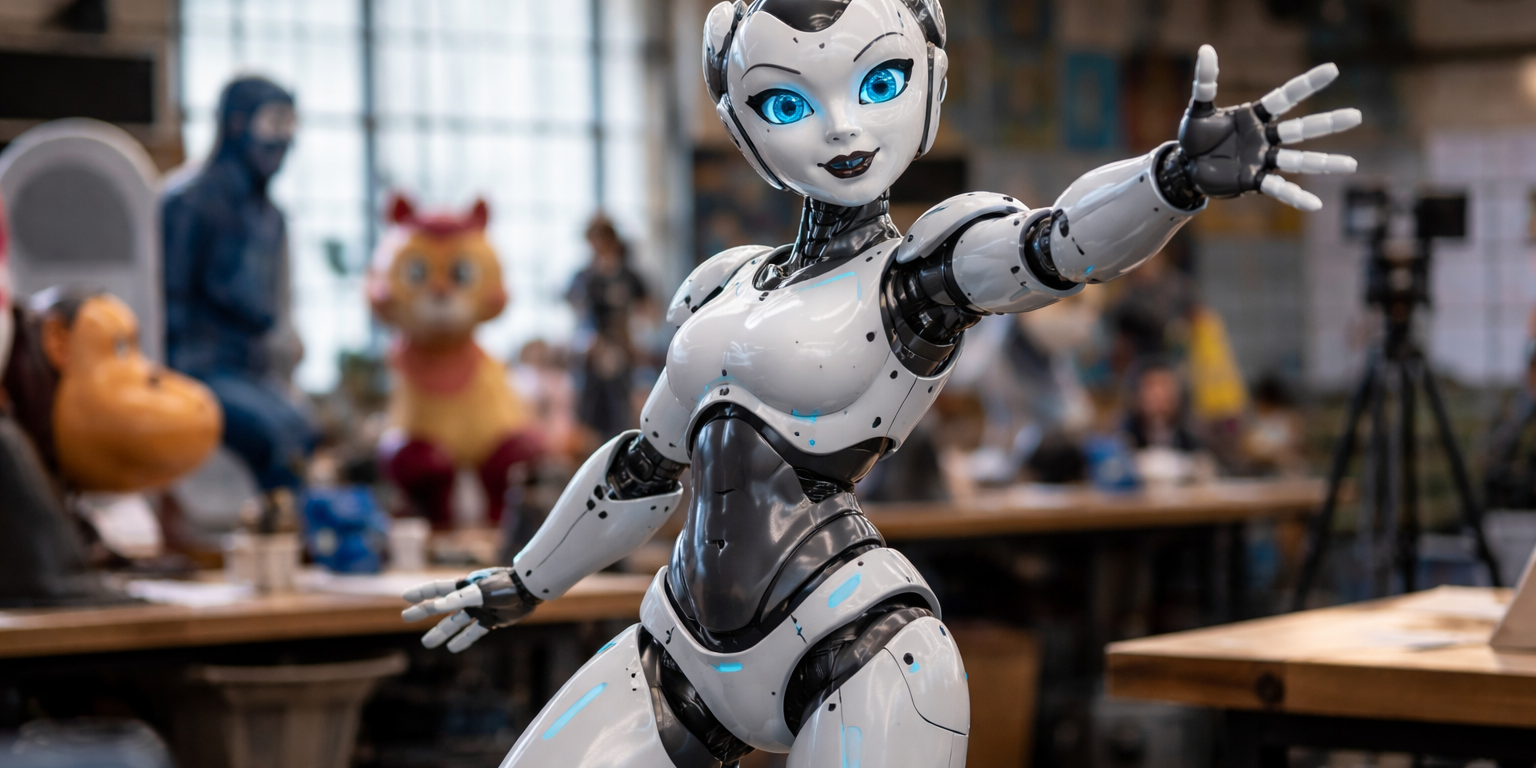

Agility Robotics is taking its bipedal warehouse robot public through a SPAC transaction, a financing path that sets the Oregon-based company apart from competitors chasing ever-larger venture rounds. CEO Damion Shelton told investors the timeline for humanoid robots entering consumer homes remains measured in decades, not years, positioning Agility as the pragmatist in a sector increasingly defined by ambitious promises. The move comes as the company operates one of the industry's few scaled manufacturing facilities, a 70,000-square-foot plant in Salem that began producing Digit units in late 2023 and has since shipped robots to Amazon, Spanx, and automotive manufacturers for tote handling and parts kitting applications.
Shelton's public caution marks a deliberate contrast with the messaging from Figure AI, which raised $675 million in February 2024 at a $2.6 billion valuation, and 1X Technologies, backed by OpenAI's venture fund with a focus on artificial intelligence-driven humanoids for home and office environments. Where those companies pitch general-purpose machines capable of learning new tasks through large language models and visual reasoning, Agility has narrowed its commercial focus to repetitive warehouse workflows. Digit stands 5 feet 9 inches tall, weighs 141 pounds, and can carry loads up to 35 pounds while navigating uneven surfaces and stairs. Its torso houses perception sensors and compute modules, but the robot's software stack emphasizes reliability over adaptability. Shelton has said publicly the company prioritizes reducing hardware cost and improving uptime over expanding task repertoire, a strategy informed by his years leading engineering teams at automotive supplier organizations before joining Agility in 2020.
The SPAC route offers Agility access to public markets without the roadshow demands of a traditional IPO, though the structure has fallen out of favor since its peak in 2021 when more than 600 blank-check companies raised capital. Terms of the deal were not disclosed, and Agility declined to name the SPAC sponsor or provide a target close date. The company last raised private capital in 2023, a $150 million Series B led by DCVC and Playground Global that brought total funding to approximately $180 million. That figure trails Figure's $675 million Series B and Boston Dynamics' undisclosed investment from Hyundai Motor Group, which acquired the company from SoftBank in 2021 for $880 million. Agility's decision to pursue a public listing now suggests confidence in near-term revenue, though the company has not released unit sales figures or disclosed its installed base size. Amazon operates multiple Digit units at a fulfillment center outside Seattle, where the robots move empty totes from conveyors to staging areas, a task the e-commerce giant previously handled with fixed automation or human workers.
The humanoid robotics market has attracted more than $2 billion in venture investment since early 2023, with at least eight companies now developing bipedal platforms for industrial or consumer use. Apptronik, based in Austin, unveiled its Apollo robot in August 2023 and announced a partnership with Mercedes-Benz to pilot the system in vehicle assembly plants. Sanctuary AI, headquartered in Vancouver, raised $140 million in 2024 and deployed its Phoenix humanoid at a Canadian Tire distribution center for box picking and packing tasks. Tesla continues development of Optimus, the humanoid unveiled at AI Day 2022, with CEO Elon Musk claiming the robot could begin limited production in late 2026 for internal factory use. Shelton has dismissed comparisons to Tesla's timeline, noting Agility began commercial deployments in 2023 while Optimus remains in prototype phase. The Agility CEO has also pushed back on the notion that humanoid form factors represent a universal solution, arguing that wheeled mobile robots and fixed automation will continue handling the majority of logistics tasks for the foreseeable future. His pragmatism extends to artificial intelligence integration. While Figure and 1X have partnered with OpenAI and deployed large language models for task planning, Agility uses more conventional computer vision and motion planning algorithms, a choice Shelton defends as better suited to the deterministic environments where Digit operates.
What to Watch: Agility has not disclosed its SPAC partner or target valuation, details that should emerge within 60 days if the deal follows typical timelines. Amazon's expansion of Digit deployments beyond the Seattle pilot will signal whether the robot has proven its business case at scale, with any announcement of additional fulfillment centers adopting the technology serving as a validation point. Figure AI's planned automotive deployments with BMW, originally slated for early 2025, remain in progress and will provide a direct comparison of go-to-market velocity between the two leading U.S. humanoid makers. Tesla's production timeline for Optimus, which Musk has repeatedly revised, continues to loom over the sector as a potential inflection point or cautionary tale depending on execution.