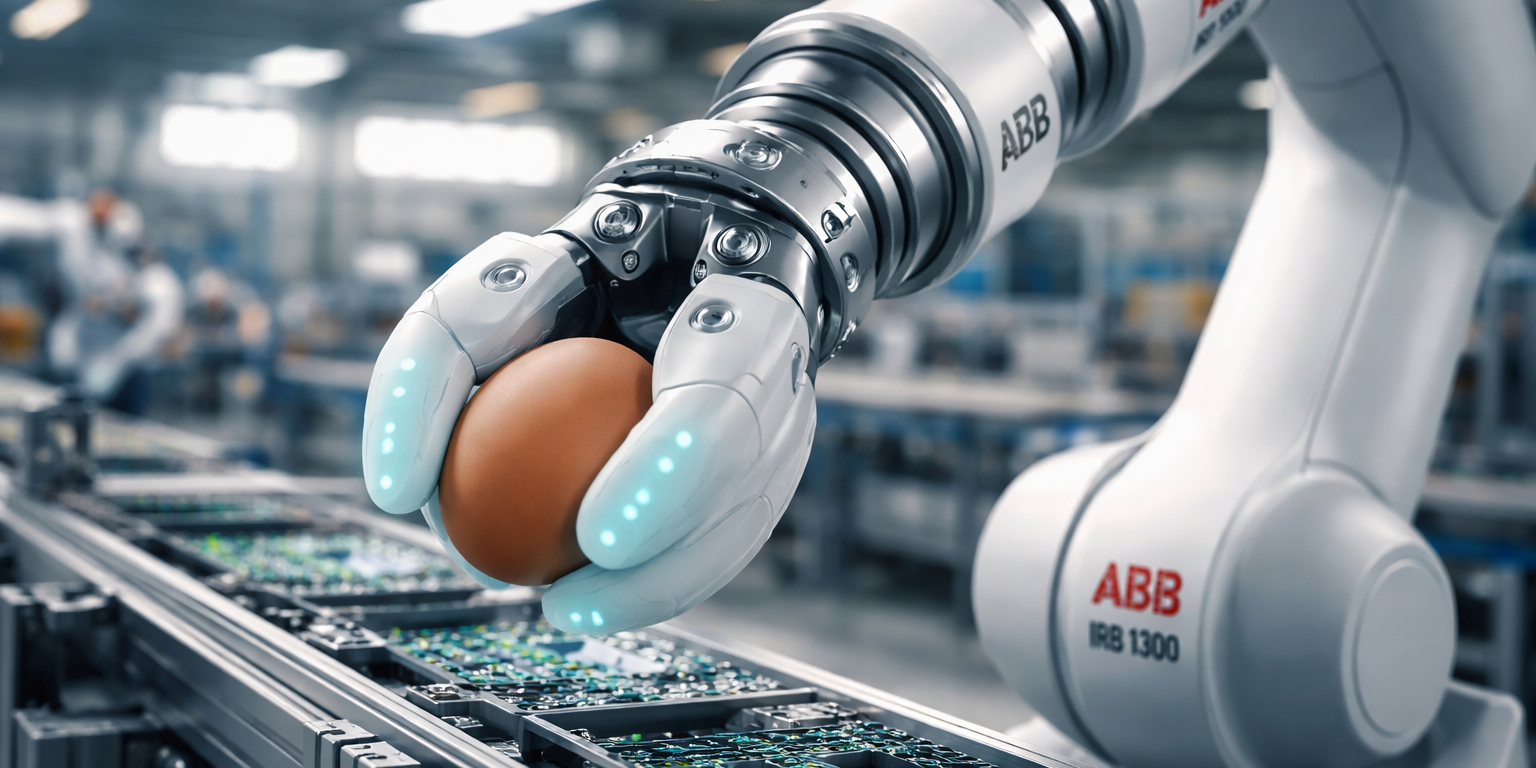
Industrial robots equipped with PSYONIC's prosthetic hand sensor arrays can now detect pressure gradients across synthetic fingertips with millisecond precision, a capability ABB Robotics believes will solve the long-standing problem of handling soft or fragile goods on high-speed production lines. The sensor data streams from PSYONIC's Ability Hand, a commercially available bionic prosthetic that uses 32 individual tactile sensors embedded in each fingertip, transmitting force measurements at 300 hertz. ABB is applying that same sensor architecture to its IRB 1300 collaborative robots, which handle assembly tasks in electronics manufacturing and food packaging facilities across North America and Europe.
PSYONIC began shipping the Ability Hand to amputees in late 2023, collecting anonymized touch data from more than 400 users who agreed to share their grip patterns during everyday tasks. That dataset includes 18 million discrete touch events recorded while users picked up coffee cups, turned doorknobs, typed on keyboards, and handled raw eggs. ABB's research team in Västerås, Sweden identified patterns in how human users modulate grip force when transitioning from rigid to compliant objects, then encoded those patterns into neural networks running on the company's OmniCore controllers. The resulting algorithm adjusts gripper pressure in real time based on tactile feedback, mimicking the reflexive adjustments a human hand makes without conscious thought.
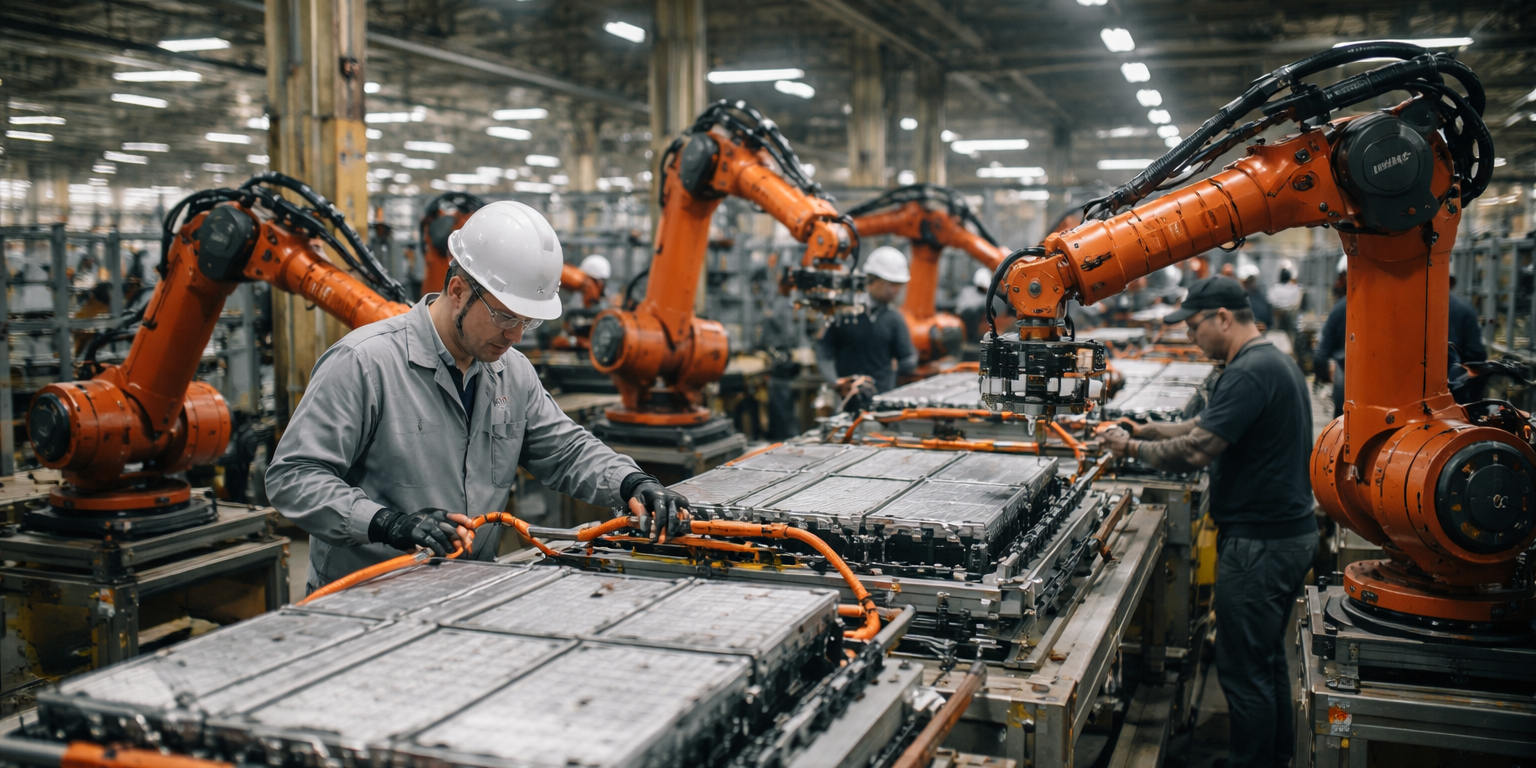
ABB has deployed 14 prototype units at customer sites since March 2026, primarily in facilities that package consumer electronics, cosmetics, and baked goods. One installation at a contract manufacturer in Stuttgart handles smartphone batteries with variance in cell thickness of up to 0.3 millimeters, a tolerance that previously required manual sorting. The robot's gripper applies between 2.1 and 3.8 newtons of force depending on feedback from the PSYONIC sensor array, reducing battery damage rates from 1.7 percent to 0.09 percent. Another deployment at a bakery in Lyon grips croissants emerging from conveyor ovens, adjusting pressure based on surface temperature and crust firmness. Marc Segura, who directs ABB's discrete automation division, said the prosthetic sensor data provides a training shortcut that would have required years of lab work to replicate synthetically. PSYONIC holds 11 patents on the capacitive sensor design used in the Ability Hand, covering electrode spacing, signal processing algorithms, and the polymer compounds that simulate human skin compliance. ABB licensed the sensor technology and the accompanying dataset in a deal announced in February 2026, though neither company disclosed financial terms.
The collaboration reflects broader momentum in robotics toward human-derived training data rather than purely simulated environments. Tesla's Optimus team has used motion capture data from factory workers to train humanoid manipulation policies, while Sanctuary AI records teleoperated task demonstrations from remote pilots wearing haptic gloves. Using prosthetic sensor data carries a distinct advantage: the touch patterns come from real users performing unscripted tasks in uncontrolled environments, not lab settings. PSYONIC's dataset includes grip failures, overshoot corrections, and adaptive strategies that emerge naturally when people interact with unfamiliar objects. Aadeel Akhtar, PSYONIC's founder and a biomedical engineer who completed his doctorate at Johns Hopkins, said the company initially collected the data to improve the prosthetic's own control algorithms but realized its broader applicability when ABB approached them in mid-2025. The partnership positions ABB to compete with newer entrants like Covariant and Dexterity, both of which use vision-based AI to guide robotic grippers but lack integrated tactile feedback at the component level.
What to Watch: ABB plans to integrate PSYONIC's sensor arrays into its IRB 2600 and IRB 6700 models by Q4 2026, expanding beyond collaborative robots into heavier industrial applications. PSYONIC will release a second-generation Ability Hand in September 2026 with 48 sensors per digit, and ABB has negotiated early access to that dataset. Competitors including FANUC and Yaskawa have publicly discussed tactile sensing upgrades scheduled for 2027, likely accelerating their timelines in response to ABB's deployment numbers.