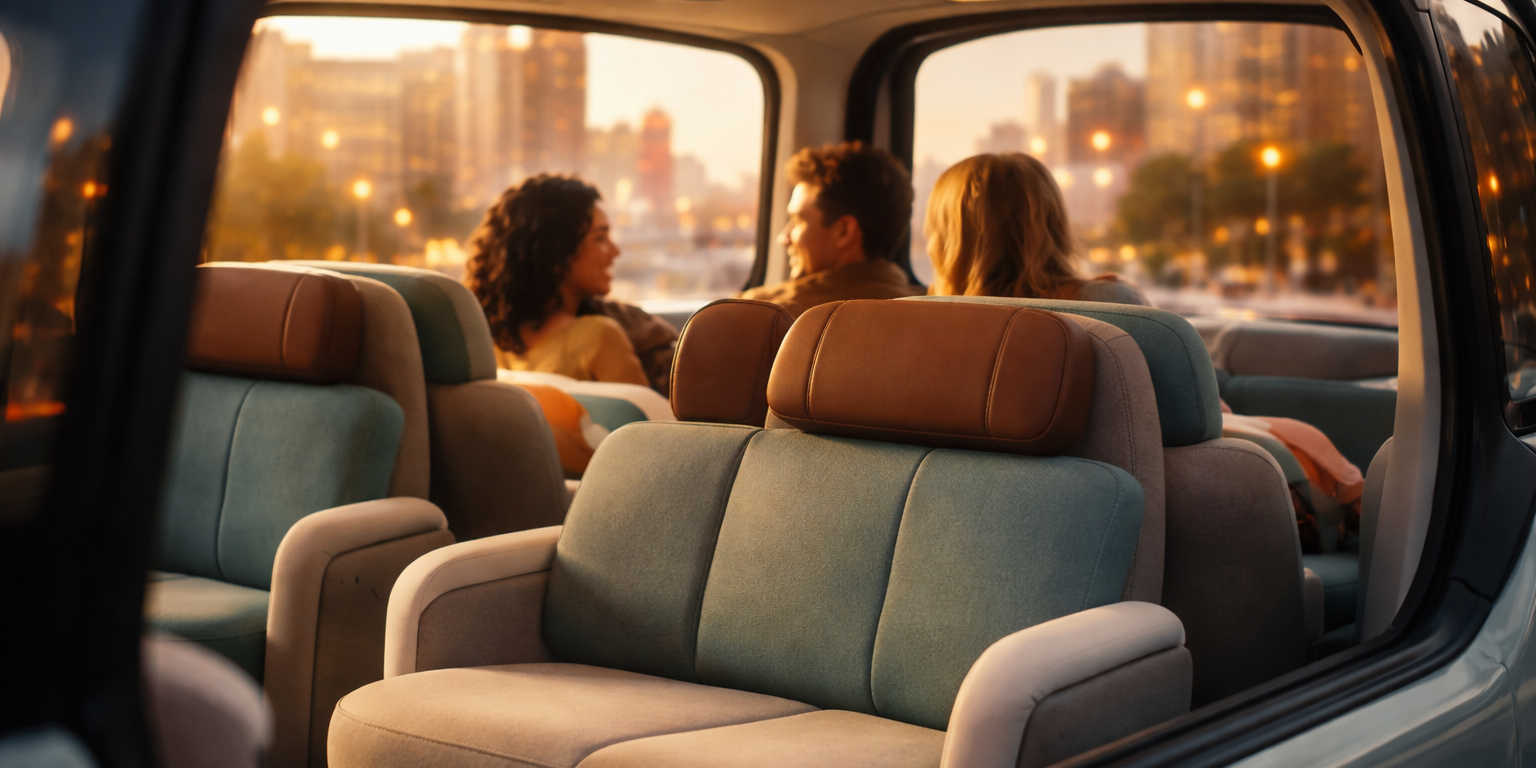
The Zoox robotaxi now features softer seat cushioning, a redesigned color palette, and enhanced communication hardware—small details that matter considerably more when passengers are paying for the ride. Amazon's self-driving subsidiary has spent the past 18 months ferrying its own employees around a one-mile route in Foster City, and the second-generation vehicle incorporates dozens of refinements based on that operational data. The changes address a fundamental challenge in autonomous mobility: engineering teams obsess over sensor fusion and path planning, but commercial viability depends equally on whether people feel comfortable sitting in a vehicle with no steering wheel for ten minutes.
Zoox began testing its first-generation robotaxi in February 2023, initially on private roads before expanding to public streets with employees as passengers. The company has logged thousands of autonomous rides in the controlled Foster City environment, primarily during daylight hours and favorable weather conditions. That operational window provided rich data on rider preferences, but it also revealed gaps. Passengers complained about microphone quality when attempting to contact remote support staff. The original dark interior materials, while visually striking, made the already-small cabin feel more confined. Engineers discovered that road noise transmission through the seats created fatigue on longer trips, even at the slow speeds typical of urban robotaxi service. These observations drove the current redesign, which Zoox characterizes as evolutionary rather than revolutionary—no changes to the core sensor suite, compute stack, or drive-by-wire systems that define the vehicle's autonomy capabilities.
The Foster City deployment served as an extended beta test for operations Zoox plans to scale in Las Vegas, where the company has been mapping streets and building relationships with local regulators since 2019. Nevada's autonomous vehicle framework allows commercial deployment without a human safety operator once companies demonstrate adequate safety performance, and Zoox executives have stated publicly that Las Vegas remains their target market for first commercial operations. The timeline has slipped repeatedly—initial projections called for paid rides in 2024, then 2025—but the second-generation vehicle launch suggests the company now considers its technology mature enough for uncontrolled public use. Las Vegas presents a different operational design domain than Foster City: higher speeds, more aggressive drivers, tourists unfamiliar with autonomous vehicles, and intense heat that stresses battery and cooling systems. The upgraded interior will face its real test there, not in the sheltered Peninsula environment where Zoox employees have been the primary guinea pigs.
Zoox competes in a crowded field where operational timelines and geographic scope vary wildly. Waymo operates hundreds of vehicles across Phoenix, San Francisco, Los Angeles, and Austin, completing more than 100,000 paid trips per week as of mid-2026. Cruise suspended operations in late 2023 following a pedestrian-dragging incident in San Francisco, resumed testing in 2024, and now runs limited service in Phoenix and Dallas with safety operators. Baidu's Apollo Go dominates Chinese markets with fully driverless operations in Beijing, Shanghai, and Wuhan. Against this landscape, Zoox's cautious approach—two years of employee-only testing before attempting commercial service—reads as either prudent or paralyzed, depending on perspective. The company benefits from Amazon's capital reserves and long time horizon, which removes some pressure to generate near-term revenue. But it also faces internal questions about when the robotaxi division will contribute meaningfully to Amazon's logistics and mobility ambitions. The second-generation vehicle launch answers none of those strategic questions. It simply demonstrates that Zoox can iterate on industrial design while maintaining its core technology stack, and that the company still believes a purpose-built vehicle without manual controls represents the correct architecture for autonomous urban transport.
What to Watch: Zoox has not announced a specific date for Las Vegas commercial launch, but the second-generation vehicle rollout suggests operations could begin in Q4 2026. Watch for fleet size announcements—the company has manufactured fewer than 100 robotaxis to date, and scaling production will indicate confidence in demand and regulatory clearance. Nevada DMV filings will show whether Zoox has secured the commercial permits required for paid passenger service without safety operators. Finally, monitor how Zoox positions its service against Waymo's expanding Las Vegas presence, which began public testing in early 2026 and could reach commercial deployment on a similar timeline.