Xinhua's anchors have a face problem that software alone could never solve, and on November 5, 2026, the agency answered it with hardware. At the Artificial Intelligence and Chinese Modernization forum in Beijing, the state news service introduced Xinyu and Xinyan, a male and female pair of life-size bionic humanoids built with UBTECH and tailored for news-reading scenarios. Xinhua billed them as the first of their kind anywhere. The claim is narrow but defensible: lifelike on-screen AI presenters have existed for years, yet a physical, human-proportioned robot built specifically to anchor broadcasts is a different category of object.
The lineage matters. Xinhua has been cycling through synthetic presenters since 2018, when it debuted a virtual anchor built with the search company Sogou, and it has steadily added avatars as generative models improved. Those were rendered characters, pixels driven by text-to-speech and lip-sync models. Xinyu and Xinyan trade the render farm for actuators. A screen avatar can be re-skinned in an afternoon; a robot face that must smile, blink, and hold eye contact for a ten-minute bulletin has to survive mechanical wear, thermal limits, and the uncanny-valley scrutiny of a live audience. That is an engineering burden, not a branding exercise.
UBTECH is the hardware partner, and the choice is telling. The Shenzhen-listed company is best known for its Walker series of humanoids and for service robots deployed in education and logistics, and it has spent the past two years pushing the Walker S line into automotive factories while courting investors with large order announcements. A news-anchor contract is a different kind of win. It is small in units, probably two machines, but it is large in visibility, and it showcases the fine-motor and facial-expression work that most factory-focused humanoid builders deliberately skip. Xinhua says it holds complete independent intellectual-property rights over the jointly developed robots, a detail that suggests the agency negotiated ownership of the design rather than simply buying a product off a catalog.
That ownership clause is the most commercially interesting line in the announcement. In a market where most humanoid vendors guard their actuator stacks, perception pipelines, and control software as the core of their valuation, a customer walking away with full IP on a bespoke embodiment is unusual. It hints at how state-backed institutions in China are procuring robotics: not as off-the-shelf purchases, but as co-development projects in which the buyer's institutional goals shape the hardware. For UBTECH, it creates a template for custom humanoid work with media, broadcasting, and public-sector clients, where margins on one-off builds can exceed those on high-volume industrial units. For competitors such as Unitree, AgiBot, and Fourier, it raises the question of whether expressive, face-forward humanoids are a niche worth contesting or a distraction from the manipulation and locomotion benchmarks that investors actually track.
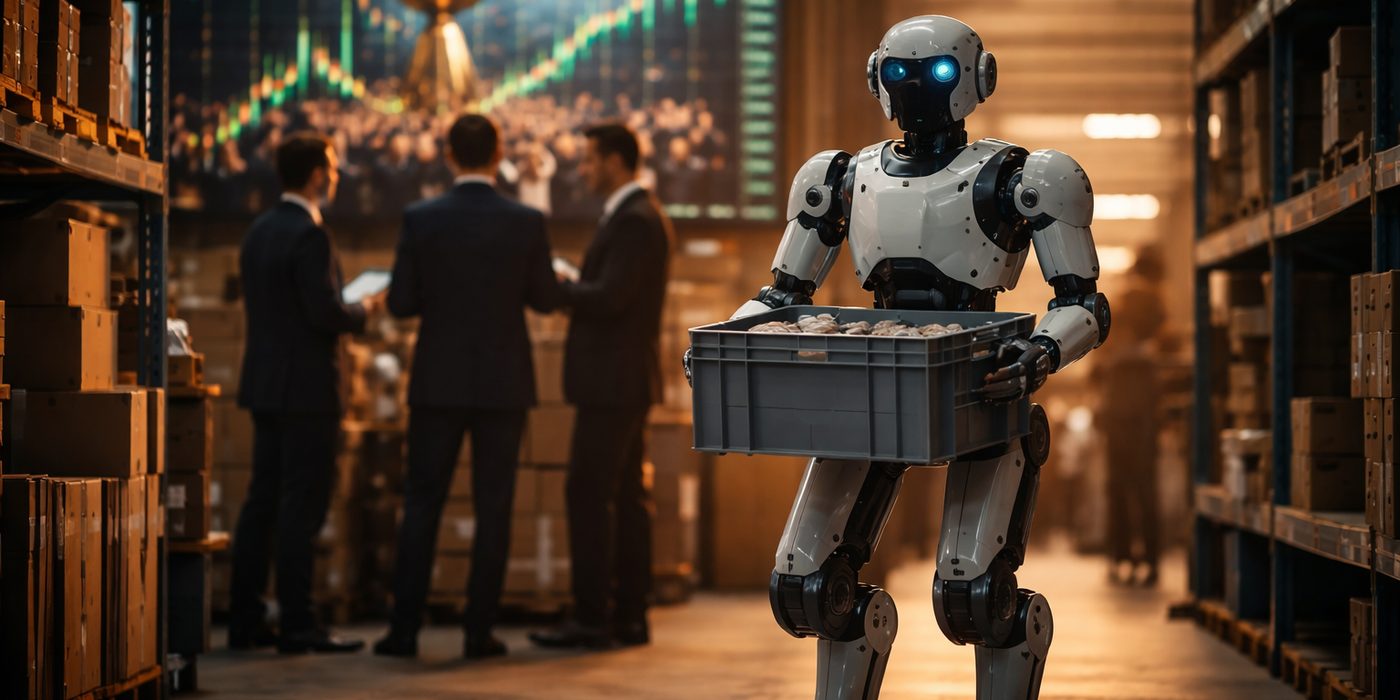
The broader signal for the industry is about where humanoid embodiment is being tested first. Warehouses and assembly lines demand reliability metrics that no humanoid has yet proven at scale. Studios, exhibition halls, and reception desks demand only that the robot look convincing and not fall over, which is a far lower bar and a faster route to paid deployments. Xinhua's pair will not move boxes or weld seams, and nobody expects them to. But every hour they spend in front of cameras generates real-world data on facial actuation durability and audience reaction, and that is data the humanoid sector has largely lacked. If the anchors hold up under daily use, expect other broadcasters and corporate customers to ask for the same thing.
What to Watch Track whether Xinhua puts Xinyu and Xinyan into regular, scheduled broadcasts before the end of 2026 or confines them to forum demonstrations, since sustained airtime is the real durability test. Watch UBTECH's next investor communications and any Walker S order announcements for signs that the company is packaging expressive-humanoid work as a repeatable product line. Keep an eye on rival Chinese makers, including Unitree, AgiBot, and Fourier, for competing face-and-voice humanoid reveals aimed at media and service customers in the coming quarter. Finally, look for technical disclosures on the robots' facial actuator count and latency between generated speech and lip movement, because those specifications will reveal how much of the claim is mechanical achievement and how much is staging.