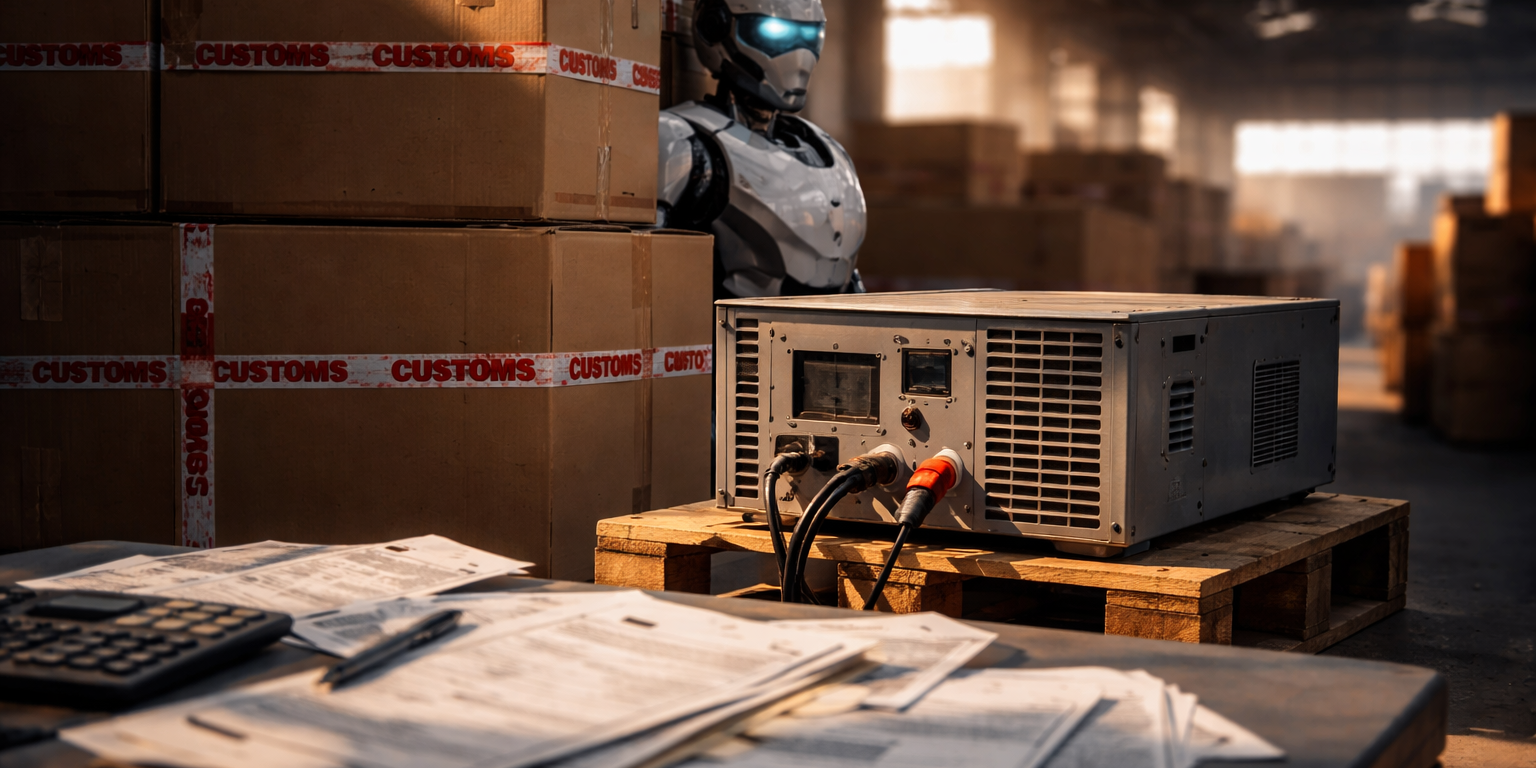
The federal government's simultaneous restriction of foreign robotics imports and power inverters has left automation manufacturers searching for coherent strategic logic. The policy, implemented through a series of agency directives rather than comprehensive legislation, bars new deployments of robotics systems manufactured outside the United States while imposing parallel constraints on industrial power conversion equipment. Trade groups representing both robotics integrators and electrical component suppliers report receiving minimal advance notice and virtually no technical justification connecting the two product categories.
The coupling of robotics platforms with power electronics represents an unusual regulatory pairing that defies straightforward explanation. Power inverters convert direct current to alternating current and appear in applications ranging from solar installations to motor drives, with limited overlap to the specific security concerns typically cited for robotics restrictions. Several major systems integrators speaking off the record described the inverter provision as appearing almost arbitrary, suggesting either a broad interpretation of supply chain vulnerability or incomplete policy coordination between agencies. The lack of public technical documentation supporting the linkage has amplified industry concern that the restrictions emerged from political rather than engineering analysis. Robotics manufacturers with established US facilities report fielding calls from customers seeking to understand whether existing installations face retroactive compliance requirements, though current guidance appears to grandfather deployed systems.
The timing compounds strategic questions about American competitiveness in global automation markets. US-based robotics production capacity remains concentrated in specific segments, particularly collaborative arms and autonomous mobile robots, while high-volume industrial manipulators still predominantly ship from Asian and European factories. Restricting foreign systems without corresponding domestic manufacturing scale forces end users into a choice between limited supplier options and delayed automation projects. Investment in US robotics fabrication facilities typically requires three to five years from groundbreaking to volume production, creating a gap period where the restrictions may simply redirect business to manufacturers willing to serve markets outside American jurisdiction. Several Asia-Pacific robotics companies have publicly stated they will prioritize expansion in Southeast Asian and European markets rather than navigate uncertain US policy terrain, a development that potentially accelerates the geographic decoupling of automation supply chains.
The power inverter dimension introduces complications extending beyond robotics into renewable energy, industrial automation, and grid infrastructure. Inverter manufacturing concentrates heavily in China, South Korea, and Germany, with American production representing a small fraction of global capacity. Restricting imports without viable domestic alternatives creates immediate procurement challenges for solar developers, electric vehicle charging networks, and manufacturing facilities upgrading motor control systems. Trade data indicates US inverter imports exceeded $4.2 billion annually prior to the restrictions, serving applications where technical specifications, certification timelines, and integration complexity make rapid supplier substitution impractical. Electrical contractors report project delays and cost increases as they source from the narrowed supplier pool, while some manufacturers consider relocating production lines to Mexican facilities that may remain outside restriction scope depending on final regulatory interpretation.
Industry observers note the restrictions arrive as international competitors accelerate robotics development programs explicitly designed to reduce dependence on American technology. China's humanoid robot initiatives, supported by provincial manufacturing incentives and streamlined regulatory frameworks, aim to deploy domestic platforms across logistics and manufacturing by 2027. European robotics companies benefit from coordinated industrial policy that pairs research funding with procurement preferences, creating home market advantages that allow scale before international expansion. The American restriction approach, focused on limiting foreign access rather than incentivizing domestic capability, risks ceding market development to competitors while constraining the US automation sector's access to cost-effective components. Several venture-backed robotics startups privately acknowledge evaluating international incorporation structures that would allow more flexible global sourcing while maintaining US R&D operations.
What to Watch: Monitor whether the Commerce Department issues technical clarifications distinguishing between robotics categories subject to restriction versus those exempted for specific applications. Track major systems integrators' quarterly earnings calls through Q4 2026 for discussion of project pipeline impacts and supplier diversification strategies. Observe whether Mexico-based electronics manufacturing expands as companies establish inverter and component production outside direct US restriction scope. Follow legislative efforts to attach domestic robotics manufacturing incentives to infrastructure or defense authorization bills during the fall congressional session.