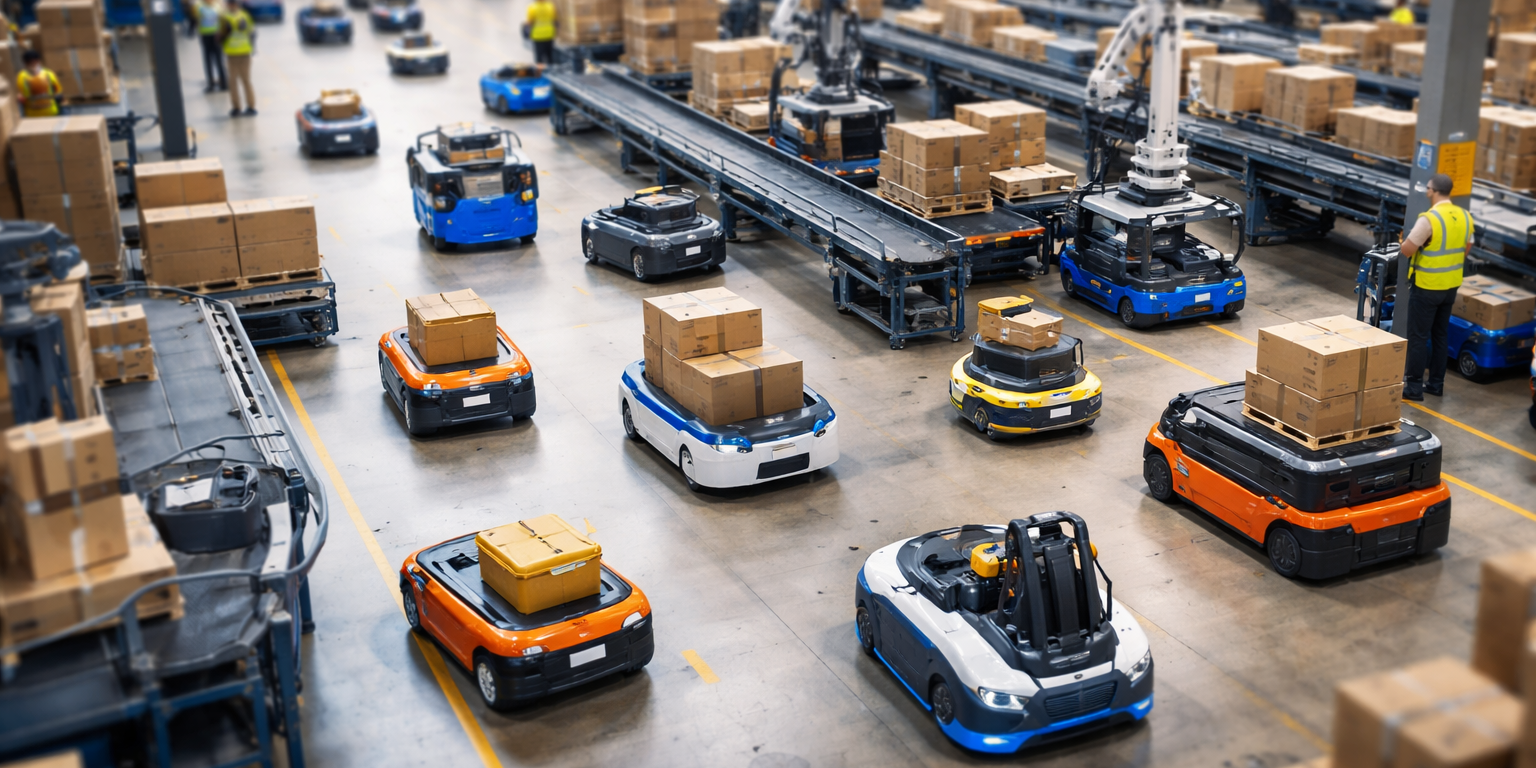
TechForce Robotics has released a proprietary network protocol built specifically for coordinating multiple robots, AI systems, and sensors within shared operational environments. The connective network, which the company describes as middleware for autonomous coordination, targets enterprise facilities where machines from different manufacturers must work alongside each other without collisions, redundant tasks, or communication failures. Warehouses operating autonomous mobile robots from three or four vendors alongside conveyor systems, picking arms, and inventory scanners represent the core use case. TechForce claims the protocol eliminates the need for custom integration work between each vendor's control software.
The announcement arrives as fleet heterogeneity has become standard practice rather than exception in industrial automation. A 2025 survey by the Robotics Industries Association found that 68 percent of warehouses over 200,000 square feet deploy equipment from at least three robot manufacturers, up from 41 percent in 2022. Each vendor typically provides its own fleet management software, creating data silos that prevent true coordination. A mobile robot from Vendor A cannot see the planned path of a picking arm from Vendor B, leading to inefficient spacing, conservative safety buffers, and lower throughput than the combined hardware should theoretically support. System integrators have built one-off solutions for specific client deployments, but TechForce argues the market needs a standardized layer that any vendor can plug into. The company has not disclosed whether major robot manufacturers have committed to supporting the protocol, nor whether licensing terms would make adoption attractive to competitors who maintain their own fleet management platforms.
TechForce describes the network as operating above the level of individual robot controllers but below enterprise resource planning systems. It ingests position data, task queues, sensor readings, and planned movements from connected machines, then broadcasts a unified operational picture back to each device. The protocol purportedly handles conflicts through a priority system based on task urgency, machine capability, and spatial constraints. If two robots need to occupy the same corridor segment simultaneously, the network assigns right-of-way and queues the lower-priority unit. For collaborative tasks requiring handoffs between different robot types, the system coordinates timing without requiring the machines to run vendor-compatible software. TechForce has not published technical specifications, communication latency benchmarks, or details on how the protocol handles network interruptions. The company also did not specify whether the system requires centralized servers, operates in a distributed mesh, or relies on edge computing nodes throughout the facility.
The robotics coordination problem resembles challenges already addressed in other domains. Air traffic control systems have managed complex airspace with heterogeneous aircraft for decades, while telecommunication networks route packets across equipment from dozens of manufacturers using agreed standards like TCP/IP. The difference in robotics lies in physical proximity, real-time spatial conflicts, and the absence of industry-wide protocol adoption. Several standards bodies, including the Open Robotics consortium and the Industrial Internet Consortium, have published frameworks for robot interoperability, but voluntary standards face adoption hurdles when proprietary fleet management represents a competitive moat for equipment vendors. TechForce's approach as a proprietary protocol raises questions about whether customers will accept dependence on a single vendor's middleware layer, particularly when that vendor does not manufacture the underlying robots. Enterprises may hesitate to build critical infrastructure atop technology they cannot switch away from easily. The company's revenue model, pricing structure, and whether it plans to open-source elements of the protocol remain undisclosed.
What to Watch: Monitor whether major robot manufacturers including ABB, KUKA, FANUC, or AMR vendors like Mobile Industrial Robots and Locus Robotics announce integration partnerships with TechForce over the next quarter. Track any pilot deployments named by the company, particularly facility names, fleet sizes, and performance metrics compared to pre-network baselines. Watch for technical documentation or API specifications that would signal whether TechForce intends to build an ecosystem or maintain tight control over the protocol. Note any competing announcements from established fleet management software providers like Waypoint Robotics or Balyo, who may counter with interoperability features in their own platforms.