ChatGPT crossed 100 million users in 60 days because OpenAI needed only server farms, not factories. Robots require collision sensors, power systems, mechanical assemblies, and safety certifications that stretch development from concept to commercial deployment across years, not weeks. Even as multimodal foundation models improve how robots learn manipulation tasks, each physical installation demands custom integration work that refuses to scale like duplicating software. Tesla's Optimus remains in pilot programs two years after unveiling. Boston Dynamics ships Stretch warehouse robots in quantities measured in dozens, not thousands. Dozens of venture-backed startups face the same constraint: hardware timelines resist compression through capital injection alone.
The technical progress underneath these deployment challenges tells a more optimistic story than the slow market penetration suggests. Simulation environments now generate training data at scales previously impossible, allowing robots to practice millions of grasps before touching real objects. Transfer learning methods refined over the past 18 months let models trained in virtual warehouses adapt to actual facilities with hours of real-world fine-tuning instead of months. Google DeepMind's RT-2 model, announced in July 2023, demonstrated that vision-language-action models could generalize across robot types and tasks using internet-scale training data. UC Berkeley's BEHAVIOR benchmark, tracking 1,000 household activities, provides the kind of standardized testing framework that accelerated computer vision progress a decade earlier. These foundations exist. Deployment infrastructure lags behind.
The capital allocation problem emerges from this mismatch between technical capability and market velocity. Venture funds structured around seven-year timelines struggle with robotics companies that need four years for product-market fit and another three for manufacturing scale. Software AI companies reached unicorn valuations on revenue growth rates exceeding 300 percent annually. Physical robotics companies growing at 80 percent face skeptical term sheets because investor expectations calibrated to ChatGPT's trajectory. Serve Robotics, operating sidewalk delivery bots in Los Angeles, trades at a fraction of the revenue multiple that food delivery apps command despite solving harder technical problems. Agility Robotics raised $150 million in 2023 to manufacture Digit humanoid robots but must compete for capital against AI agents that require no assembly lines. This valuation discount discourages exactly the patient capital that hardware development demands. If foundation models deliver a breakthrough in the next 24 months, the companies positioned to exploit it may lack the funding to scale manufacturing.
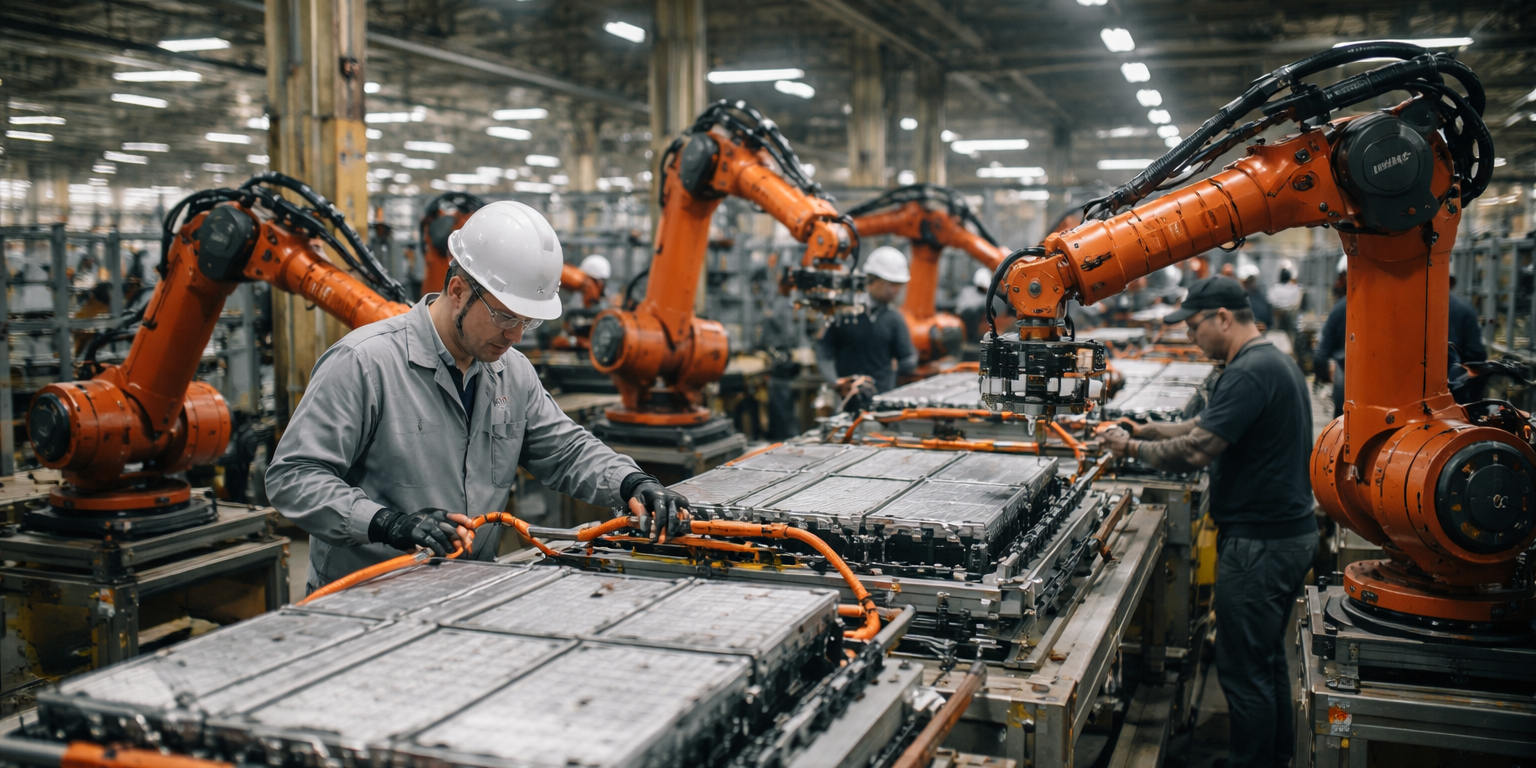
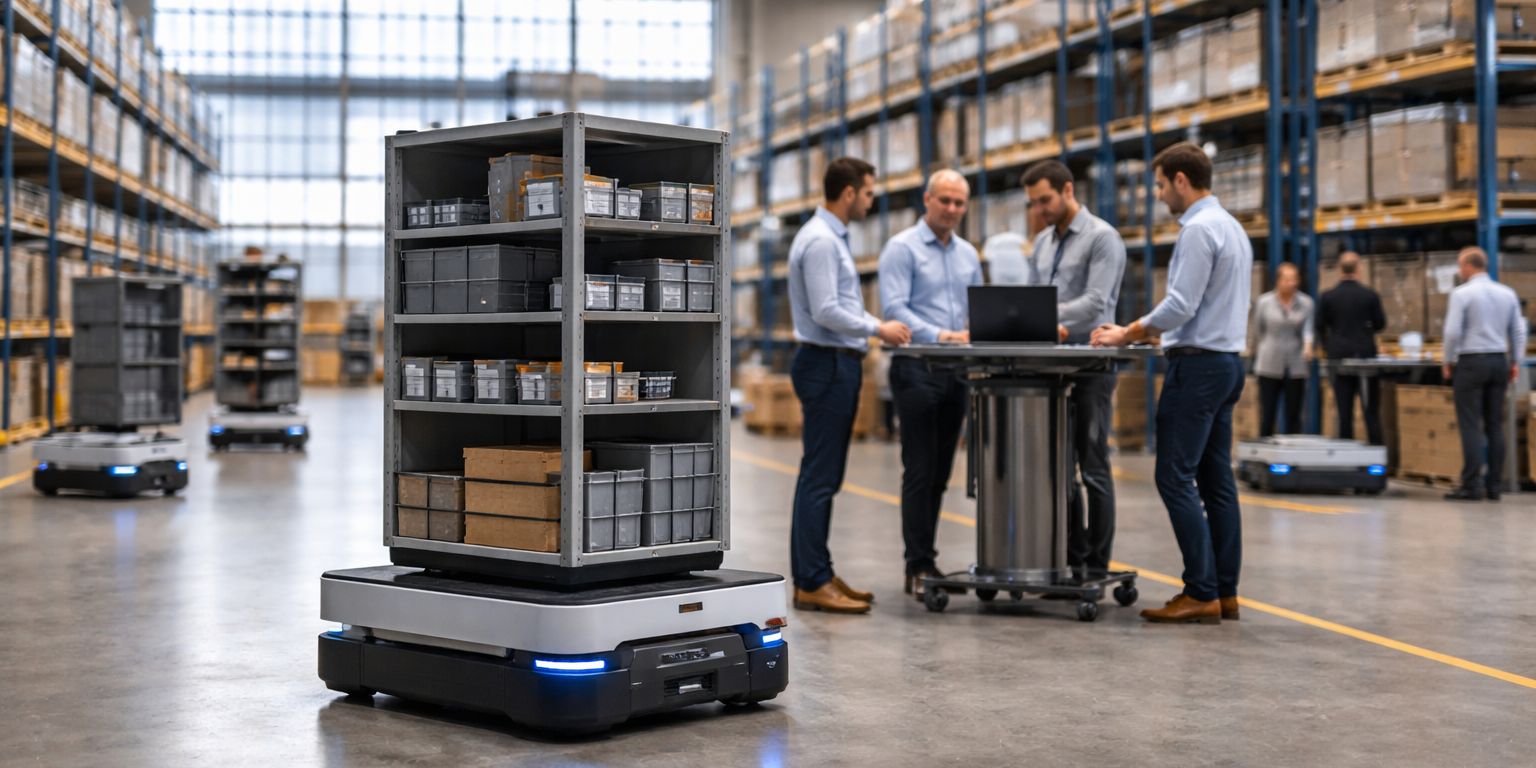
Warehouse automation offers the clearest view of how robotics adoption actually unfolds versus how AI software spread. Amazon operates more than 750,000 mobile robots across its facilities, but that fleet represents 15 years of development since acquiring Kiva Systems in 2012. Each new capability—from basic pallet moving to mixed-case picking to trailer unloading—required separate engineering programs spanning 18 to 36 months. Third-party providers like Locus Robotics and Fetch Robotics followed similar trajectories, with annual deployment growth in the 40 to 60 percent range rather than the exponential curves that defined social media or generative AI adoption. Manufacturing applications face even longer sales cycles because factory floor integration demands coordination with existing equipment, union negotiations, and safety audits that consume quarters. ABB and FANUC, selling industrial arms for decades, still measure quarterly shipments in thousands of units globally. The physical world imposes friction that no algorithm eliminates.
Research labs pursuing general-purpose robot foundation models aim to collapse these timelines by creating systems that require minimal task-specific training. If a single model can perform hundreds of manipulation tasks out of the box, deployment engineering shrinks from custom development projects to configuration exercises. Google DeepMind, Physical Intelligence, Covariant, and several university labs are converging on architectures that combine vision transformers with action prediction heads, trained on datasets aggregating robot teleoperation logs from dozens of labs. Physical Intelligence raised $400 million in November 2024 with exactly this thesis: foundation models will do for robots what large language models did for text generation. But even optimistic projections from these teams suggest deployable systems arrive in 2025 or 2026, not weeks from now. That timeline lands firmly in the incrementalist camp, not the overnight transformation category.
What to Watch: Physical Intelligence plans to release its first commercial foundation model in Q2 2025, which will test whether generalist robot models can actually compress deployment timelines in warehouse and manufacturing settings. Tesla committed to placing Optimus robots in its own factories during 2025, providing the first large-scale test of humanoid economics. Track whether robotics hardware companies can secure growth-stage funding rounds at valuations comparable to AI software peers—capital allocation shifts would signal investor timeline expectations are adjusting to physical AI realities. Google DeepMind's next RT-series model release, expected mid-2025, should demonstrate whether internet-scale pretraining continues to improve robot generalization or if physical data collection remains the binding constraint.