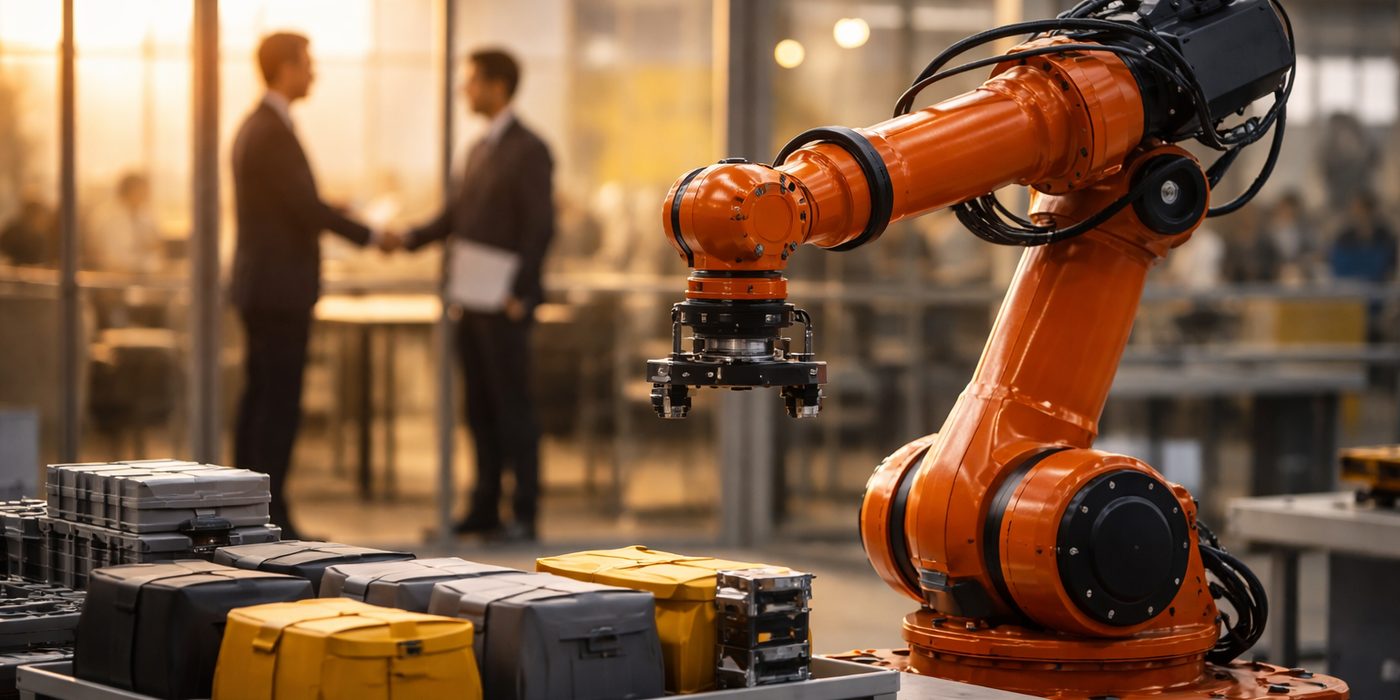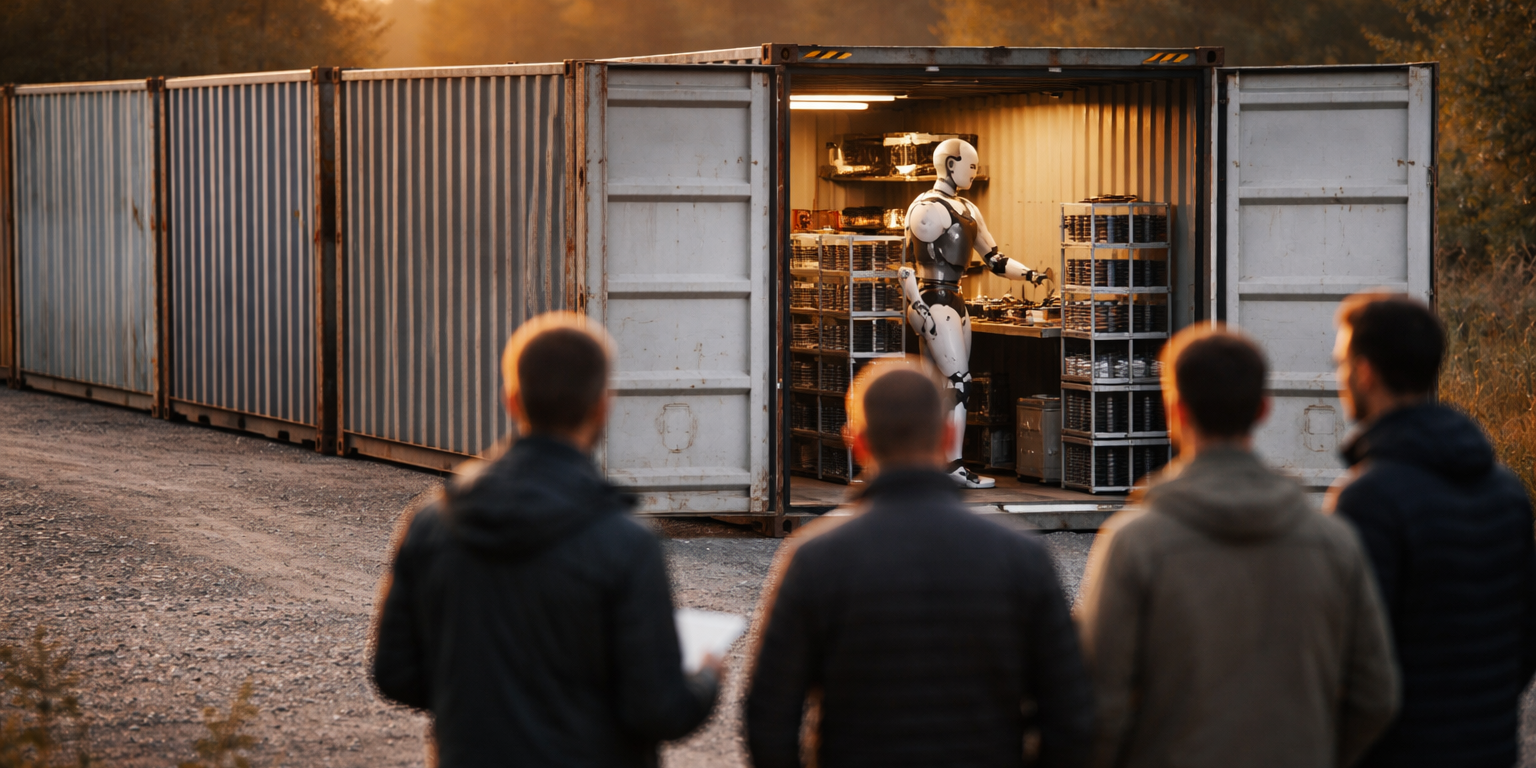
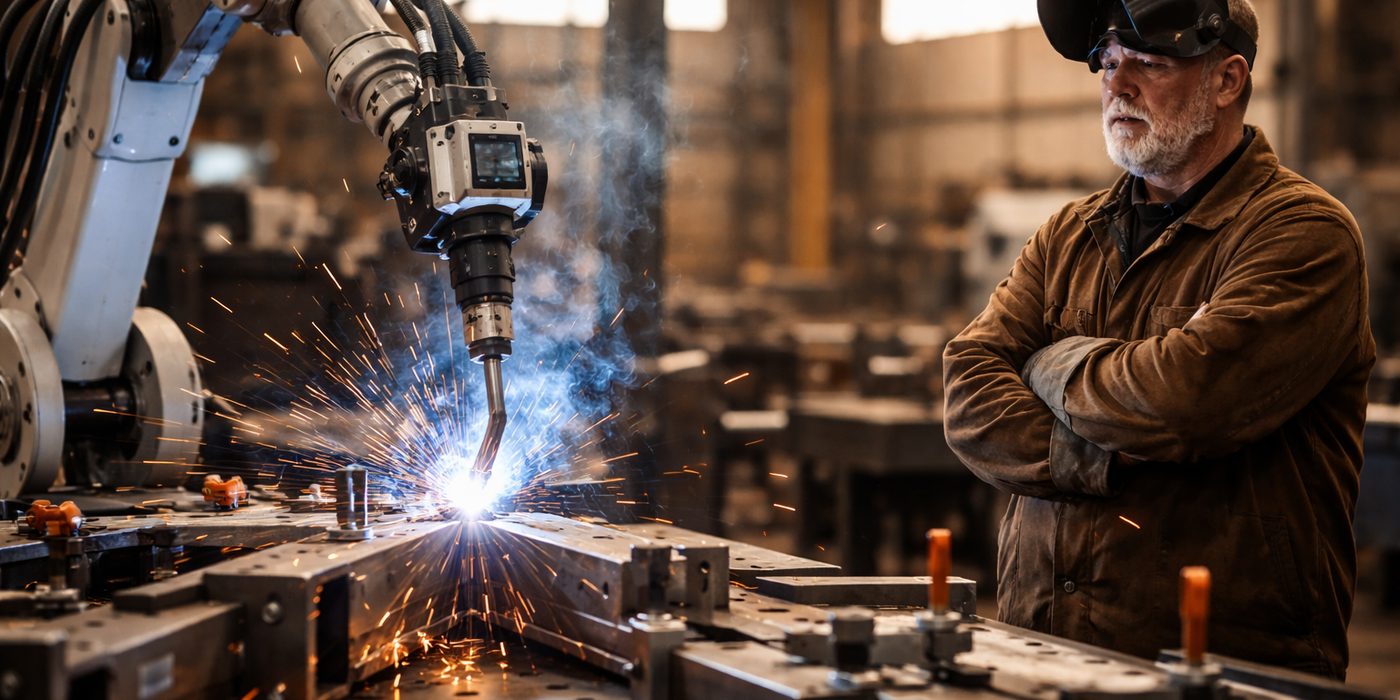
Welding is a skilled trade with a stubborn labor shortage, and $300 million says investors believe software can fill the gap. Path Robotics announced on November 10, 2026 that it closed a Series E at a $2.45 billion post-money valuation, with Georgian leading the round. The Columbus, Ohio-based company plans to use the money to extend its physical AI beyond welding into a wider set of manufacturing tasks and into additional robotic form factors. That is a larger ambition than the one the company built its name on. Path has spent its history proving that a robot can see a part, plan a weld, and execute it without a human programming every seam.
The pitch has always been about removing the programming bottleneck. Traditional robotic welding demands fixturing, precise part placement, and hours of teach-pendant work for each new job, a model that suits high-volume automotive lines but fails the job shops and fabricators that make up much of North American metalworking. Path's approach pairs vision with learned models so the system adapts to variation in parts rather than demanding identical ones. Those small and mid-sized shops run short runs, mixed products, and chronic staffing gaps, which is exactly where conventional automation has struggled to earn its keep. The new funding signals that investors see that market as large enough to justify a unicorn-plus valuation.
The investor list matters as much as the check size. Georgian describes itself as an AI-focused growth-equity firm, a label that frames Path as an AI company that happens to ship robots, rather than a robotics company with some software attached. Returning backers Addition, Drive Capital, IronArc Ventures, and Tiger Global are doubling down alongside Yamaha Motor Ventures and its affiliates, a strategic presence worth watching given Yamaha's own position in industrial robotics and factory automation. When a strategic investor with manufacturing relationships stays in a round at this stage, it often points to distribution and hardware partnerships rather than capital alone. Valuation at $2.45 billion places Path among the better-funded physical AI players outside the humanoid headline cycle.
The harder question is whether welding intelligence transfers. Welding is a bounded problem with clear success criteria, measurable in bead quality, penetration, and inspection pass rates. Grinding, cutting, assembly, and material handling each bring different physics, different failure modes, and different data requirements. The company's stated move into new form factors adds a hardware dimension to what has largely been a perception-and-planning story, and hardware expansion historically strains margins and delivery schedules. Still, the logic is sound: a model trained across many shop floors accumulates data that a competitor starting from scratch cannot easily replicate. If Path can show that learning in one task accelerates deployment in the next, the economics of manufacturing automation start to look more like software than capital equipment. If it cannot, the broader thesis behind general-purpose factory AI loses its most credible proof point.
What to Watch The first signal is which task Path names after welding. Whether it targets cutting, grinding, or part handling will reveal how portable its models really are, so watch for any customer announcements in the first quarter of 2027. Track hiring in Columbus and any new facility plans, since scaling hardware form factors usually shows up in job postings before press releases. Keep an eye on Yamaha Motor Ventures-linked partnerships for channel or co-development news. Finally, compare Path's next disclosed deployment counts and uptime figures against rivals in robotic welding and flexible fabrication to see whether the valuation is backed by throughput rather than promise.