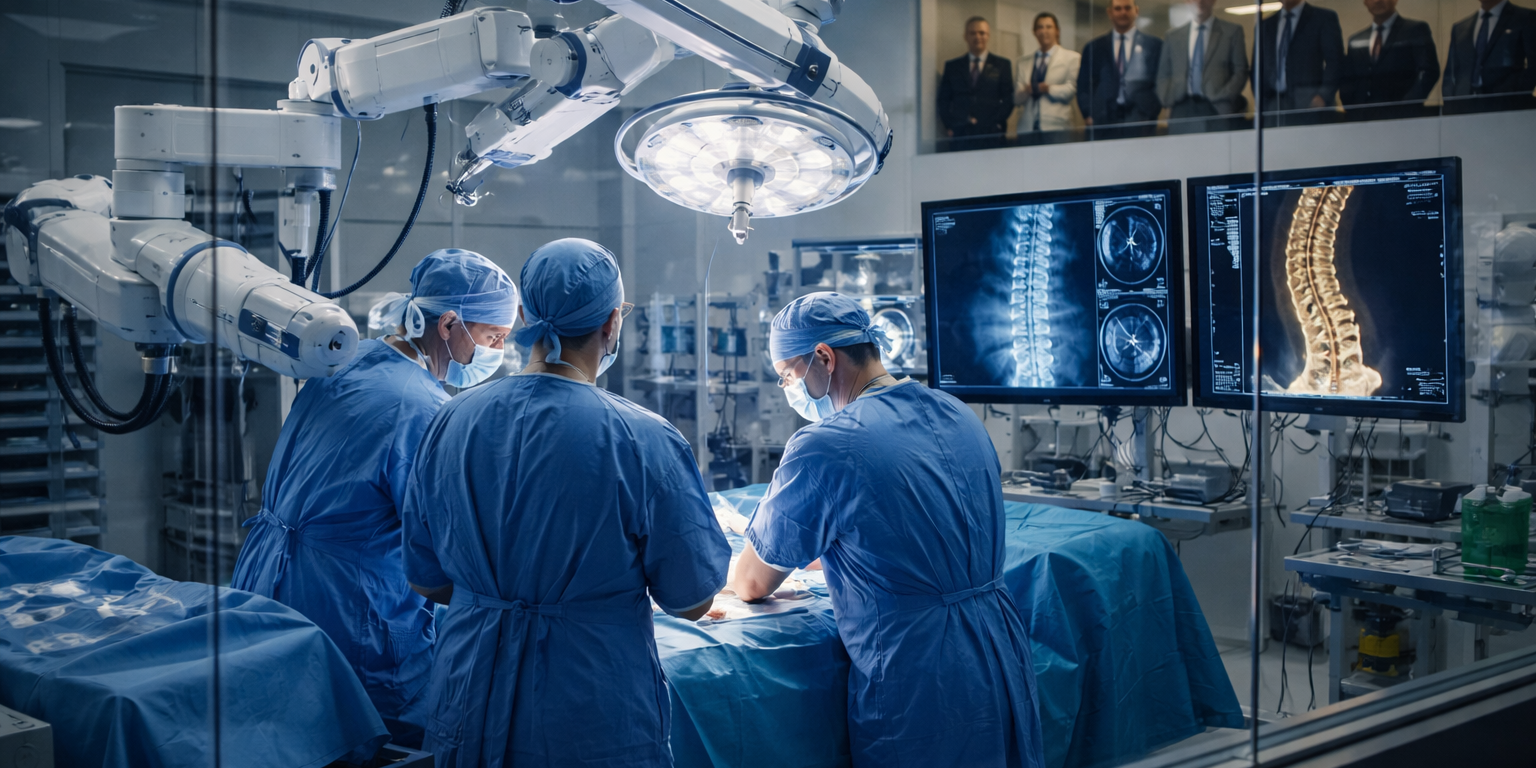
The medical robotics industry will generate $41.7 billion in annual revenue by 2031, doubling from its current $20.6 billion valuation, according to market research published by MarketsandMarkets on August 6. The forecast, based on analysis of 247 companies and interviews with hospital procurement officers across 18 countries, points to a compound annual growth rate of 15.1% through the end of the decade. That expansion outpaces the broader medical device market, which MarketsandMarkets pegs at 5.8% CAGR for the same period. The gap signals a fundamental shift in how hospitals allocate capital budgets. Equipment buyers are prioritizing platforms that address staffing constraints and procedural backlogs, two pressures that intensified during the pandemic and have not abated.
Surgical robotics accounts for the largest share of the market, but the fastest growth is happening in rehabilitation and diagnostics. Systems that automate physical therapy protocols or read imaging studies are seeing adoption rates 30% higher than surgical platforms, according to the report. This shift reflects changing reimbursement models. Medicare began covering robotic rehabilitation in selected markets last year, and private insurers followed. Hospitals that previously viewed these systems as optional now see them as necessary to hit quality benchmarks tied to reimbursement. The report identifies nursing shortages as another driver. A 200-bed hospital needs roughly 18 physical therapists to maintain pre-pandemic service levels, but average staffing sits at 12. Robotic systems fill part of that gap, handling repetitive exercises while clinicians focus on assessment and treatment planning.
Geographic expansion is accelerating faster than earlier forecasts anticipated. MarketsandMarkets projects Asia-Pacific will account for 34% of new installations between now and 2031, up from 22% in the previous five-year period. China and India are building new hospital capacity at rates not seen in developed markets, and those facilities are specifying robotic systems from the beginning rather than retrofitting them later. Japan represents a different dynamic. Its aging population and shrinking workforce have made automation a policy priority. The Ministry of Health, Labour and Welfare allocated ¥47 billion for medical robotics subsidies in fiscal 2026, targeting rural hospitals that struggle to recruit specialists. South Korea is following a similar path, with Samsung Medical Center and Asan Medical Center each deploying more than 40 robotic systems across surgery, diagnostics, and logistics.
The competitive landscape is fragmenting as new entrants challenge established players. Intuitive Surgical still commands the largest market share in surgical robotics, but its dominance has slipped from 78% in 2021 to an estimated 61% this year, according to MarketsandMarkets data. Medtronic, Johnson & Johnson, and Stryker have launched competing platforms with different cost structures and specialization strategies. CMR Surgical, based in Cambridge, UK, is pricing its Versius system to appeal to mid-tier hospitals that cannot justify the capital expense of a da Vinci. The company has placed 180 units since 2024, primarily in Europe and the Middle East. Meanwhile, venture-backed firms are targeting niches. Procept BioRobotics raised $165 million last year to scale production of its Aquablation system for prostate procedures. Moon Surgical, which makes a camera-holding robot that attaches to existing laparoscopic towers, closed a $55 million Series B in March. These specialized platforms are capturing budget that once flowed automatically to general-purpose systems.
What to Watch: Reimbursement decisions in the United States will determine how quickly rehabilitation robotics penetrate beyond academic medical centers. CMS is reviewing coverage for three additional robotic therapy categories, with guidance expected before the end of Q4 2026. In Asia, watch for announcements from Apollo Hospitals in India and Bumrungrad International in Thailand, both of which are evaluating multi-system contracts worth more than $50 million. Regulatory approvals for autonomous diagnostic systems remain a wildcard. The FDA has three AI-driven radiology robots under priority review, and approvals would open a market segment MarketsandMarkets values at $4.2 billion by 2029.