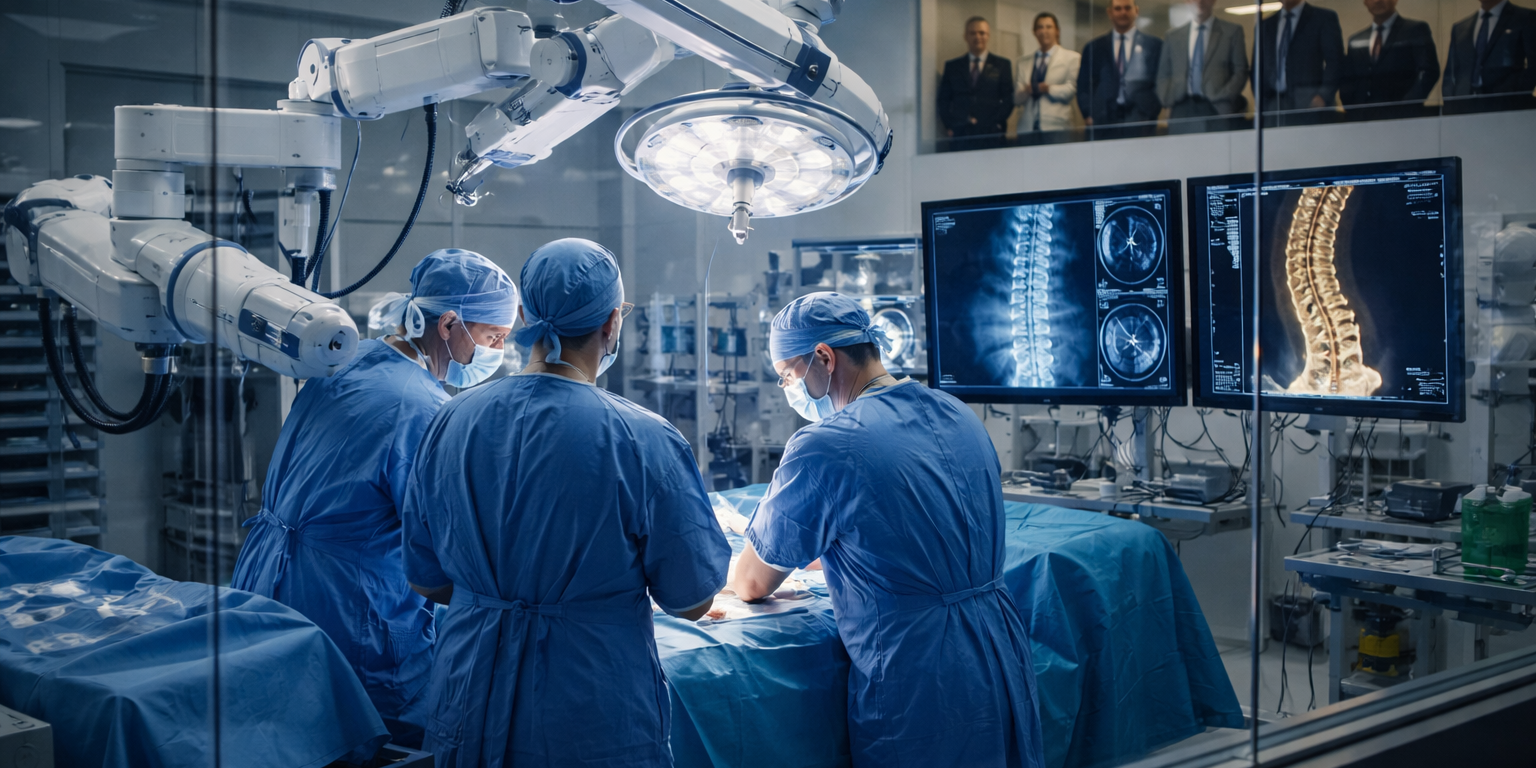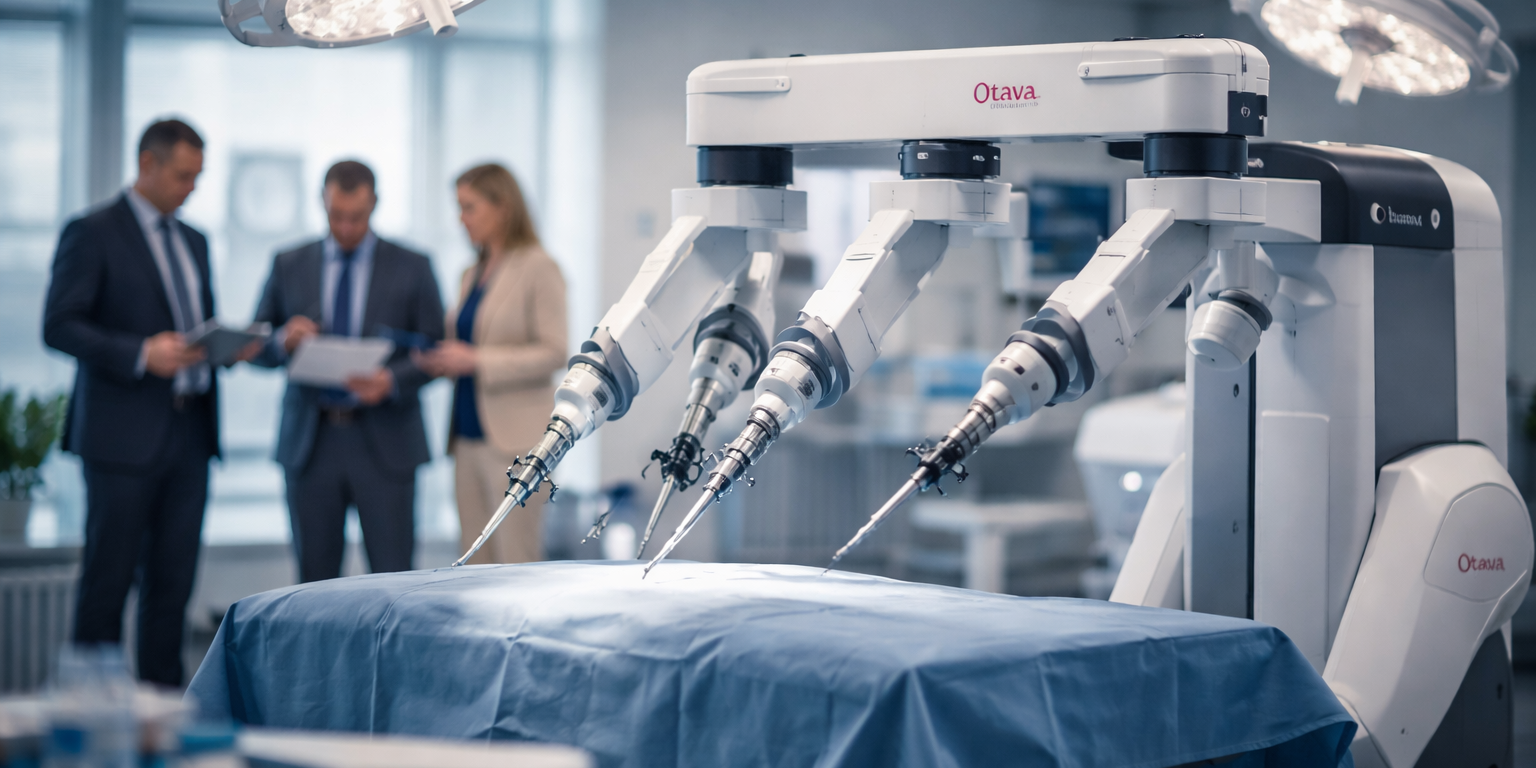
Johnson & Johnson received FDA 510(k) clearance for its Ottava robotic surgical system, a modular platform the company has positioned as a challenger to Intuitive Surgical's entrenched da Vinci franchise. The clearance follows years of development within J&J's medical devices division and arrives as hospitals confront mounting pressure to diversify their surgical robotics vendors. Intuitive Surgical controls roughly 80 percent of the installed base in the United States, with more than 8,500 da Vinci systems in operation globally as of early 2026. That dominance has created pricing leverage and ecosystem lock-in that hospital systems have increasingly resisted. J&J's entry with a cleared platform from the FDA gives procurement committees a credible alternative backed by a company with established relationships across surgery departments. The Ottava system received clearance for general laparoscopic procedures, a broad indication that mirrors the initial scope granted to competitors.
The platform's design reflects lessons learned from both Intuitive's success and the missteps of earlier challengers. Ottava uses a single boom-mounted arm rather than the multi-arm cart configuration that has defined robotic surgery for two decades. The console and cart occupy less floor space than da Vinci systems, addressing a persistent complaint from operating room managers who have struggled to accommodate bulky equipment in facilities not designed for robotics. Wristed instruments attach to the arm in a configuration J&J has described as more intuitive for surgeons accustomed to traditional laparoscopic techniques. The system incorporates 3D visualization, haptic feedback elements, and instrument tracking software that J&J has developed in partnership with Verily, Alphabet's life sciences subsidiary. That collaboration, announced in 2020, brought machine learning capabilities into the platform's architecture. The extent to which those algorithms assist surgeons intraoperatively remains a competitive differentiator J&J has not fully disclosed. The company has filed for additional FDA clearances covering specific procedure types, including colorectal and gynecologic surgeries, though those remain pending.
J&J's path to clearance has been notably extended compared to initial projections. The company first unveiled Ottava in 2022, projecting human clinical trials would begin in 2023 with regulatory submissions to follow in 2024. Those timelines slipped as the company refined the mechanical design and software stack. J&J MedTech, the division that houses Ottava, declined to specify which technical hurdles caused delays but confirmed the system underwent iterative testing at multiple sites. The 510(k) pathway requires demonstrating substantial equivalence to a predicate device, and J&J cited the da Vinci Xi system as its primary comparator. That choice streamlined the regulatory process compared to a de novo classification but also invited direct performance comparisons. Early clinical data from investigator-initiated studies in Europe, where Ottava received CE Mark approval in late 2025, showed procedure times and complication rates comparable to da Vinci outcomes for routine cholecystectomies and hernia repairs. Surgeons involved in those studies noted the learning curve for Ottava appeared shorter than for da Vinci, though formal validation of that claim has not been published. J&J has not disclosed pricing for the Ottava system, but industry analysts expect capital costs below the $2 million list price typical for da Vinci Xi consoles. Instrument costs per procedure represent the recurring revenue stream that drives profitability in surgical robotics, and J&J's pricing strategy there will determine its competitive positioning.
The broader surgical robotics market has attracted billions in investment as the installed base expands beyond the early adopter academic medical centers that drove initial growth. Medtronic's Hugo system, which received FDA clearance for urologic procedures in 2023, has captured approximately 150 placements in the United States as of mid-2026, a modest but growing foothold. CMR Surgical's Versius platform holds CE Mark in Europe and is pursuing FDA clearance for late 2026 or early 2027. Asensus Surgical, formerly TransEnterix, continues to market its Senhance system despite financial struggles and a narrow installed base. The competitive landscape reflects a maturing market where hospitals increasingly demand interoperability, modular pricing, and procedure-specific capabilities rather than general-purpose platforms. J&J's existing relationships through its Ethicon surgical device franchise provide distribution advantages competitors lack. Ethicon supplies sutures, staplers, and energy devices to virtually every hospital system in the United States, giving J&J's sales force established access to the surgeons and procurement committees that approve capital equipment purchases. That channel advantage could accelerate Ottava adoption faster than standalone robotics companies have managed. The question remains whether hospitals will commit capital to a second or third robotic platform when many still face utilization challenges with their existing da Vinci systems.
What to Watch: J&J's commercial launch strategy and initial placement velocity will clarify whether hospitals view Ottava as a true alternative or a secondary option for lower-volume sites. Watch for pricing disclosures, particularly around instrument costs per procedure, which will determine long-term profitability. Intuitive Surgical's response, whether through pricing adjustments or expanded service offerings, will signal how seriously the incumbent views the competitive threat. Medtronic's Hugo placement numbers through Q4 2026 will indicate whether multiple challengers can coexist or if the market consolidates around two dominant platforms.