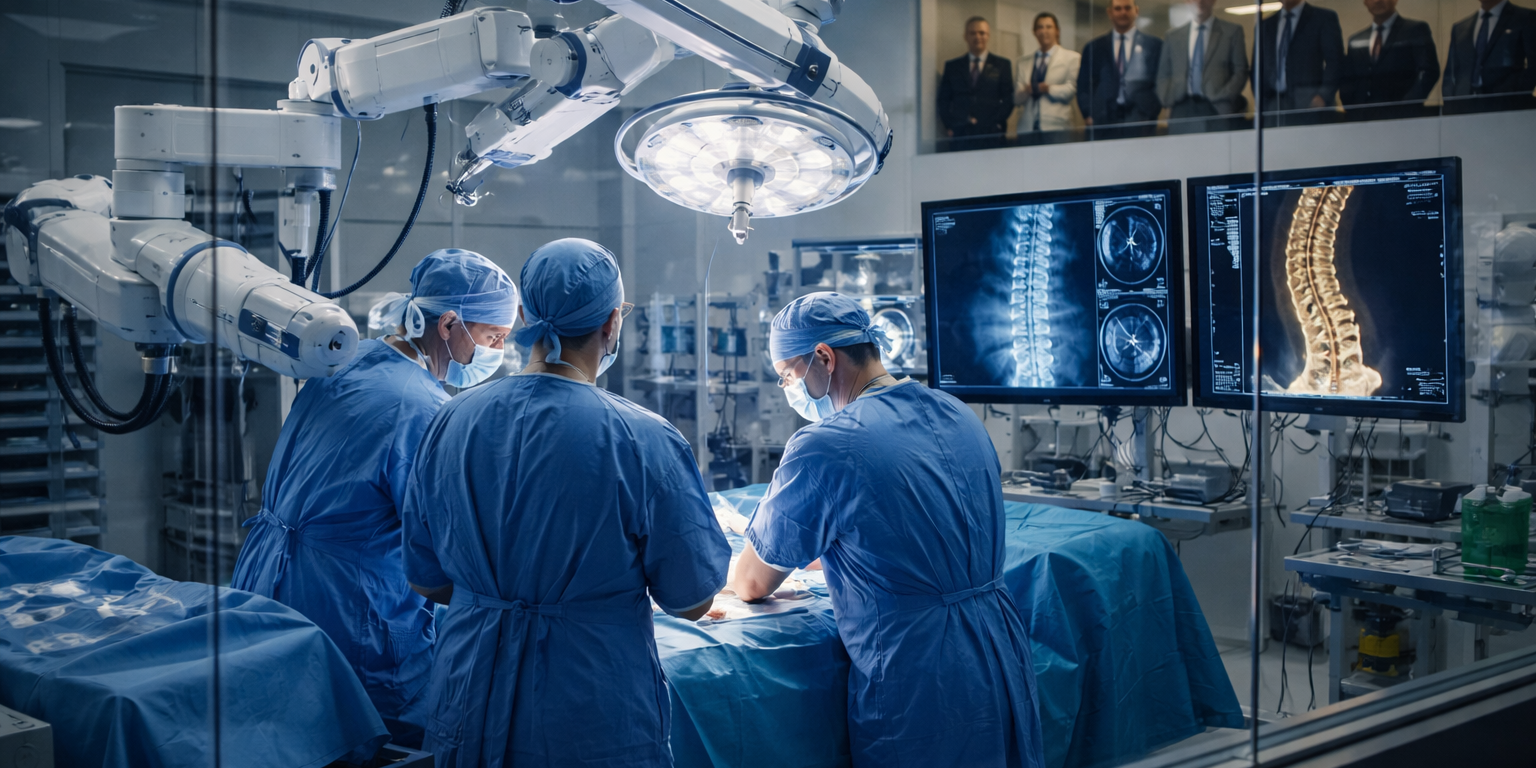
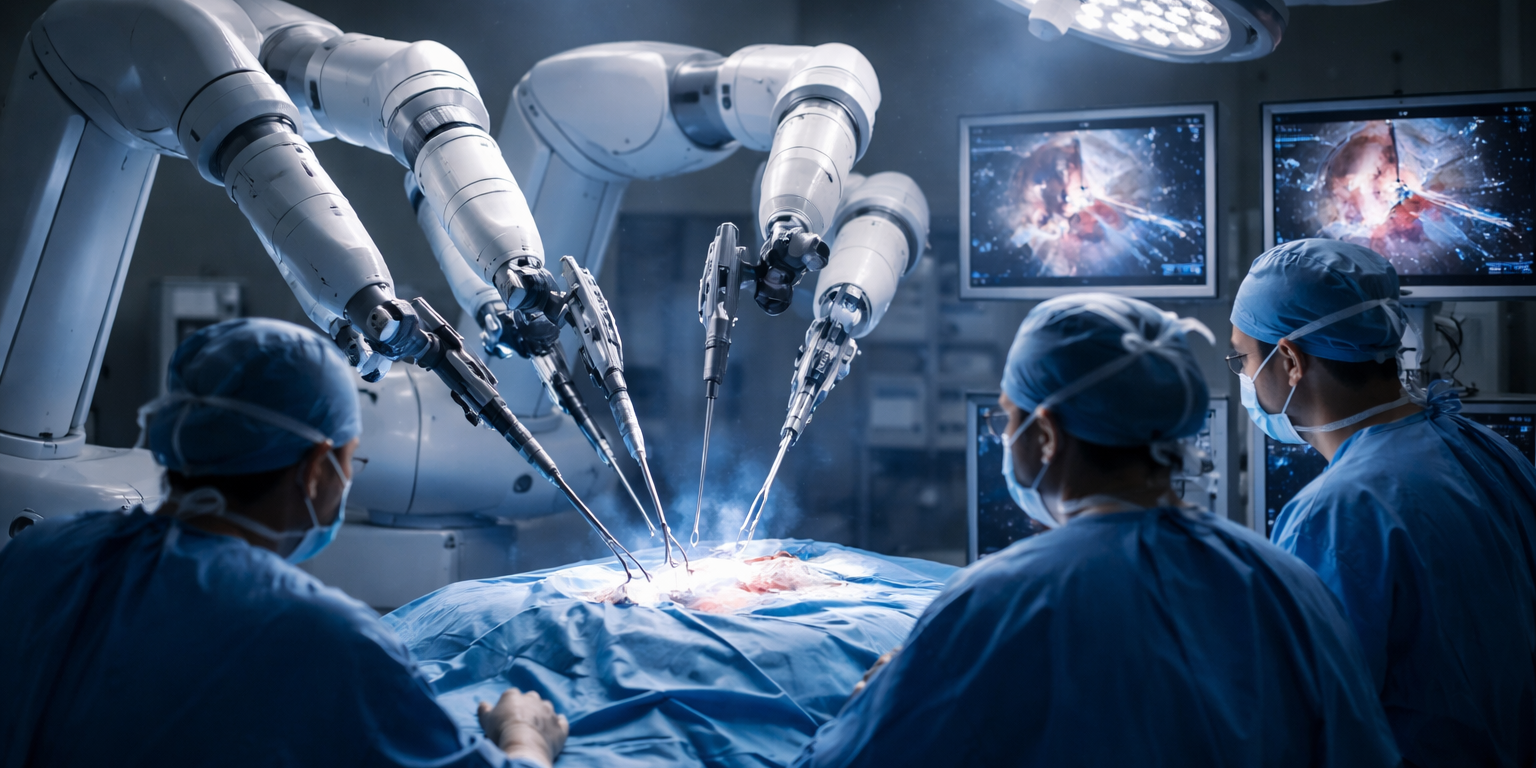
Intuitive Surgical shipped 350 da Vinci systems between April and June, a figure that eclipses the entire annual robot sales of most medical device manufacturers and frames the competitive reality Johnson & Johnson now faces with its newly cleared Ottava platform. The FDA granted De Novo authorization for Ottava on July 22, clearing the system for general surgery procedures in the upper abdomen and formalizing J&J's entrance into a market Intuitive has dominated for two decades. Shares of Intuitive closed lower that day, though the single-quarter placement number suggests the company's operational momentum remains largely insulated from new competition. The 350-unit quarter represents a run rate that would put Intuitive on pace to place roughly 1,400 systems in 2026, extending an installed base that already exceeds 9,000 da Vinci platforms worldwide.
Ottava's authorization follows a development timeline that stretched longer than Johnson & Johnson initially projected when it acquired the core technology through its 2019 purchase of Auris Health for approximately $3.4 billion. The platform features a single console controlling multiple independent arms on separate carts, a modular architecture intended to differentiate it from da Vinci's integrated design. J&J MedTech executives have positioned the multi-quadrant workspace and open console architecture as advantages for complex procedures requiring instrument repositioning, though the clinical evidence supporting workflow improvements over existing platforms remains limited at commercial launch. The FDA clearance covers soft-tissue surgical procedures in the upper abdomen, a scope narrower than the broad general surgery indication da Vinci systems carry, though J&J has signaled intentions to pursue label expansions across additional anatomical regions and procedure types through 2027.
The competitive math for any challenger extends beyond system placements to the recurring revenue Intuitive derives from instruments and services tied to its installed base. Intuitive generated $4.8 billion in instruments and accessories revenue in 2025, a figure driven by single-use tools consumed with each procedure performed on da Vinci systems. That recurring stream, combined with service contract revenue, creates an economic moat that compounds with each additional system placement. Hospitals evaluating Ottava must weigh not only capital acquisition costs but also the switching costs associated with surgeon training, credential requirements, and procedural volume commitments needed to justify a second robotic platform. Several major academic medical centers have signed early evaluation agreements for Ottava, including institutions that already operate multiple da Vinci systems, suggesting the initial commercial strategy targets high-volume centers capable of supporting parallel platforms rather than displacement of existing Intuitive installations.
Medtronic and CMR Surgical represent the other significant players attempting to establish alternative surgical robotic platforms in Western markets, with Medtronic's Hugo system securing limited European commercial traction and CMR's Versius platform achieving modest placement numbers primarily in the UK and India. Neither has materially affected Intuitive's growth trajectory in core markets. The second-quarter placement figure of 350 systems reflects a year-over-year increase of approximately 18 percent, sustained despite the entry of multiple competitors across global markets over the past three years. Procedure volume growth continues to outpace system placements, with Intuitive reporting approximately 2.3 million da Vinci procedures performed in 2025, up from 1.9 million the prior year. The delta between system growth and procedure growth indicates rising utilization across the installed base, a dynamic that further strengthens Intuitive's economic position independent of competitive system launches. For Johnson & Johnson, the challenge extends beyond securing FDA clearance to demonstrating sufficient procedural volume and margin contribution to move financial results for a company generating roughly $95 billion in annual revenue across pharmaceutical, medical device, and consumer health divisions.
What to Watch: Monitor J&J's disclosure of initial Ottava placement numbers in third-quarter earnings, expected in October 2026, for signals on hospital adoption velocity. Track whether Intuitive maintains system placement growth above 15 percent annually through year-end despite new competition. Observe FDA submissions from J&J for label expansions covering colorectal, thoracic, or gynecologic procedures, which would broaden Ottava's addressable case volume. Watch for partnerships between J&J and ambulatory surgery centers, a distribution channel Intuitive has not prioritized and where capital budget dynamics may favor modular platform architectures.