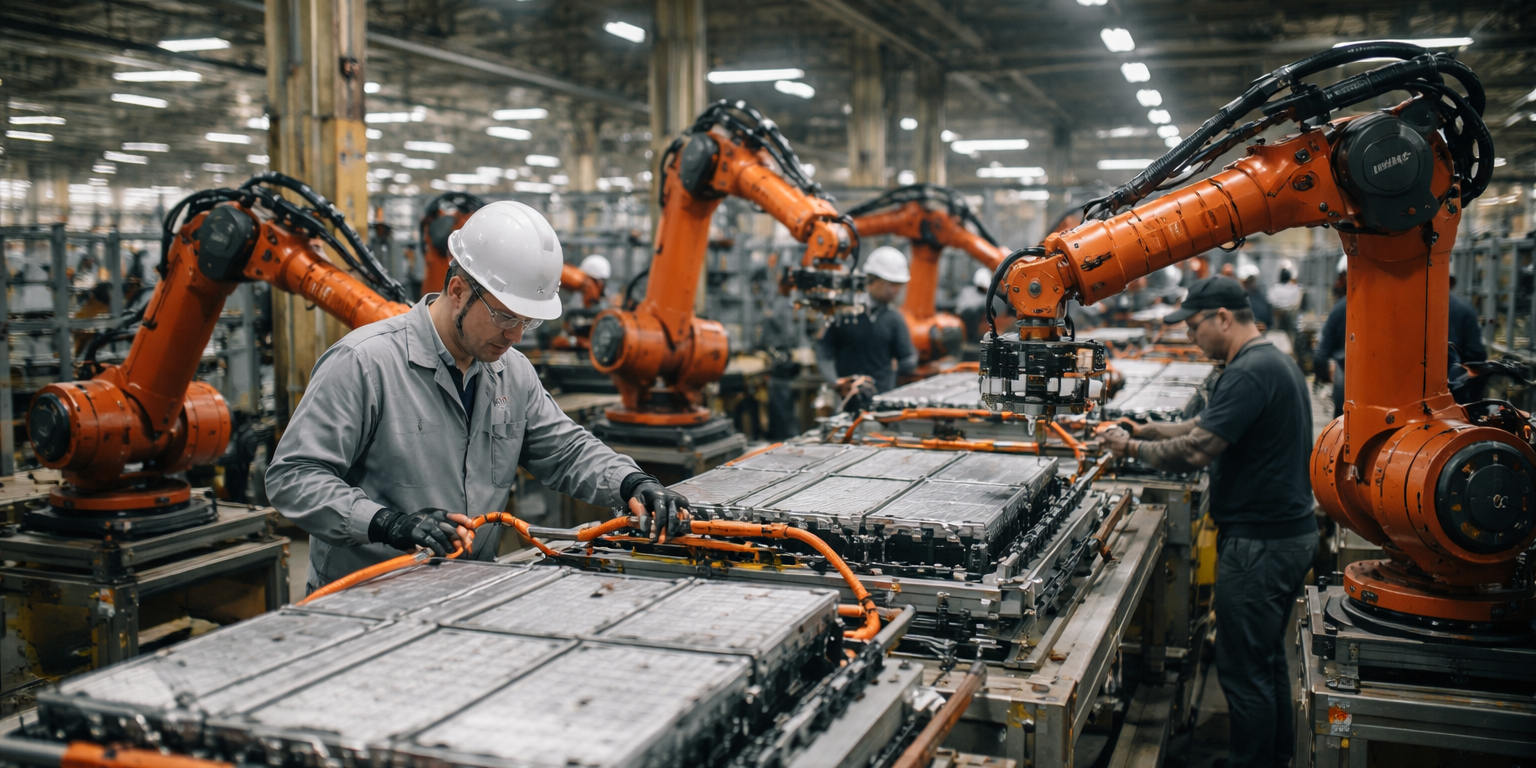
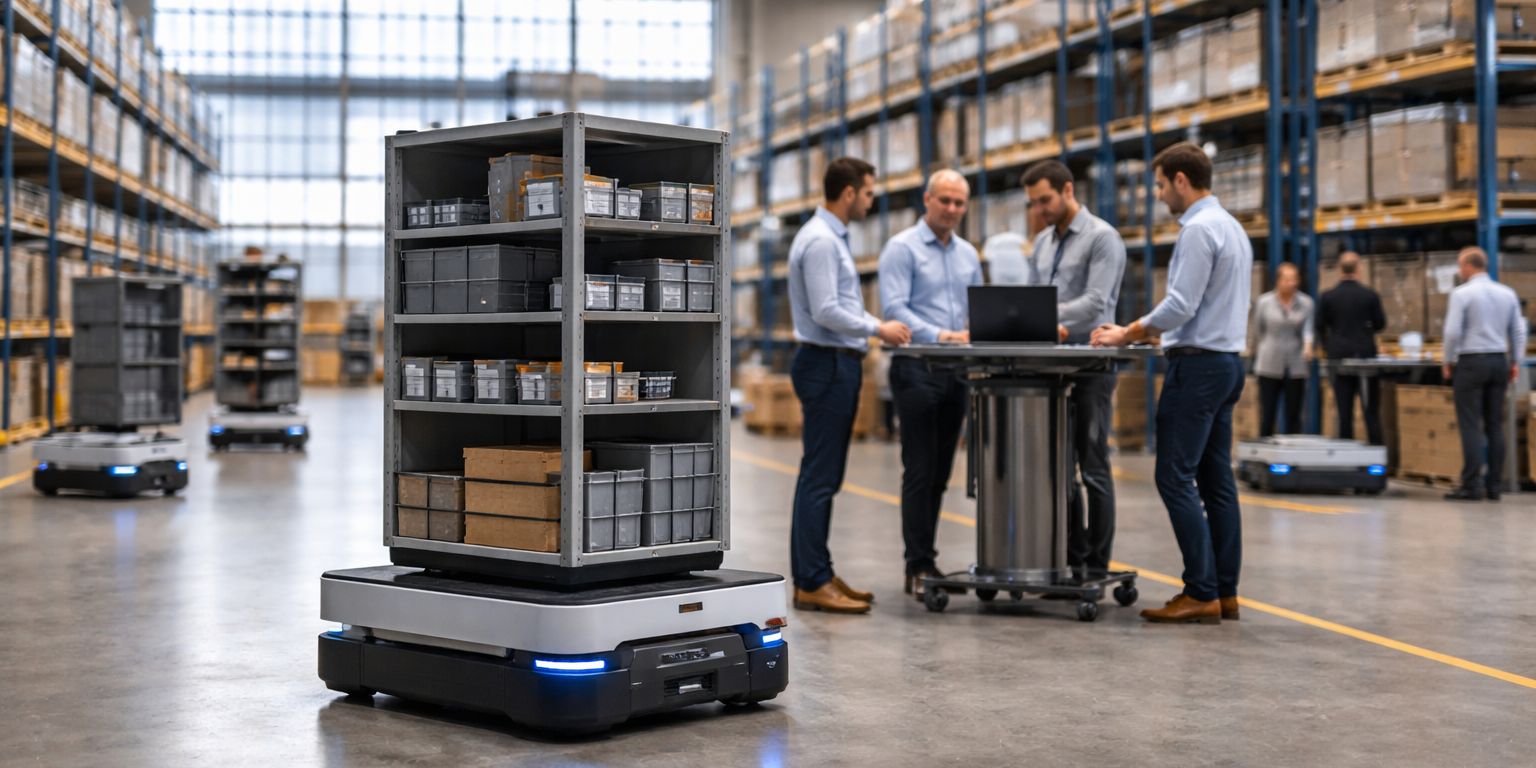
Service robots now operate in thousands of warehouses and hotels, yet the industrial floor remains comparatively untouched. The disparity has less to do with technology readiness than with the friction inherent to factory automation. A welding robot requires precision calibration, safety certification, and coordination with legacy systems installed decades ago. A delivery robot in a fulfillment center needs none of that. The result is a two-speed robotics economy where consumer-facing applications move faster than the heavy industry that built the sector.
Manufacturing accounts for roughly 16 percent of global GDP, but industrial robot installations have plateaued in key markets. The International Federation of Robotics reported 553,000 units shipped worldwide in 2023, up modestly from 531,000 the prior year. Compare that to the explosive growth in autonomous mobile robots for logistics, which saw deployments triple between 2020 and 2023 according to multiple market analyses. The divergence is not about demand. Automakers, electronics producers, and metalworking shops all face labor shortages and margin pressure that robotics could address. What separates intent from execution is the complexity of retrofitting production lines that were never designed for flexible automation. A modern collaborative robot may cost $35,000, but integrating it into a stamping operation can require $200,000 in engineering, safety infrastructure, and downtime. Service robots, by contrast, often operate in greenfield environments where layout and workflow can be optimized from the start.
The challenge extends beyond cost. Industrial robots must interface with programmable logic controllers, supervisory control systems, and quality inspection equipment from multiple vendors, often spanning decades of technology generations. ABB, FANUC, KUKA, and Yaskawa have spent years building ecosystems around their hardware, but interoperability remains a pain point. A factory running a mix of brands typically needs specialized integrators to make the systems communicate, adding time and expense to every project. Contrast that with autonomous floor scrubbers or inventory robots, which generally operate as standalone units with minimal integration. The technical debt in manufacturing is real, and it compounds with every year a facility delays modernization. Meanwhile, labor markets continue tightening. Germany reported 1.74 million unfilled jobs in manufacturing and logistics in mid-2024, while U.S. manufacturers posted 622,000 open positions in the same period. Robotics could fill some of that gap, but only if deployment timelines shorten and total cost of ownership becomes predictable.
Investment patterns reflect the bifurcation. Venture funding for warehouse automation and last-mile delivery robots hit $4.2 billion in 2023, while industrial robotics startups raised roughly $1.1 billion, per PitchBook data. The difference is not lost on technologists. Universal Robots, Techman Robot, and others have pushed collaborative arms into small and mid-sized manufacturers with some success, but penetration remains shallow outside automotive and electronics. The broader industrial base lacks the capital, technical staff, or risk tolerance to experiment. Energy sectors, food processing, and chemical plants still rely heavily on manual labor for tasks that robots could theoretically handle. The gap between theoretically and practically looms large. A food plant may need robots that can handle variable product sizes, work in wet environments, meet strict hygiene standards, and integrate with existing conveyors and packaging lines. Meeting all those requirements simultaneously is harder than solving any one in isolation. Service robotics benefits from more forgiving use cases where occasional failures do not halt production or create safety incidents. A hotel delivery robot that gets confused can stop and wait for help. A robot handling molten metal cannot.
What to Watch: Track whether established industrial players like ABB and KUKA accelerate modular offerings that reduce integration complexity over the next two quarters. Monitor adoption rates in mid-tier manufacturers, particularly in Europe and North America where labor costs are rising fastest. Watch for policy shifts, especially in Germany and Japan, where governments may increase subsidies or tax incentives to offset upfront automation costs. Pay attention to startups targeting niche industrial verticals with purpose-built solutions rather than general-purpose arms, as vertical specialization may prove the faster path to deployment at scale.