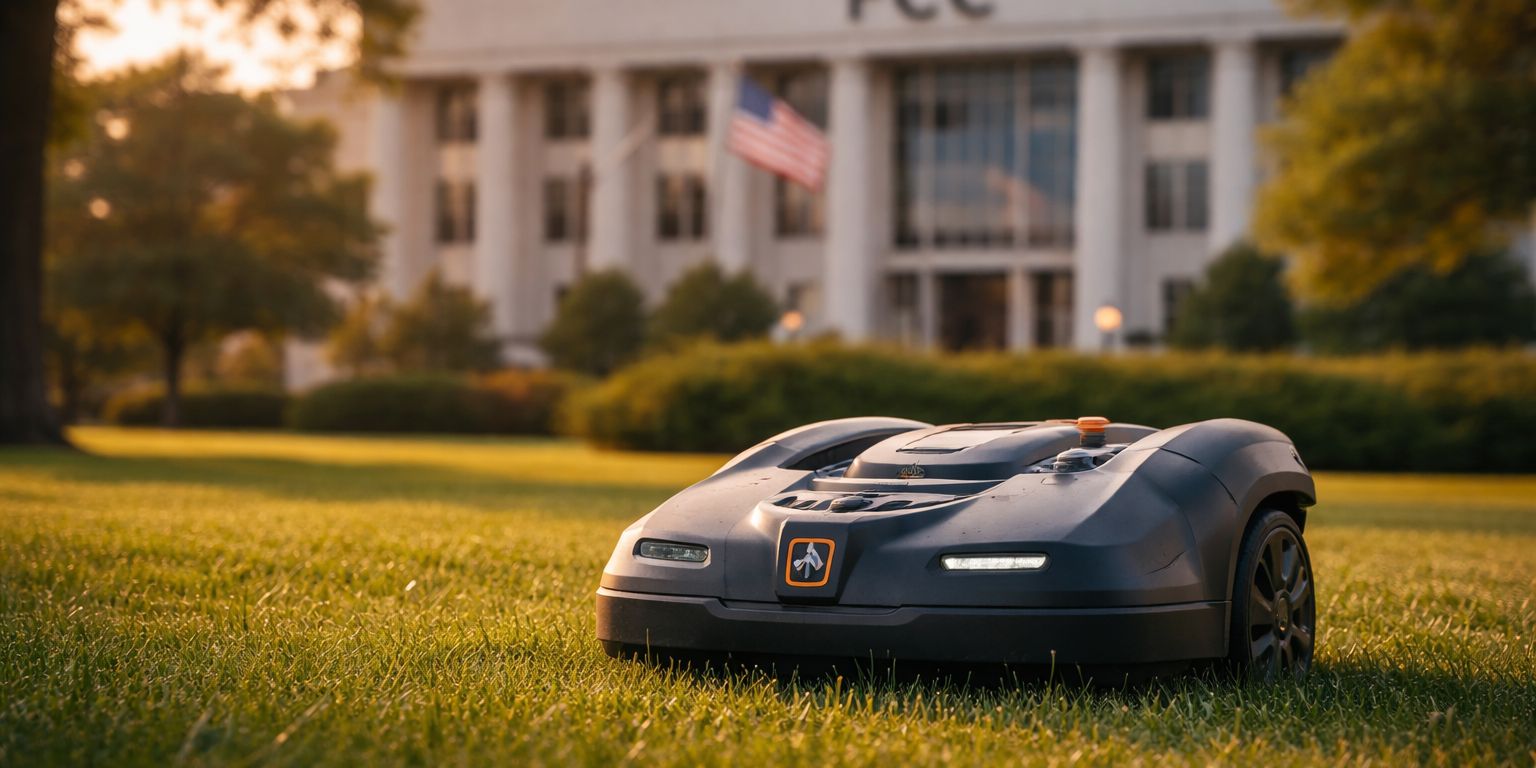
The Federal Communications Commission issued its first exemption to the foreign-made advanced robotics ban on September 11, 2026, granting Husqvarna Group permission to continue importing and selling its autonomous lawn mowers in the United States. The conditional approval carries no expiration date, a departure from the temporary exemptions granted to commercial drone operators and Wi-Fi router manufacturers since the restrictions took effect on August 1, 2026. The Swedish manufacturer, which commands roughly 35 percent of the global robotic mower market through its Husqvarna, Gardena, and McCulloch brands, faced the prospect of losing access to its second-largest market when the ban targeting Chinese and other foreign robotics firms went into effect. The indefinite nature of the exemption suggests the FCC views consumer lawn care equipment as a lower national security risk compared to aerial systems or telecommunications infrastructure, though the agency attached conditions to the approval that remain undisclosed.
The robotics import restrictions emerged from concerns about data collection and potential vulnerability to foreign interference in autonomous systems manufactured outside the United States. The executive order signed in late July 2026 covered ground-based autonomous robots capable of navigation and decision-making, aerial drones above 250 grams, and robotic systems with onboard artificial intelligence processing. Exemptions require manufacturers to demonstrate that their products do not transmit sensitive location data to foreign servers, do not receive over-the-air software updates from non-US entities without prior review, and maintain data storage exclusively on domestic infrastructure. Commercial drone operators received 90-day exemptions to transition to approved systems. Consumer Wi-Fi router makers with embedded automation features secured similar temporary authorizations. Husqvarna's indefinite approval suggests the company satisfied more stringent data handling requirements or agreed to restructure its connectivity architecture for the US market. Industry sources indicate at least fourteen other robotics manufacturers have filed exemption requests, including two Chinese vacuum robot makers and a South Korean warehouse automation firm.
Husqvarna Group operates twelve manufacturing facilities across Europe, Brazil, and China, with its robotic mower production concentrated in Sweden and Poland. The company shipped approximately 580,000 autonomous mowing units globally in 2025, with the United States accounting for an estimated 140,000 units valued at roughly $280 million in retail sales. Its Automower series, which ranges from $1,000 models for small residential yards to $5,500 commercial units covering two acres, relies on cellular and Wi-Fi connectivity for remote operation through the Husqvarna Fleet Services cloud platform. That platform processes location data, mowing patterns, and maintenance alerts transmitted from units in the field. The FCC exemption likely required Husqvarna to migrate US customer data to domestic servers and implement geographic restrictions on data transmission. The company declined to comment on specific technical modifications made to secure approval, but engineers familiar with the application process say the FCC demanded proof that lawn boundary data and GPS coordinates could not be accessed from overseas. Competitors including Worx, Mammotion, and Ecovacs face continued uncertainty about their ability to sell similar products without comparable exemptions.
The exemption arrives as manufacturers across the robotics sector recalibrate supply chains and data architectures to maintain US market access under the new regulatory framework. Defense contractors have largely supported the restrictions, arguing that commercial autonomous systems create mapping and infrastructure vulnerabilities when operated at scale. Consumer electronics trade groups opposed the rules, warning that compliance costs would drive up prices and delay product launches. Lawn care equipment represents a testing ground for how the FCC will balance security concerns against established consumer markets. The indefinite duration of Husqvarna's approval may pressure the agency to explain why other product categories face temporary authorizations while robotic mowers receive permanent status. Several members of Congress have questioned whether the exemption process favors established Western manufacturers over emerging Asian competitors. The agency has not published formal criteria for determining which robotics categories warrant indefinite versus temporary exemptions, leaving manufacturers to negotiate terms privately through applications that can take 45 to 90 days to process. Three battery-powered vacuum manufacturers have reportedly withdrawn US market entries scheduled for fourth quarter 2026 rather than pursue uncertain exemption processes.
What to Watch: Track whether Husqvarna modifies its Automower Connect app or Fleet Services platform before the 2027 spring selling season, which would signal required architecture changes. Monitor exemption decisions for iRobot, Ecovacs, and Roborock, all expected by late October 2026, to see whether the FCC extends indefinite approvals to indoor autonomous systems. Watch for congressional hearings on the exemption criteria, with Senate Commerce Committee staff indicating possible oversight sessions before year-end.