The U.S. Navy requires 174,000 additional manufacturing workers to meet defense production targets, according to an industrial base review that has prompted GrayMatter Robotics to accelerate deployment of its autonomous finishing systems across military suppliers. That projection, released as part of the service branch's assessment of shipbuilding and maintenance capacity, identifies skilled labor as the primary constraint on expanding output of surface vessels, submarines, and supporting equipment. GrayMatter, which builds vision-guided robotic systems for sanding, grinding, and polishing complex metal surfaces, argues that automating these traditionally manual tasks represents the fastest path to bridging the workforce gap without compromising quality standards demanded by defense contracts.
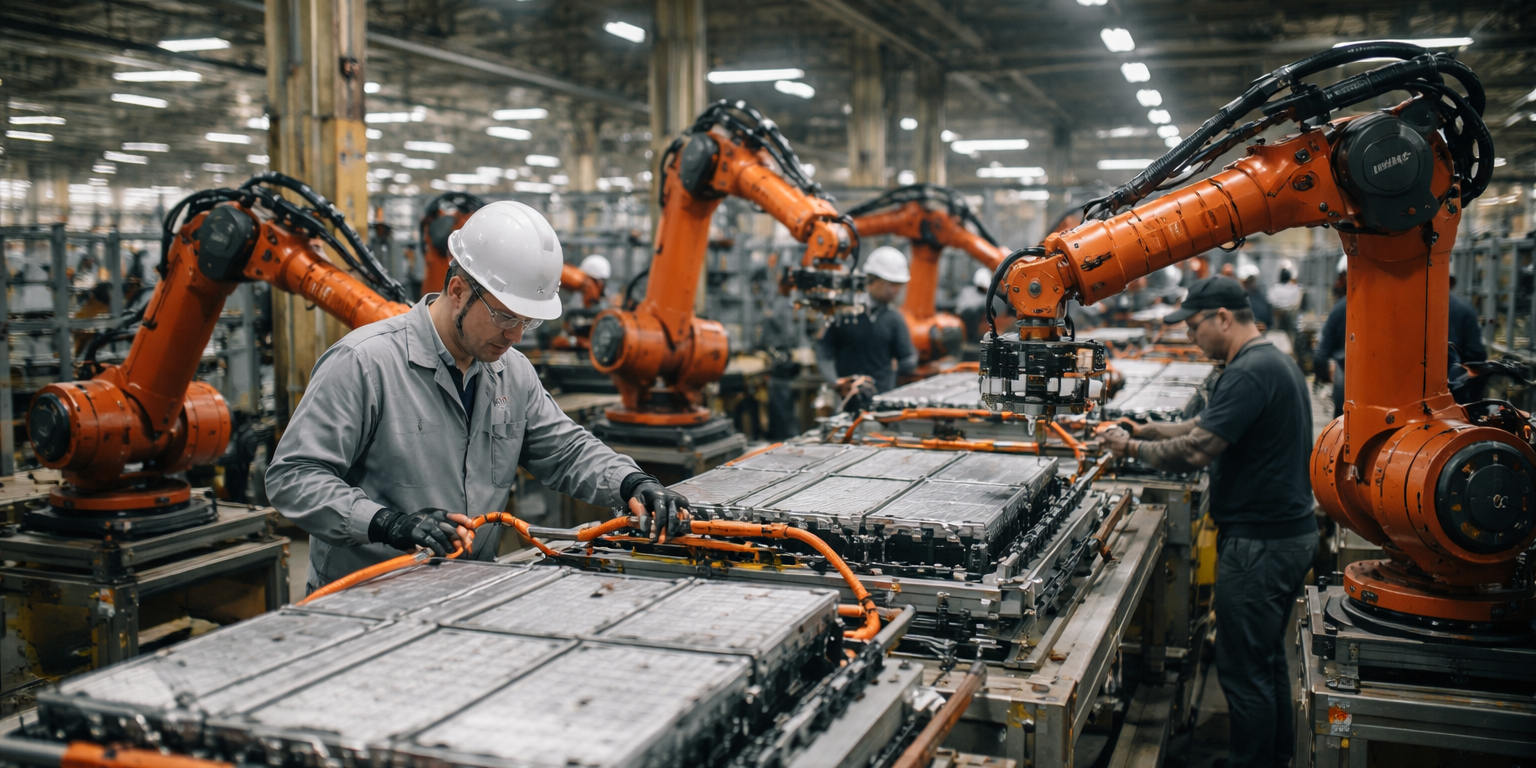
The timing matters because defense prime contractors face mounting pressure to increase production rates while confronting labor markets where experienced metal finishers command premium wages and remain difficult to recruit. Surface finishing operations, which can account for 30 to 40 percent of total manufacturing labor hours on large metal components, have proven especially resistant to automation due to the irregular geometries and stringent surface quality requirements common in aerospace and naval applications. GrayMatter's approach combines 3D scanning, path planning algorithms, and force-controlled robotic arms to replicate the adaptive techniques human finishers use when working curved surfaces and complex contours. The Los Angeles company has installed systems at suppliers serving Lockheed Martin, Northrop Grumman, and other defense primes, though it does not disclose specific facility locations or customer counts.
The Navy's workforce projection stems from planned expansion of shipbuilding capacity and accelerated maintenance cycles for the existing fleet, both of which require proportional increases in manufacturing throughput at hundreds of tier-one and tier-two suppliers. These suppliers typically operate job shops and small-batch production lines where robotic integration has lagged compared to high-volume automotive or consumer electronics manufacturing. Defense contracts often involve one-off or limited-run parts with tolerances measured in thousandths of an inch, making traditional fixed-sequence industrial robots poorly suited to the work. GrayMatter's systems address this by generating new toolpaths automatically for each part based on 3D scans, eliminating the need for custom fixturing or teach-pendant programming that would otherwise make robotic finishing economically unviable for low-volume production.
Beyond labor availability, the defense industrial base faces knowledge transfer challenges as veteran finishers retire without adequate apprenticeship pipelines to replace their tacit expertise. A skilled finisher's ability to identify surface defects by touch, adjust abrasive pressure dynamically, and maintain consistent results across eight-hour shifts represents know-how accumulated over years of practice. GrayMatter captures elements of this expertise through machine learning models trained on thousands of finishing operations, creating what amounts to institutional memory encoded in software rather than residing exclusively in individual workers. The strategic implication extends beyond simple labor substitution: autonomous finishing systems can operate continuously across multiple shifts, reducing lead times on critical components and creating buffer capacity during production surges associated with geopolitical events or emergency procurement.
The company's focus on defense manufacturing intersects with broader Department of Defense initiatives to modernize the defense industrial base through advanced manufacturing technologies. Pentagon procurement officials have identified robotics and automation as essential to maintaining military readiness without perpetual expansion of the manufacturing workforce, particularly as competition for skilled labor intensifies with commercial aerospace recovery and infrastructure spending. GrayMatter positions its technology as dual-use, serving both defense and commercial customers, though defense applications carry additional certification requirements and typically involve longer sales cycles due to security clearances and supply chain vetting. The 174,000-worker gap quantifies what suppliers have described anecdotally for years: defense manufacturing operates under structural labor constraints that cannot be resolved through wage increases or traditional recruitment alone, requiring fundamental changes to how production tasks are allocated between human workers and machines.
What to Watch: Monitor GrayMatter's announcements of defense contractor partnerships over the next quarter, particularly installations at shipyards or aerospace component manufacturers. Track whether competing robotic finishing providers like FANUC or Path Robotics pursue defense certifications or announce military supplier contracts. Watch for additional DoD industrial base assessments that quantify automation requirements across other manufacturing categories beyond surface finishing.