The Federal Communications Commission issued guidance in February 2026 that prohibits most consumer robots from operating in the 6 GHz spectrum band, a decision that caught manufacturers off guard and now threatens to delay or halt shipments of devices already in production. The order, framed as a clarification of existing unlicensed device rules, specifically targets indoor autonomous systems that lack direct oversight, a category that encompasses the majority of robot vacuums, some robotic lawn mowers, and pool cleaning robots that communicate with base stations or smartphone apps over WiFi 6E and newer protocols. Companies including iRobot, Ecovacs, Roborock, and Husqvarna now face the prospect of recalling units, redesigning radio subsystems, or absorbing significant inventory write-downs on products that can no longer legally operate in the United States.
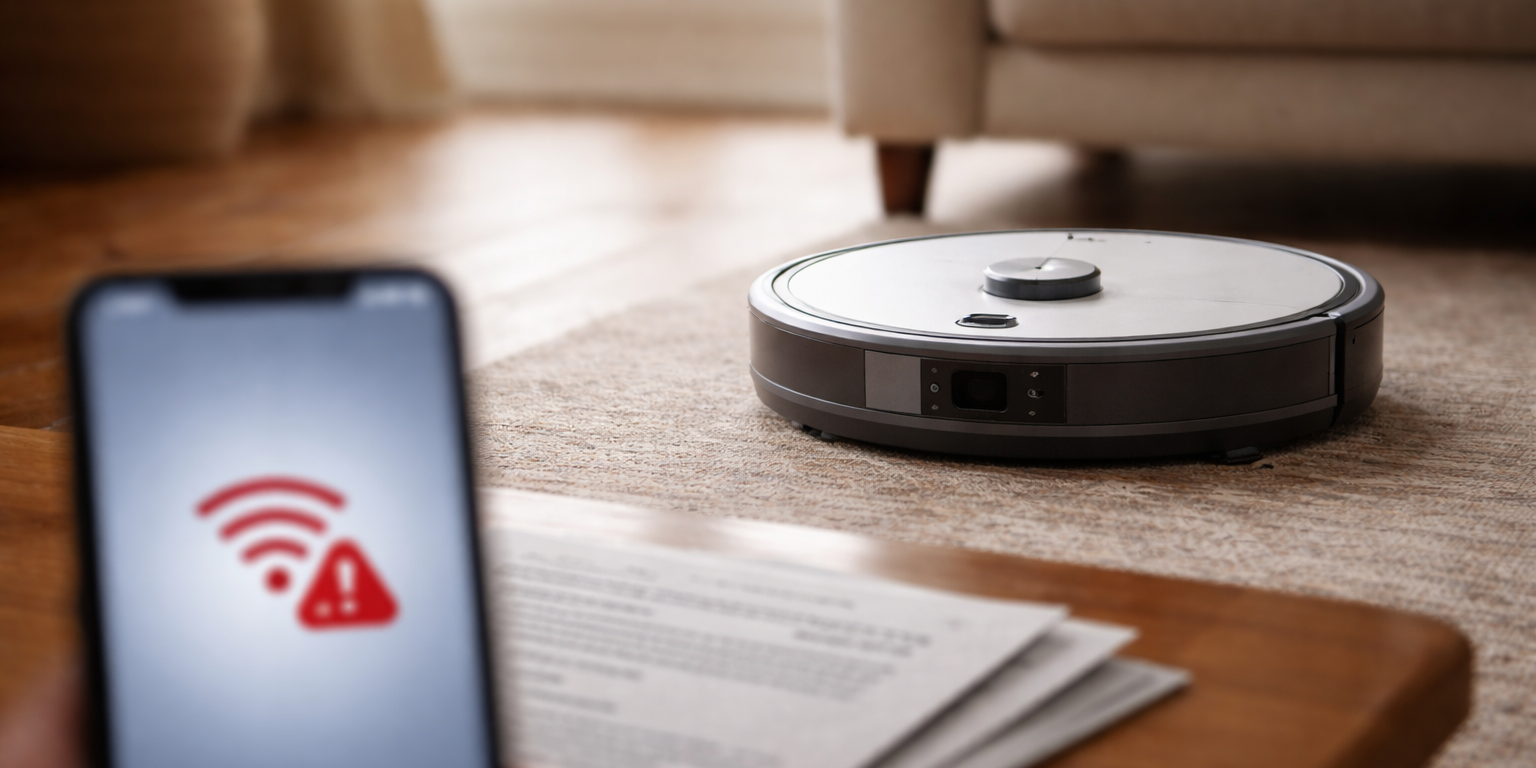
The spectrum conflict stems from the FCC's 2020 decision to open the 6 GHz band for unlicensed use, which enabled the WiFi 6E standard and promised faster, less congested wireless performance. Consumer robotics manufacturers quickly adopted the spectrum for precisely those reasons. Navigation systems that fuse lidar, cameras, and inertial sensors generate substantial data streams, especially when implementing simultaneous localization and mapping algorithms in real time. Offloading telemetry, software updates, and high-resolution floor maps to cloud services or local base stations became far more practical with 6 GHz channels offering up to 1200 Mbps throughput. But the February order draws a distinction the industry had not anticipated: devices operating indoors without continuous human supervision now fall under stricter power and interference rules originally written for stationary access points, not mobile autonomous systems. The practical effect is that a robot vacuum moving between rooms, passing through walls that attenuate signal strength unpredictably, can no longer legally transmit in the band.
Manufacturers are exploring three paths forward, none of them inexpensive. The first option involves reverting to 2.4 GHz and 5 GHz bands, which remain available for unlicensed devices but reintroduce the congestion and latency problems that drove the migration to 6 GHz in the first place. Engineering teams at several major brands confirmed they are testing firmware rollbacks that disable 6 GHz radios on existing hardware, though this approach degrades performance noticeably in homes with multiple connected devices competing for the same channels. The second path requires entirely new radio hardware compliant with the revised rules, which means redesigning circuit boards, recertifying products with the FCC, and managing the costs of stranded inventory for units already manufactured with 6 GHz chipsets. One senior hardware engineer at a top-five vacuum manufacturer, speaking on condition of anonymity, estimated the redesign and recertification process would add four to six months to product schedules and increase bill-of-materials costs by twelve to eighteen dollars per unit. The third option, lobbying for an exemption or revised interpretation, has gained traction among industry groups, but the FCC has shown little willingness to revisit the guidance so far.
The economic implications extend beyond consumer inconvenience. The global market for robotic vacuum cleaners alone reached 4.2 billion dollars in 2025, with North America accounting for roughly 28 percent of unit sales. Pool cleaning robots and robotic lawn mowers add another 1.8 billion dollars combined. A six-month delay in new product launches, coupled with potential recalls or performance downgrades on existing models, represents hundreds of millions in lost revenue and erosion of consumer confidence in a category that has only recently achieved mainstream adoption. Investors have taken notice: shares of iRobot, already under pressure from competition and a failed acquisition attempt by Amazon, dropped eleven percent in the week following the FCC guidance. Smaller players without the capital reserves to absorb a full product redesign face even steeper challenges. Two startups that had planned 2026 launches of premium robot mowers with advanced mapping features reliant on 6 GHz communication have quietly shelved those plans, according to sources familiar with the companies' strategies. The uncertainty also complicates the roadmap for next-generation features like multi-robot coordination, where several vacuums or mowers operate simultaneously in the same environment and must share mapping data in real time without interfering with one another.
What to Watch: Monitor whether the Consumer Technology Association or Robotic Industries Association files formal petitions for reconsideration with the FCC before the end of August 2026, as multiple member companies have signaled interest in a coordinated response. Track product launch schedules from iRobot, Ecovacs, and Roborock in Q4 2026 to see whether flagship models ship on time or face delays attributable to radio redesigns. Pay attention to any announcements from Qualcomm or Broadcom regarding new chipset SKUs optimized for consumer robotics under the revised spectrum rules, as silicon vendors will need to provide compliant solutions for the 2027 product cycle.