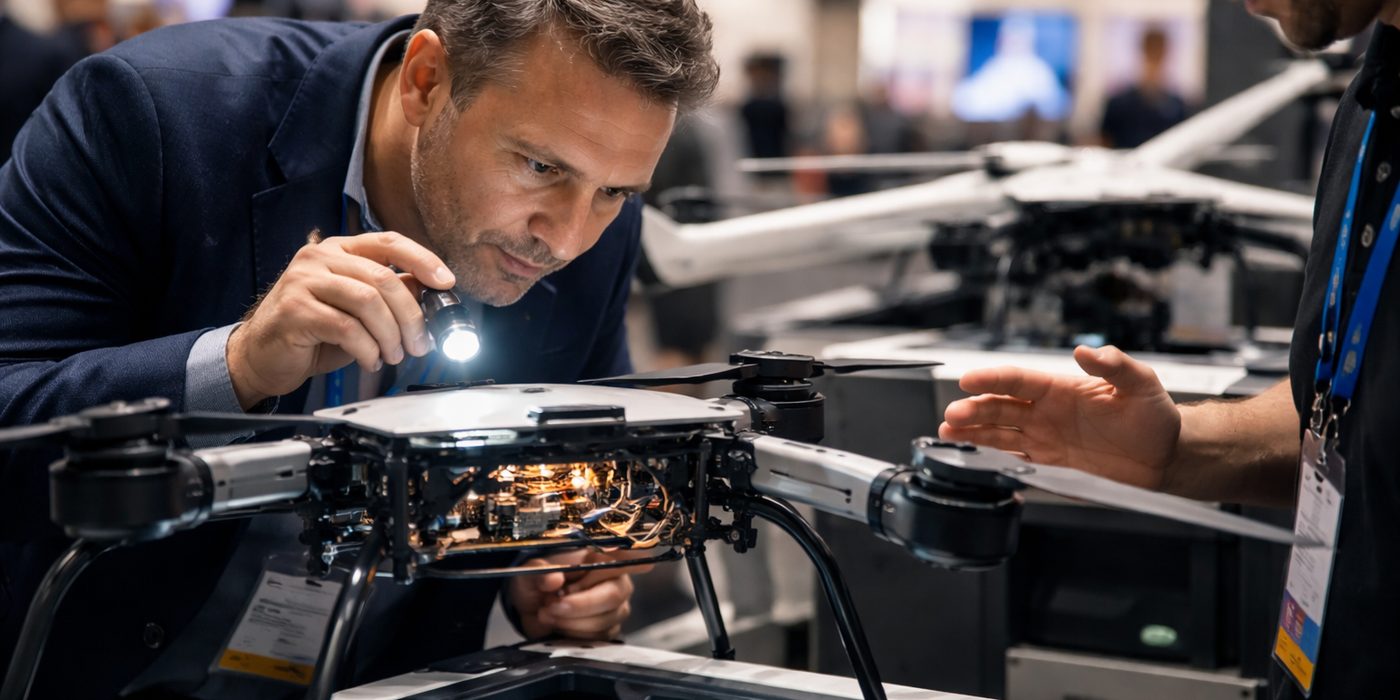
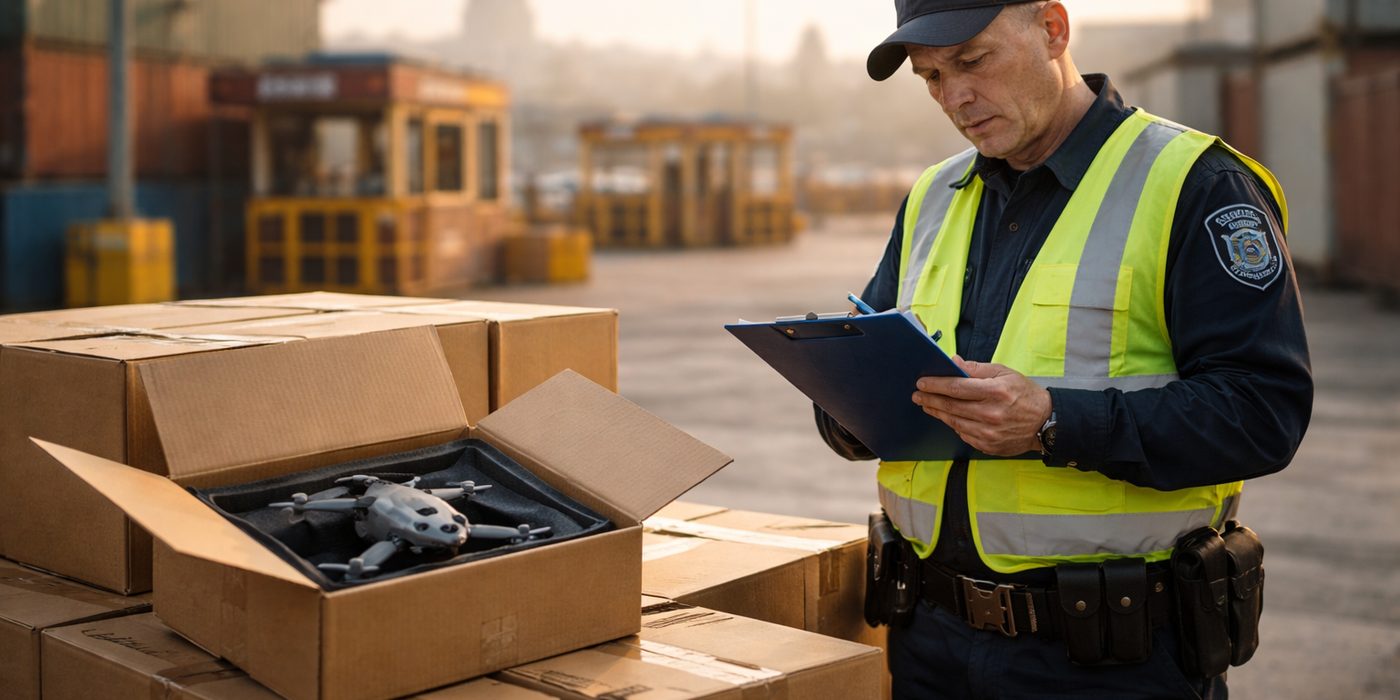
No one in Washington had to write the word "ban." The Federal Communications Commission got there through a side door: by adding foreign-made equipment to its Covered List, it stops new devices from receiving the equipment authorization every radio-emitting product needs before it can legally be marketed in the United States. No authorization, no sales. For DJI, which has dominated the consumer and commercial drone market for the better part of a decade, and for Autel Robotics, the effect is a de facto import freeze on new models, achieved without a tariff schedule or a customs order. The tool is narrow in statute and enormous in practice.
The path to that outcome ran through the 2025 National Defense Authorization Act, which contained a provision directing a national security agency to review DJI and Autel within a fixed window and, absent a determination, requiring the FCC to add them to the Covered List by default. That clock ran out. The Covered List was created under the Secure and Trusted Communications Networks Act of 2019, originally aimed at telecom gear from Huawei and ZTE, and it was never designed with a $499 consumer quadcopter in mind. FCC Chairman Brendan Carr has since signaled that the commission sees the list as an instrument with broad reach, and his public statements have extended the logic well past drones to routers and other connected consumer hardware.
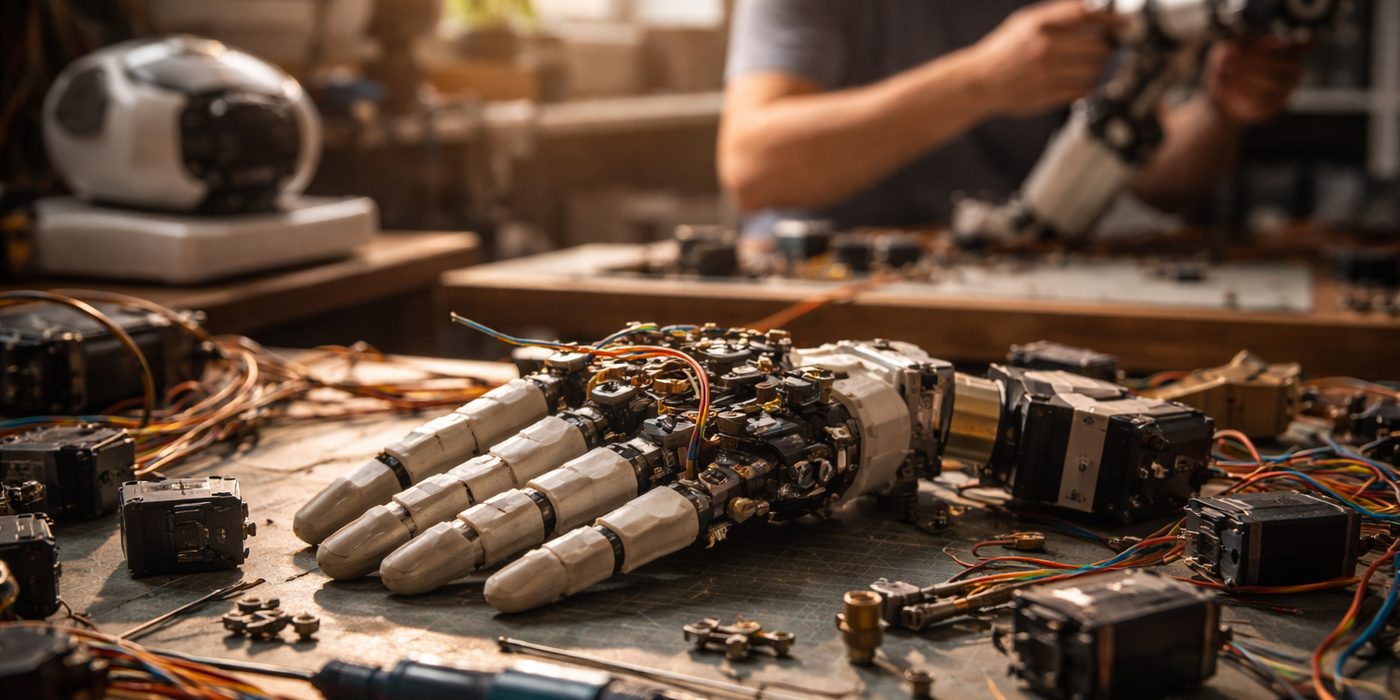
Here is the detail that matters for anyone building or buying robots: an equipment authorization covers the radio, not the brand. A robot vacuum, a warehouse AMR, a sidewalk delivery bot, and a quadruped inspection platform all carry Wi-Fi, Bluetooth, cellular, or proprietary RF modules, and every one of those modules needs FCC clearance. If the commission treats a Chinese-origin component or a Chinese-controlled manufacturer as a trigger, the problem migrates from finished goods into bill-of-materials decisions. Roborock, Ecovacs, Dreame, and Narwal, which together hold a commanding share of the premium robot vacuum segment, build in Chinese facilities and ship app-connected, camera-equipped, cloud-linked machines into millions of American homes. Whether they face the same treatment as DJI is the question their US distributors are asking privately.
The industry's exposure is uneven and, in places, poorly mapped. Drone makers already feel the sharpest pain: US commercial operators, from public-safety agencies to agricultural contractors and surveyors, have built workflows around DJI's Matrice and Mavic lines, and replacement options from domestic manufacturers like Skydio cost more and ship in lower volume. Skydio, itself sanctioned by Beijing in late 2024, has been a visible beneficiary of the policy shift, but capacity constraints and battery supply, much of it still sourced from Chinese cell makers, limit how quickly any American vendor can absorb displaced demand. The same dependency runs through humanoids and quadrupeds: Unitree's low-cost platforms are research-lab staples in US universities, and a tightening of authorization rules would ripple through academic and startup robotics programs that rely on them as affordable development hardware.
What makes this episode different from earlier trade friction is the mechanism. Tariffs raise prices and let buyers decide whether to pay. Authorization denial removes the product entirely, and it can happen to a company with no warning and no formal rulemaking comment period of the kind that governs most trade actions. That asymmetry pushes manufacturers toward pre-emptive redesign, shifting radio modules, flight controllers, and compute boards to non-Chinese suppliers or to assembly sites in Vietnam, Mexico, or Malaysia, and it rewards vendors who can document component provenance down to the chipset. For investors, the diligence question has shifted. A robotics startup's gross margin matters less than whether its supply chain survives a Covered List expansion that nobody has yet fully defined, and whether its customers can legally keep buying.
What to Watch Track any FCC public notice or Public Safety and Homeland Security Bureau announcement expanding the Covered List beyond drones and routers, since the category language will determine whether robot vacuums and mobile manipulators are swept in. Watch the 2026 holiday shopping season for DJI, Roborock, and Ecovacs inventory levels at Best Buy, Amazon, and Costco as a real-time read on how retailers interpret the rules. Follow Skydio's production announcements and any DoD or DHS procurement guidance steering agencies toward domestic fleets. Finally, monitor component suppliers such as Quectel and Fibocom, whose cellular and Wi-Fi modules sit inside countless US-sold robots, for any move that turns a finished-goods problem into a parts shortage.