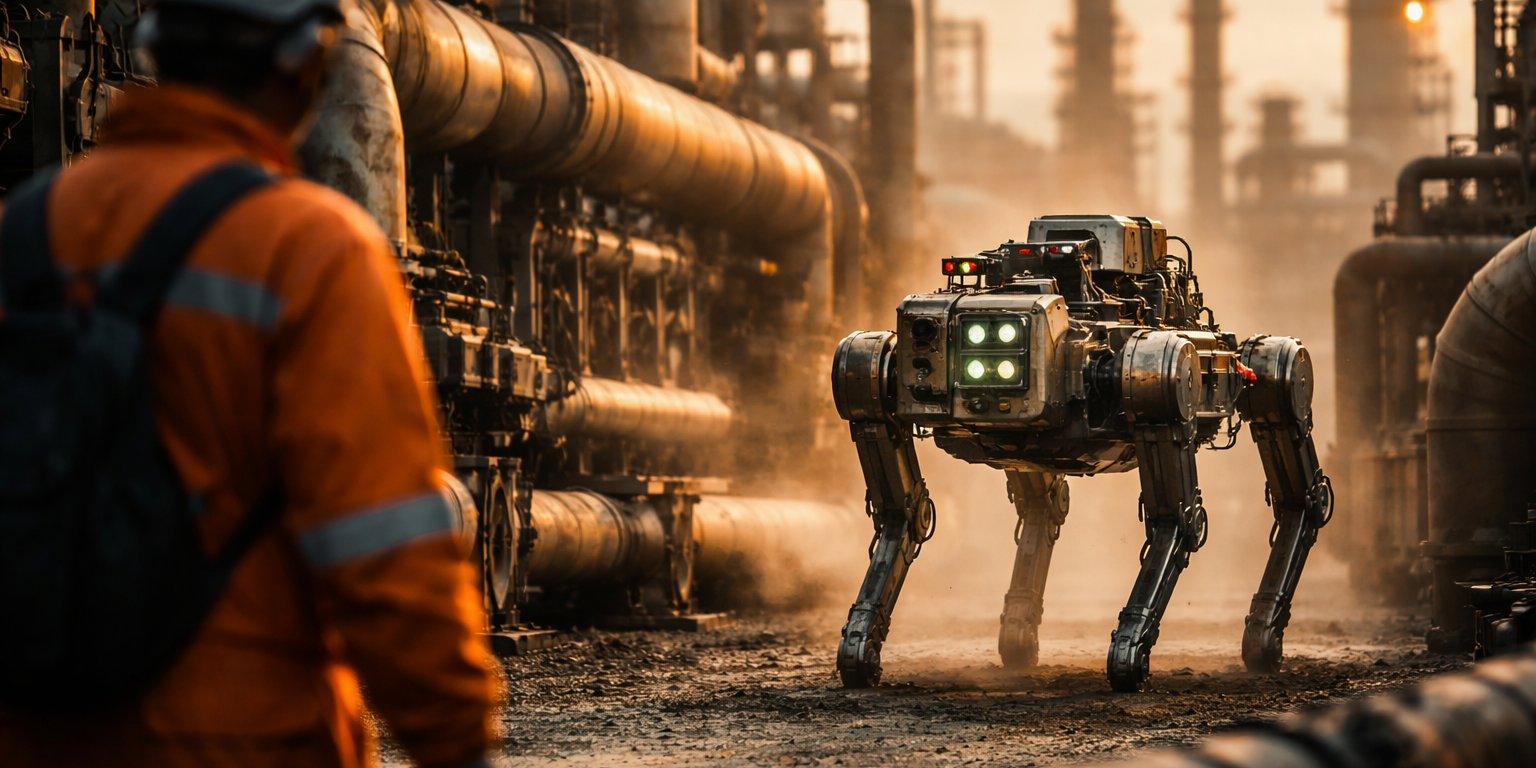
ExRobotics secured Underwriters Laboratories certification for its ExR-2.5 inspection robot, making it one of fewer than a dozen mobile platforms cleared for autonomous operation in North American facilities where explosive atmospheres are a daily concern. The Trondheim-based company announced the UL Class I Division 1 rating this week, a designation that permits the quadruped machine to navigate refineries, chemical plants, and offshore platforms where a single spark from non-certified equipment could trigger catastrophic failure. The certification process, which ExRobotics began in early 2025, required extensive hardware modifications and third-party validation that the robot's electrical systems, sensors, and communications equipment meet intrusion protection standards designed to prevent ignition sources in volatile environments.
Few inspection robots carry genuine hazardous location certifications, despite widespread marketing claims about rugged industrial design. ATEX certification dominates in Europe, while UL and CSA marks are required for legal deployment across refineries and chemical sites in the United States and Canada. Boston Dynamics never pursued formal hazardous area certification for Spot, limiting its use in petrochemical facilities to cold zones or temporary hot work permits. Clearpath Robotics obtained CSA certification for its Husky platform in 2019, while Switzerland's ANYbotics secured ATEX approval for ANYmal in 2021 but has yet to announce North American equivalents. ExRobotics claims the ExR-2.5 is the first quadruped inspection robot to hold both ATEX Zone 1 and UL Class I Division 1 certifications simultaneously, though the company has not disclosed how many units have shipped to date or which energy companies are piloting the platform.
The ExR-2.5 weighs 47 kilograms and measures 850 millimeters in length, dimensions that allow it to traverse industrial catwalks and squeeze through access panels common in aging refinery infrastructure. Its sensor suite includes a thermal camera capable of detecting temperature differentials as small as 0.1 degrees Celsius, a laser methane detector with a detection threshold of five parts per million, and ultrasonic thickness gauges for corrosion mapping on pipes and pressure vessels. ExRobotics built the platform around a sealed electronics bay rated IP66 for dust and water ingress, with all external components either intrinsically safe or housed in explosion-proof enclosures that can contain internal detonations. Battery runtime reaches four hours under continuous operation, with hot-swappable power packs that allow inspection crews to extend missions without returning the robot to a charging station. The company has not disclosed the ExR-2.5's price, but industry sources familiar with hazardous area robotics suggest certified platforms typically command premiums of 40 to 60 percent over non-certified equivalents, placing the ExR-2.5 likely above $150,000 per unit.
Demand for certified inspection robots is rising as energy companies face simultaneous pressures from aging infrastructure, workforce shortages, and tightening safety regulations. The American Petroleum Institute estimates that refineries in the United States conduct more than 12 million manual inspections annually, many in confined spaces or elevated areas where falls and toxic exposures account for a disproportionate share of industry fatalities. Insurance carriers are beginning to adjust premiums based on inspection frequency and documentation quality, creating financial incentives for operators to deploy robots capable of continuous monitoring rather than quarterly or annual manual checks. Shell and TotalEnergies have both published internal studies showing that robotic inspections reduce unplanned shutdowns by catching early-stage corrosion and equipment degradation that human inspectors miss during brief visual surveys. ExRobotics has not named specific customers, but the company's LinkedIn profile shows recent hires in Houston and Rotterdam, suggesting pilot deployments or sales activity in two of the world's largest refining hubs. The UL certification arrives as North American refining capacity utilization hovers near 90 percent, a level that leaves operators with narrow maintenance windows and heightened consequences for equipment failures that force unscheduled outages.
What to Watch: ExRobotics is expected to announce pricing and initial customer deployments before the end of Q3 2026, likely timed to coincide with industry conferences where plant managers finalize capital equipment budgets. Watch whether Clearpath Robotics pursues UL certification for its Warthog platform, which currently holds only CSA approval and trails behind in the quadruped inspection market. ANYbotics' entry into North America remains the wild card—if the Swiss firm secures UL certification for ANYmal by early 2027, ExRobotics will face a competitor with deeper venture backing and a longer operational track record in European petrochemical sites.