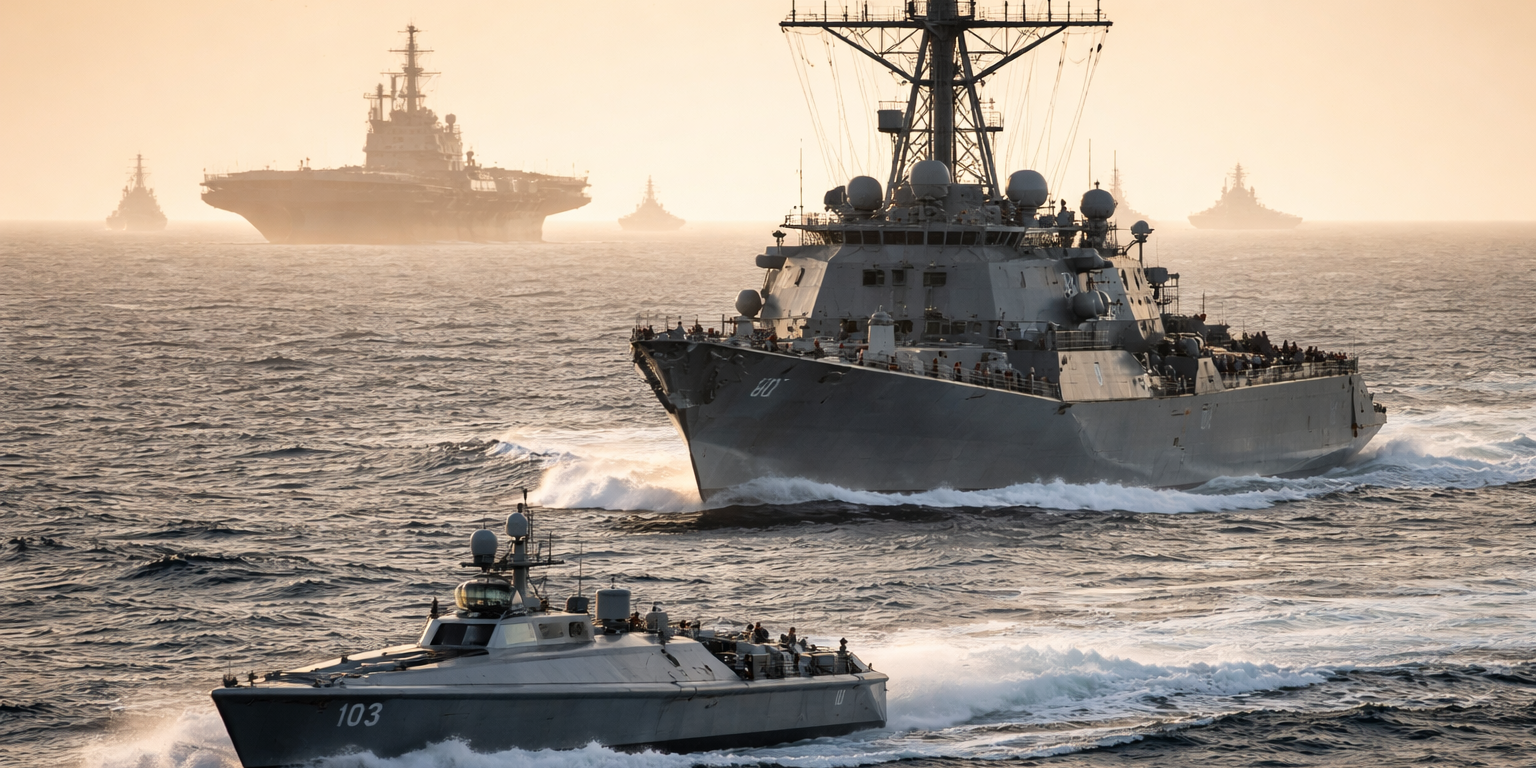
Autonomous barges started navigating the Pinglu Canal on Wednesday, marking the first operational tests of intelligent shipping infrastructure on a waterway that cost roughly $10 billion to construct. The trials in Guangxi Zhuang autonomous region involve multiple vessel types equipped with autonomous navigation systems, collision avoidance sensors, and automated docking capabilities. Engineers from state-owned shipping operators and technology firms are evaluating how the systems perform on a canal designed from the ground up to accommodate smart logistics, with digital locks, automated traffic management, and integrated positioning networks already installed along the 135-kilometer route.
The canal represents a different approach to autonomous maritime deployment than the piecemeal retrofitting underway in established shipping lanes. Where European and North American ports struggle to integrate autonomous vessels into century-old infrastructure, Pinglu was engineered as a clean-sheet environment for robotics. The waterway features standardized lock dimensions, consistent channel depth of 3.5 meters, and shore-based sensor arrays that communicate directly with vessel control systems. Project managers allocated approximately 8 percent of total construction costs to digital infrastructure, including fiber-optic networks embedded in canal walls and remote operations centers at three locations along the route. That level of integration gives autonomous systems environmental data far beyond what's available through onboard sensors alone, particularly in the narrow passages and congested lock approaches where traditional maritime autonomy struggles.
China classified the project as strategic infrastructure in 2019, directing Guangxi provincial authorities to prioritize construction timelines over incremental cost savings. The canal cuts travel distance from Nanning, capital of Guangxi province, to coastal ports by approximately 560 kilometers compared to existing river routes. Freight that previously required rail or truck connections to reach Guangzhou or Shenzhen ports can now move entirely by water, with projected transit times of 18 to 22 hours for the full canal passage. The route serves Yunnan, Guizhou, and Sichuan provinces, landlocked regions with combined GDP exceeding $1.2 trillion but persistent logistics disadvantages that add 12 to 15 percent to export costs. Autonomous vessels operating 24-hour schedules could compress those timelines further while reducing crew expenses that currently represent 35 to 40 percent of operational costs on inland waterways.
The autonomous systems under test come from multiple developers, though China State Shipbuilding Corporation holds contracts for the majority of intelligent vessel conversions. Their collision avoidance algorithms incorporate reinforcement learning trained on canal-specific scenarios, including the precise maneuvering required when multiple barges approach locks simultaneously. Positioning accuracy requirements are tighter than open-ocean autonomy standards, with deviation tolerances under 0.5 meters in lock chambers measuring 280 meters long and 34 meters wide. The vessels use differential GPS augmented by ultra-wideband beacons installed at 200-meter intervals, achieving centimeter-level accuracy in real-time kinematic positioning. Automated mooring systems eliminate the manual line-handling that creates bottlenecks at traditional locks, with hydraulic clamps that engage within 12 seconds of vessel arrival. Traffic planners expect the canal to handle 47 million tons of cargo in its first full year of operation, scaling to 89 million tons by 2035 as autonomous fleet deployment accelerates and scheduling algorithms optimize convoy formations.
Beyond domestic logistics, the canal positions robotics companies for advantage in Southeast Asian markets where infrastructure development follows similar patterns. Vietnam's planned expansion of the Mekong Delta canal network and Thailand's eastern seaboard projects both incorporate provisions for autonomous navigation. Chinese autonomous vessel developers participating in Pinglu trials gain operational data and validation credentials applicable to export markets, particularly for systems designed around shallow-draft inland waterways rather than deep-sea container shipping. The technology transfer implications extend to lock automation, canal traffic management software, and the shore-based operations centers that coordinate autonomous fleets. Cambodia awarded preliminary engineering contracts in late 2024 for canal expansions that reference Pinglu's digital architecture specifications, suggesting the project functions as both infrastructure and product demonstration.
What to Watch: Track vessel certification timelines from China Classification Society for autonomous canal operations, expected in Q2 2025. Monitor cargo volume data from Guangxi provincial statistics bureau when the canal enters commercial service, likely between April and June. Watch for autonomous system contracts from regional canal authorities in Vietnam and Thailand, where Pinglu serves as the reference implementation for smart waterway design.