
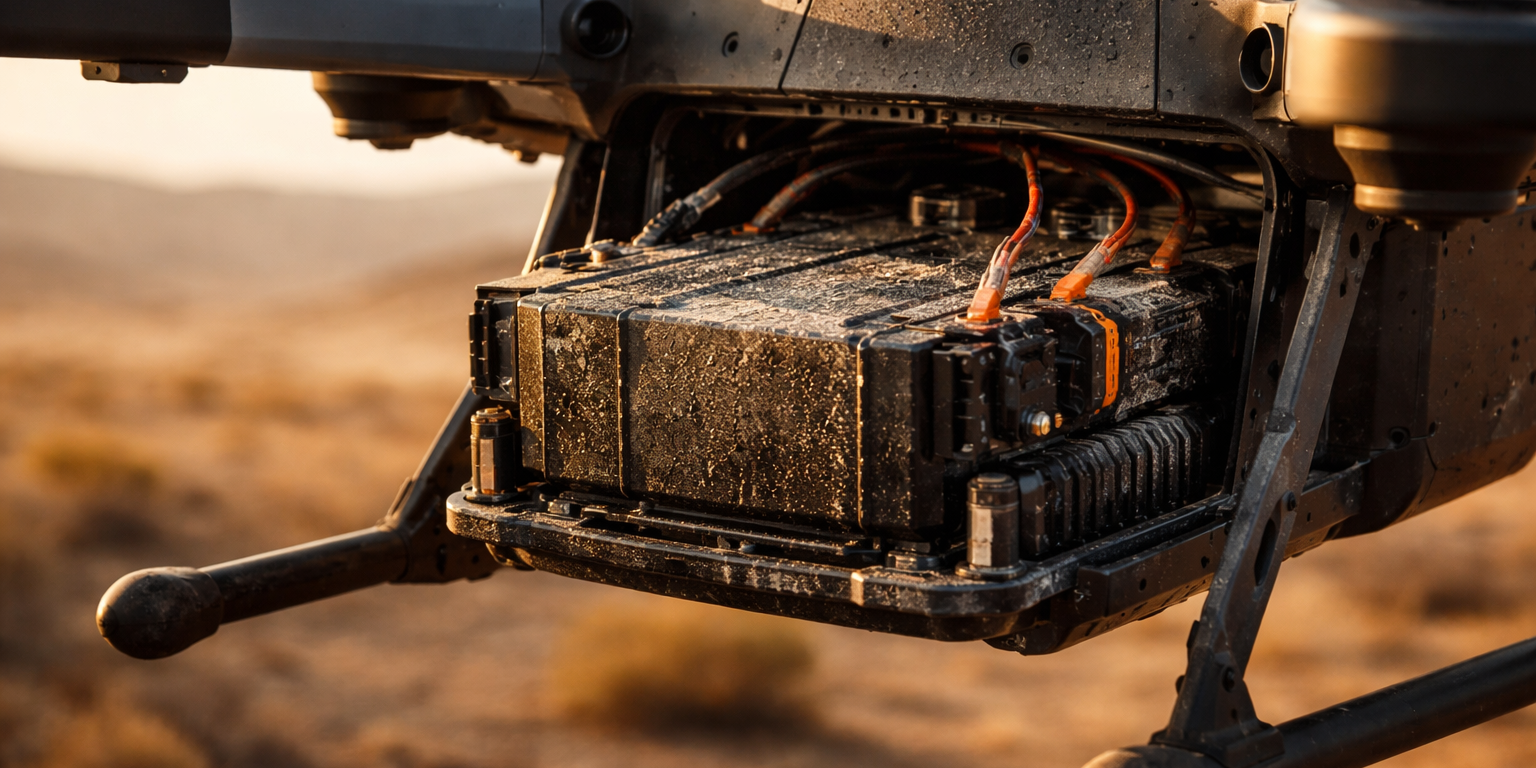
A surge of battery orders totaling more than $500,000 landed at Beam Global in a single week, all from companies running drone delivery services and autonomous mobile robots that need power systems capable of surviving harsh field conditions. The San Diego firm, better known for its solar-powered EV charging infrastructure, has quietly built a business supplying ruggedized lithium battery packs to robotics operators who need energy storage that can handle temperature swings, vibration, and rapid charge cycles without the babysitting required by consumer-grade cells. The orders came from existing customers, meaning these are companies already flying or rolling Beam batteries in commercial operations and coming back for more capacity. That repeat business matters more than the dollar figure. It suggests the systems are performing in real-world deployments where a battery failure means a grounded asset and lost revenue.
Beam Global entered the robotics battery market by leveraging engineering work originally developed for its EV ARC product line, which stores solar energy in battery arrays mounted inside street-legal charging stations. Those systems sit outdoors in Phoenix summers and Minnesota winters, which forced the company to solve thermal management and cell longevity problems that also plague mobile robots. The firm's AllCell technology, a phase-change material that absorbs and dissipates heat, emerged as a differentiator. It allows battery packs to operate across a wider temperature band without active cooling systems that add weight, complexity, and failure points. For a delivery drone or warehouse AMR, that thermal buffer translates directly into operational range. A battery that can charge faster without overheating means less downtime between runs. A pack that survives freezing temperatures without performance degradation means the robot keeps working through winter.
The customer list remains under wraps, but the split between drone delivery and autonomous ground robots reflects where commercial robotics has moved in the past eighteen months. Drone delivery companies, after years of regulatory delays, are now operating revenue-generating routes in multiple U.S. markets and need battery inventory to support growing fleets. A single delivery hub might cycle through dozens of battery packs daily as drones return, swap power units, and launch again. Ground robots, particularly in logistics and last-mile delivery, face similar operational math. Starship Technologies alone has logged millions of autonomous deliveries, and each robot in the fleet requires multiple batteries to maintain continuous service. These are not one-time purchases. They are the beginning of a recurring demand cycle as fleets expand and existing batteries reach end-of-life after thousands of charge cycles. Beam's follow-on orders indicate it has locked in relationships with operators who have moved past vendor evaluation and committed to specific hardware platforms.
The $500,000 figure, while modest in absolute terms, represents a meaningful data point for the robotics power supply chain. Battery technology remains a primary constraint on robot performance and economics. Energy density determines how long a robot can operate between charges. Cycle life determines how often operators must replace expensive packs. Charging speed dictates fleet utilization rates. Weight affects payload capacity and energy efficiency. Robotics companies historically built custom battery solutions in-house or relied on industrial battery suppliers with limited robotics expertise. A third path is emerging: specialized firms like Beam that bring automotive-grade power systems engineering to mobile robotics. The company reported that its robotics battery revenue has grown consistently over the past year, though it has not broken out specific figures in public filings. The defense sector also represents a growing revenue stream, with military drone and ground robot programs requiring batteries that meet additional standards for shock resistance and operational security.
Beam Global's core business remains renewable energy infrastructure, primarily its solar-powered EV charging stations deployed at commercial sites, universities, and government facilities. The robotics battery line contributes a smaller but faster-growing share of revenue. Management has indicated plans to expand production capacity for battery systems in 2026, though specific investment figures have not been disclosed. The company manufactures in the United States, which positions it favorably for defense contracts and commercial customers prioritizing domestic supply chains. As autonomous systems proliferate across delivery, agriculture, inspection, and security applications, the installed base of robots requiring field-proven battery technology continues to expand. Beam's challenge now is scaling production to meet demand without sacrificing the performance characteristics that brought customers back for follow-on orders.
What to Watch: Track whether Beam Global announces expanded battery production capacity or a dedicated robotics power division in Q3 2026 earnings calls. Monitor defense contract awards involving battery systems for autonomous platforms, particularly from Army and Marine Corps programs testing ground robots. Watch for partnerships between Beam and major robotics OEMs that would integrate its battery technology as a standard option rather than an aftermarket component. Finally, pay attention to whether any of Beam's drone delivery customers publicly disclose their battery suppliers, which would confirm the scale of operational deployments.