ANSCER Robotics secured $5.4 million in Series A funding to manufacture and deploy its hybrid industrial automation systems across automotive, consumer goods, and logistics facilities. The round positions the Michigan company to expand beyond its current customer base and establish distribution channels in markets where material handling still relies on manual labor or fixed conveyor systems. Manufacturing capacity has become the immediate constraint. ANSCER's vision-guided robots combine autonomous mobile platforms with multi-axis articulated arms, a configuration designed for loading, palletizing, and machine-tending operations that require both mobility and precision manipulation. The company declined to name investors or specify terms of the round, but indicated the capital would fund production scaling rather than further research and development.
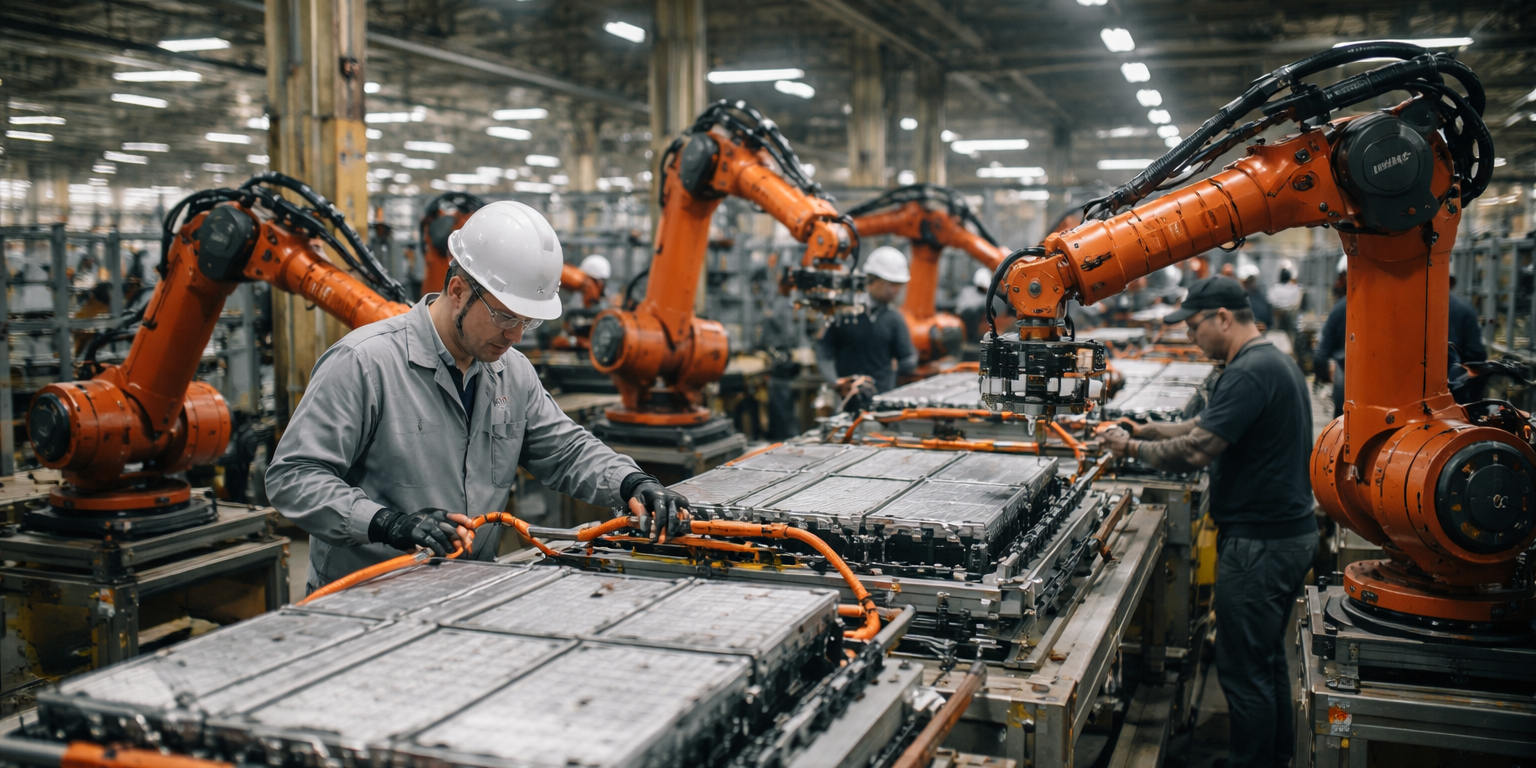
The material handling robotics segment has attracted significant capital over the past three years as labor shortages and wage inflation force manufacturers to reconsider automation thresholds. What was previously too expensive or technically complex for mid-sized facilities now pencils out financially. ANSCER entered this market with a focus on hybrid systems that split the difference between stationary industrial arms and purely mobile platforms. Traditional robotic arms offer precision but lack mobility. Autonomous mobile robots provide flexibility but struggle with manipulation tasks requiring force control or tight tolerances. ANSCER's approach mounts a six-axis arm on a mobile base with vision systems that handle localization and object recognition. The company has deployed units in automotive component manufacturing and consumer goods packaging, two sectors where production runs vary too frequently for dedicated fixed automation. Several competitors pursue similar architectures, including established players adding mobility to existing arm products and startups building integrated systems from the ground up. The technical challenge lies in coordinating motion planning between the mobile base and the manipulator while maintaining positioning accuracy under dynamic loads.
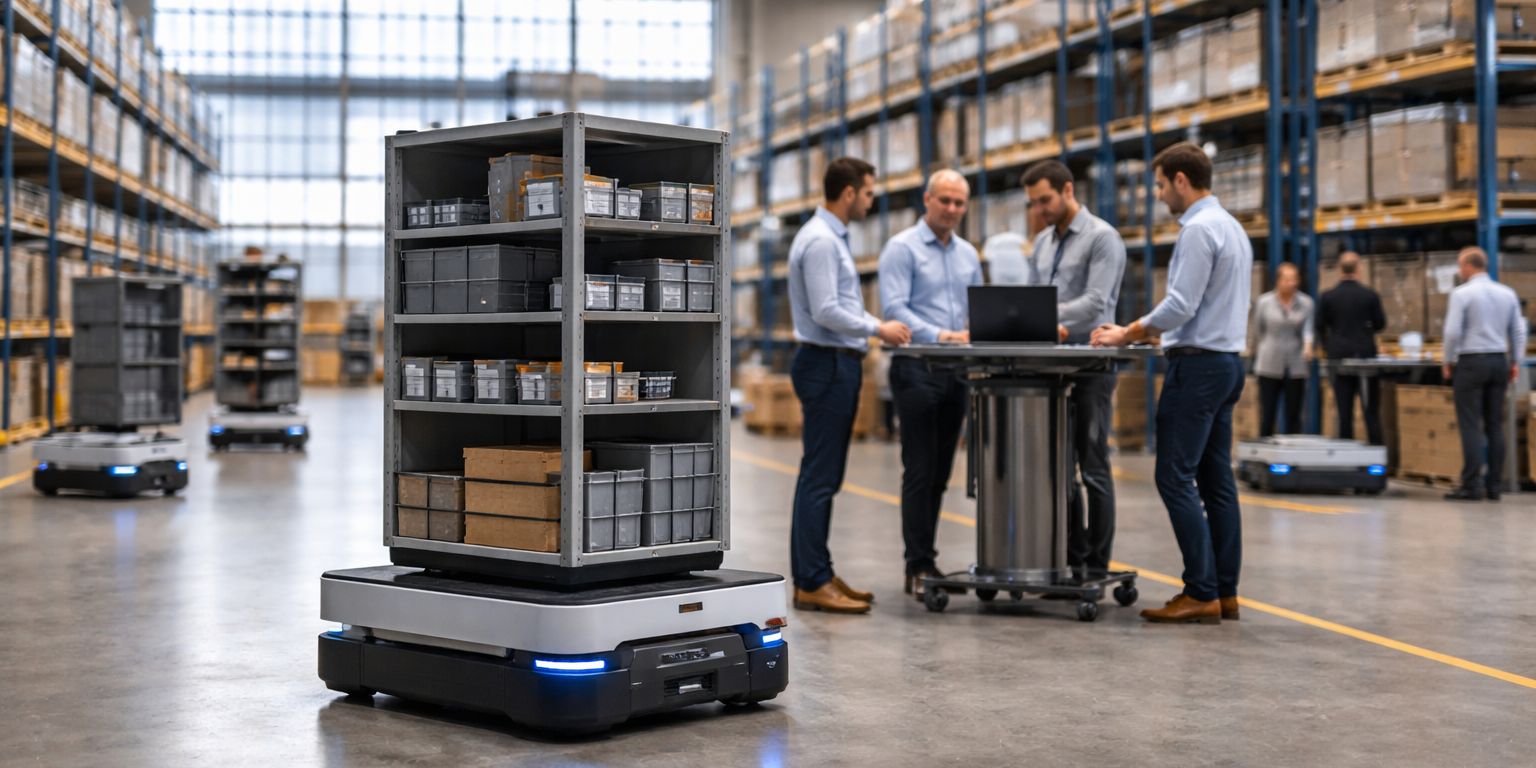
North American manufacturing facilities represent ANSCER's primary target, particularly operations running multiple product variants through the same production lines. The automotive supply chain has proven receptive. Tier-one and tier-two suppliers face pressure to reduce costs while maintaining flexibility for different vehicle platforms. Fixed automation locks in configurations that become liabilities when model years change or production volumes shift. ANSCER's systems can be redeployed to different tasks within a facility, a selling point for manufacturers wary of stranded capital in dedicated equipment. The company also targets consumer goods packaging, where seasonal demand swings and product proliferation make dedicated lines economically questionable. A facility packaging multiple SKUs might justify mobile manipulation systems that switch between tasks rather than maintaining separate fixed stations for each product variant. Logistics and warehousing represent adjacent opportunities, though ANSCER faces denser competition there from companies focused exclusively on goods-to-person automation and autonomous mobile robots for transport.
The Series A capital funds production expansion and channel development rather than core technology work, suggesting ANSCER believes its current product achieves market fit. Manufacturing robotics companies typically require significant capital to scale beyond prototype and pilot phases. Component costs, integration labor, and post-deployment support strain cash flow even with paying customers. ANSCER's timeline for ramping production capacity will determine whether the $5.4 million suffices or whether additional funding becomes necessary. The company must balance aggressive customer acquisition against operational margin pressure that comes from customizing systems for diverse applications. Industrial customers expect significant pre-sale engineering and post-deployment support, services that consume capital without immediately generating proportional revenue. ANSCER's ability to standardize its core platform while accommodating application-specific requirements will influence unit economics and capital efficiency. The company's expansion into international markets adds complexity, as regulations, customer expectations, and service requirements vary significantly across regions. European facilities often demand different safety certifications than North American plants, and labor dynamics differ enough to change the economic calculus for automation investments.
What to Watch: Track ANSCER's announced customer deployments and named manufacturing partners over the next quarter to gauge traction in automotive versus consumer goods segments. Monitor whether the company discloses unit volumes or announces follow-on funding within twelve months, which would signal either strong demand or higher-than-expected capital requirements for scaling production. Watch for technical specifications on cycle times, payload capacities, and positioning accuracy as competitive differentiation in hybrid manipulation platforms increasingly hinges on performance metrics rather than concept validation. Observe expansion announcements into European or Asian markets, which would indicate ANSCER secured regulatory approvals and established service infrastructure beyond North America.