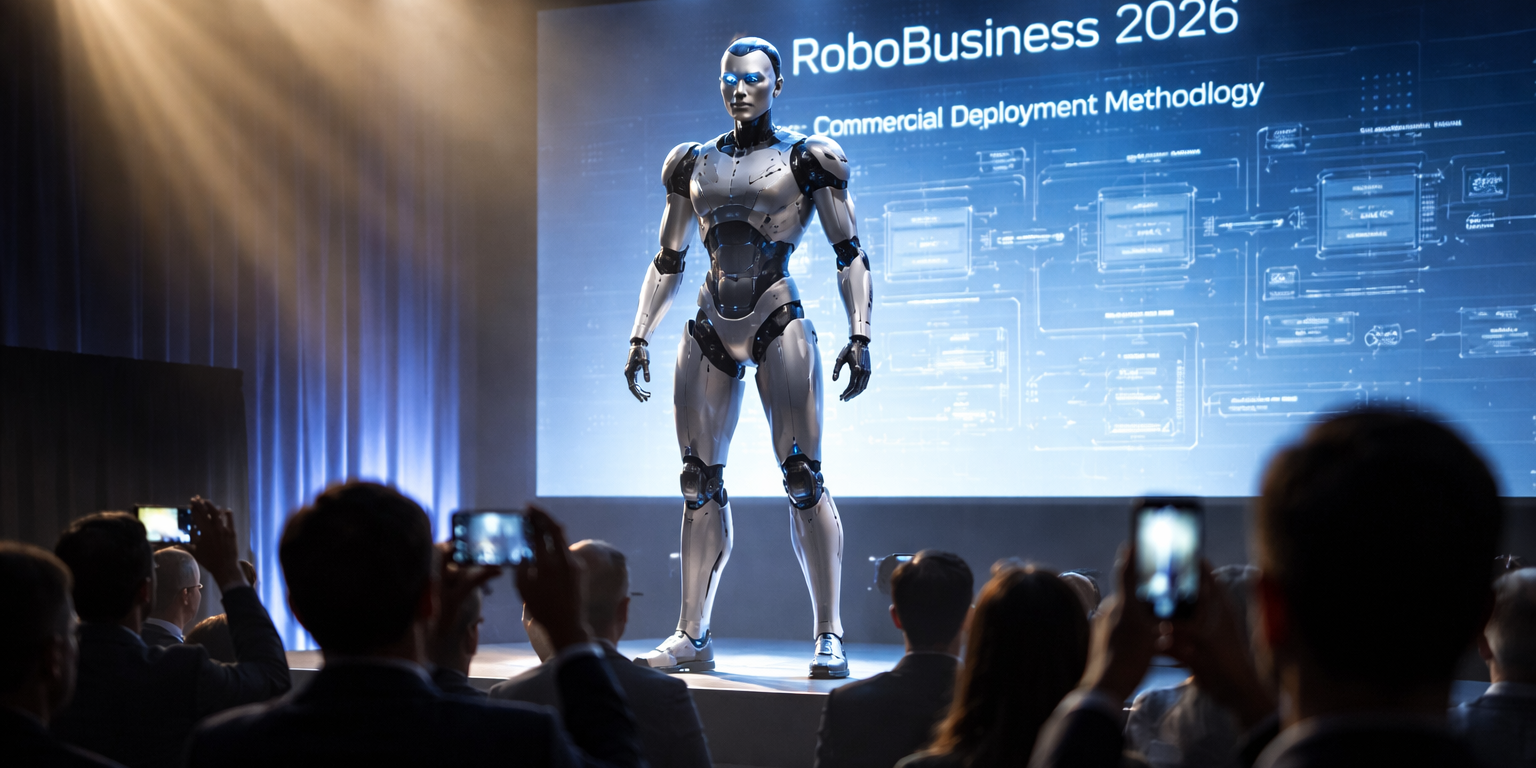
AGIBOT will present a framework for scaling humanoid robots from laboratory prototypes to revenue-generating deployments at RoboBusiness next month, drawing on the company's experience deploying bipedal systems in Chinese factories and warehouses over the past eighteen months. The Shenzhen-based developer plans to share specific methodologies for identifying commercially viable use cases and structuring developer ecosystems that support third-party application development. Conference organizers positioned the session as a rare look inside the operational realities of humanoid commercialization, a topic that has drawn intense investor interest but limited transparency from developers racing to ship production units.
AGIBOT has shipped more than 200 humanoid units to industrial customers since early 2025, according to company disclosures, placing it among a small cohort of developers with meaningful deployment numbers outside controlled pilot programs. The company's flagship platform stands 175 centimeters tall and carries a 50-kilogram payload, specifications that align closely with competitors including Fourier Intelligence and UBTech Robotics. AGIBOT differentiates on software architecture, emphasizing a modular control system that allows customers to develop task-specific applications without rewriting core locomotion and balance algorithms. That approach mirrors strategies employed by mobile robot developers a decade ago, when companies like Mobile Industrial Robots and Locus Robotics built entire business models around extensible software platforms rather than hardware differentiation alone. The parallel is deliberate. AGIBOT executives have stated publicly that sustainable humanoid businesses will emerge from developer ecosystems, not vertically integrated solutions.
The RoboBusiness presentation will detail AGIBOT's internal process for evaluating potential applications, a framework the company developed after early deployments revealed significant gaps between customer expectations and technical readiness. Sources familiar with the methodology say AGIBOT scores opportunities across four dimensions: task repeatability, environmental consistency, labor cost differential, and regulatory risk. Only applications scoring above threshold levels in all four categories advance to pilot deployment. That conservative approach stands in contrast to competitors pursuing broader use case portfolios, but AGIBOT executives argue it protects both the company's reputation and customer relationships during a period when humanoid capabilities remain narrower than marketing materials suggest. The framework also addresses a tension that has plagued robotics deployments for years: customers want transformative automation, but successful projects typically start with narrow, unglamorous tasks that deliver measurable return on investment within twelve months.
Developer ecosystem architecture represents the second major theme of AGIBOT's presentation. The company operates a partner program that grants qualified developers access to simulation environments, application programming interfaces, and discounted hardware for testing. More than 80 organizations have joined since the program launched in mid-2025, according to company statements, though AGIBOT has not disclosed how many have shipped customer-facing applications. The ecosystem model addresses a chicken-and-egg problem that has constrained robotics platforms historically: developers won't invest time learning new systems without evidence of commercial traction, but platforms struggle to gain traction without a robust application library. AGIBOT is betting that subsidizing early development costs and providing technical support will accelerate the flywheel. Whether that investment pays off depends partly on factors outside the company's control, including how quickly competing platforms mature and whether customers consolidate around one or two dominant standards. Similar dynamics played out in collaborative robot development, where Universal Robots captured disproportionate ecosystem investment by reaching critical mass first.
The broader context for AGIBOT's presentation is an industry inflection point. At least six well-funded humanoid developers now claim production-ready systems, up from essentially zero three years ago. Total announced deployments across all developers likely number in the low thousands, a tiny fraction of the installed base of traditional industrial robots but growing rapidly. Capital markets remain enthusiastic despite limited revenue evidence: humanoid developers have raised more than $3 billion in disclosed funding since 2024, with valuations frequently exceeding ten times annual revenue for companies that have revenue at all. That enthusiasm creates pressure to demonstrate real-world traction, making conferences like RoboBusiness valuable forums for developers to share progress without the legal constraints of investor communications. AGIBOT's willingness to discuss operational challenges publicly may signal confidence in its position, or recognition that transparency serves the industry's collective interest by setting realistic expectations among potential customers.
What to Watch: RoboBusiness takes place October 14-16, 2026 in Santa Clara, with AGIBOT's session scheduled for the conference's second day. Watch for specific customer case studies and deployment metrics, particularly around task cycle times and total cost of ownership comparisons. Also monitor whether AGIBOT announces expanded partnerships or new ecosystem members during the conference, as developer program growth will indicate whether the company's platform strategy is gaining momentum against competitors.