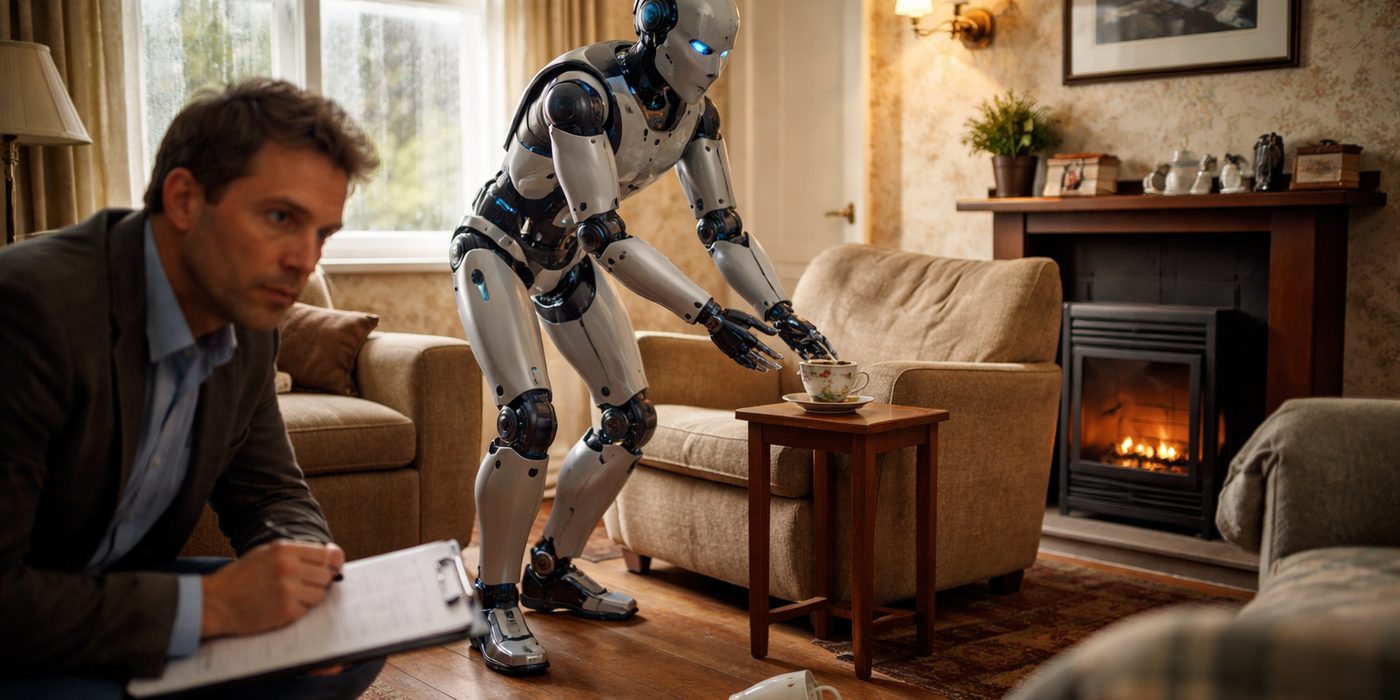
The first thing Adrian Flux had to decide was what, exactly, it was insuring. A humanoid robot in a British living room is not a car, a phone, or a pet, and the insurer's decision to launch a dedicated domestic humanoid policy, reported by Crypto Briefing and picked up across the UK trade press, forces that question into the open. Is the robot a household appliance, a vehicle, a dependent, or a contractor? The answer matters because it determines which claims get paid. Damage to the robot, damage by the robot, and injury to a person all follow different legal logic, and until now no UK consumer product has bundled them for a machine that walks.
Adrian Flux is an unusual messenger for this kind of cover. Founded in 1975 and headquartered in Norfolk, the company built its reputation underwriting vehicles that mainstream insurers shy away from: kit cars, heavily modified hatchbacks, imported classics. That lineage explains the logic. Specialist insurers survive by pricing risks that standard actuarial tables cannot, and they tend to move first when a new category appears. A humanoid robot has almost no claims history in a domestic setting. No loss ratios exist, no repair-cost benchmarks, no accident taxonomy. The insurer is effectively writing the first draft of the data it will later rely on.
The timing reflects how quickly the hardware conversation has shifted from demos to purchase orders. Through 2025 and into 2026, a handful of manufacturers pushed humanoids toward households rather than factory floors. 1X opened pre-orders for its NEO home robot at $20,000, and Chinese makers such as Unitree have sold smaller bipeds at consumer-adjacent prices, with its G1 starting around $16,000. Tesla continues to talk up Optimus for eventual domestic use, though it has not put one in a customer's home. None of these companies is likely to carry the long-tail liability of a robot that tips onto a toddler, scalds a visitor, or is hijacked over a network. Insurers fill that gap, and in doing so they quietly become de facto safety regulators.
That last point is the one engineers and investors should sit with. An underwriter does not read a spec sheet the way a buyer does. It asks what happens when power is cut mid-stride, whether the fall behavior is deterministic, how the machine handles a child in its path, and who holds the software update keys. The answers will translate directly into premiums, and premiums will shape which designs are commercially viable at home. A humanoid with a certified safe-fall routine, force-limited actuators, and an auditable update chain could earn cheaper cover than a faster, less constrained rival. In effect, the insurance market may end up rewarding conservative engineering before any UK regulator codifies it, and that creates a commercial incentive for safety work that no standards body has yet mandated.
What to Watch
Watch for whether Adrian Flux publishes policy wording and pricing tiers, since the exclusions will reveal which risks the insurer considers uninsurable, such as autonomous operation without supervision or third-party software modifications. Track whether larger carriers, including Aviva and Admiral, announce competing products or reinsurance arrangements before the end of 2026. Follow the British Standards Institution and the Department for Science, Innovation and Technology for any consultation on domestic robot safety requirements, which would give insurers a benchmark to price against. Finally, monitor first-shipment announcements from 1X and Unitree into the UK, because actual units in British homes are what will generate the first real claims data.